Smiles or struggles? How trust (in)congruence influences subordinates’ ambivalent relational identification and upward ingratiation?
Xiaodong Ma, Minmin Zhang

TL;DR
This study explores how differences between expected and perceived leader trust affect employees' behaviors and identities in the workplace.
Contribution
The study introduces expected leader trust and integrates it with perceived leader trust to explore psychological mechanisms in trust relationships.
Findings
Upward ingratiation is significantly lower when expected and perceived leader trust are aligned.
Higher expected leader trust is associated with increased upward ingratiation when trust discrepancy is constant.
Ambivalent relational identity mediates the relationship between trust configurations and upward ingratiation.
Abstract
Recent research on trust in organizational behavior has largely centered on perceived leader trust (PLT), shedding light on how being trusted influences employee behavior. However, this focus has often neglected expected leader trust (ELT)—employees’ internal expectations of being trusted—thus limiting insight into behavioral differences and the psychological mechanisms driven by trust discrepancies. To address this gap, the present study incorporates both ELT and PLT to provide a more holistic understanding of subordinates’ psychological dynamics and behavioral responses in trust relationships. Grounded in relational identity theory, we investigate how distinct trust configurations affect upward ingratiation (UI) and examine the mediating role of ambivalent relational identity (ARI). Employing a mediated Rising Ridge Congruence Asymmetry approach, we analyzed three-wave dyadic data…
Genes, proteins, chemicals, diseases, species, mutations and cell lines named across the full text — each resolved to its canonical identifier and authoritative record.
Click any figure to enlarge with its caption.
 Figure 1
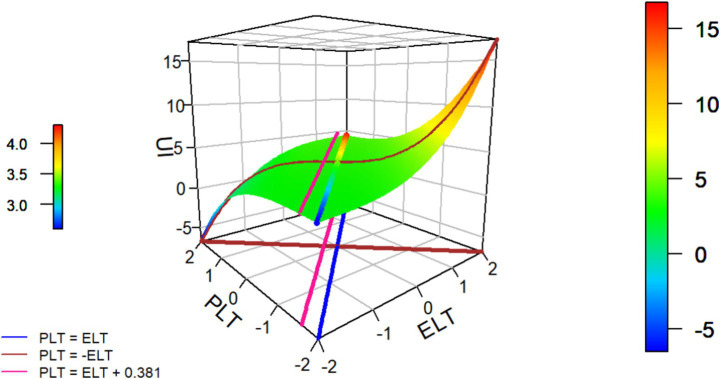 Figure 2
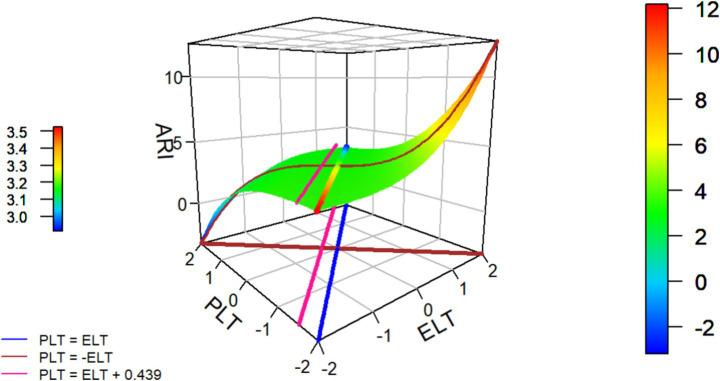 Figure 3
Peer Reviews
No public reviews on file for this paper yet. If you reviewed it on a platform where reviews are public (OpenReview, ICLR, NeurIPS, ICML), you can paste yours below so the community can read it here.
Videos
No videos yet. Explain this paper in a talk, walkthrough, or lecture? Add one.
Taxonomy
TopicsJob Satisfaction and Organizational Behavior · Social Power and Status Dynamics · Management and Organizational Studies