Combination of remazolam and alfentanil on hemodynamics, postoperative cognitive function, and adverse cardiovascular events in elderly patients undergoing laparoscopic cholecystectomy: a randomized controlled trial
Chaolei Liu, Jin Li, Junna He, Jingjing Zhang, Lijun Bo, Jiaojiao Yang, Yuan Ma, Jianzhang Qin, Yanjie Yang, Zhangnan Sun

TL;DR
This study compares remazolam and propofol with alfentanil in elderly patients during surgery, finding remazolam leads to faster recovery and fewer complications.
Contribution
The novel contribution is evaluating remazolam-alfentanil's effects on hemodynamics, cognitive function, and cardiovascular events in elderly surgical patients.
Findings
Remazolam-alfentanil reduced awakening, extubation, and anesthesia duration compared to propofol-alfentanil.
The remazolam group had better hemodynamic stability and fewer cardiovascular events like hypotension and bradycardia.
Postoperative cognitive scores were higher and delirium incidence lower in the remazolam group.
Abstract
To evaluate the effects of a remazolam-alfentanil combination versus a propofol-alfentanil combination on intraoperative hemodynamics, postoperative cognitive function, and cardiovascular adverse events in elderly patients undergoing laparoscopic cholecystectomy. This prospective, randomized controlled trial enrolled 116 elderly patients (aged 60–80 years, ASA I–III) undergoing laparoscopic cholecystectomy from January 2022 to June 2023. Patients were randomly assigned (1:1) to receive either remazolam-alfentanil (n = 58) or propofol-alfentanil (n = 58). Primary outcomes included intraoperative hemodynamic parameters (MAP, HR, CO, CI, SVR), cognitive function (MMSE and MoCA scores, and incidence of postoperative delirium [POD]), and incidence of cardiovascular events. Secondary outcomes included recovery times and postoperative VAS and Ramsay scores. A total of 112 patients (56 per…
Genes, proteins, chemicals, diseases, species, mutations and cell lines named across the full text — each resolved to its canonical identifier and authoritative record.
Click any figure to enlarge with its caption.
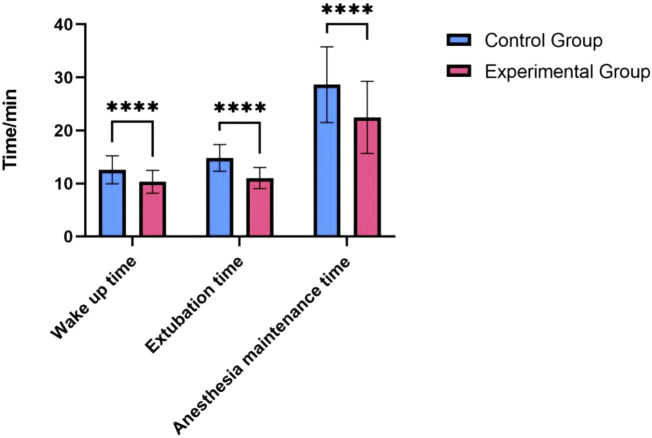 Figure 1
Peer Reviews
No public reviews on file for this paper yet. If you reviewed it on a platform where reviews are public (OpenReview, ICLR, NeurIPS, ICML), you can paste yours below so the community can read it here.
Videos
No videos yet. Explain this paper in a talk, walkthrough, or lecture? Add one.
Taxonomy
TopicsAnesthesia and Sedative Agents · Intensive Care Unit Cognitive Disorders · Abdominal Surgery and Complications