Why Homoscleromorph Sponges Have Ciliated Epithelia: Evidence for an Ancestral Role in Mucociliary Driven Particle Flux
Veronica L. Price, Anudi Nanayakkara, Andrea Pasini, Elsa Bazellières, Amelie Vernale, Caroline Rocher, Carole Borchiellini, Andre Le Bivic, Emmanuelle Renard, Sally P. Leys

TL;DR
Homoscleromorph sponges have ciliated epithelia that help move mucus and particles, suggesting this function is ancestral in animals.
Contribution
The study provides evidence that ciliated epithelia in Homoscleromorph sponges function in mucociliary transport, a trait likely lost in other sponge lineages.
Findings
Ciliary beat frequencies in Homoscleromorph sponges are similar to those in other invertebrates used for mucus transport.
Cilia on Homoscleromorph sponges are homogeneously oriented and move particles in a coordinated direction.
Nocodazole treatment reduced particle movement, confirming ciliary activity drives mucociliary transport.
Abstract
Cilia are found on the epithelia of almost all metazoans, so their absence from the epithelia of all but one class of Porifera is puzzling. Homoscleromorph sponges possess ciliated epithelia, but their function and evolutionary history within Porifera are unclear. We compared the ciliary beat frequencies (CBFs) of cilia on outer epithelia of the homoscleromorph sponge Oscarella sp. with those of other animals to suggest possible functions for the cilia. Settled Stage 4 buds, or juveniles, were found to have a higher CBF than free‐moving Stage 1 buds, and CBF was within the range of cilia that function in mucus transport in other aquatic invertebrates. Scanning Electron Microscopy (SEM) images of buds fixed with ruthenium red to detect the presence of mucus showed that mucus was associated with the cilia of the exopinacoderm and both SEM and immunofluorescence images revealed fields of…
Genes, proteins, chemicals, diseases, species, mutations and cell lines named across the full text — each resolved to its canonical identifier and authoritative record.
Click any figure to enlarge with its caption.
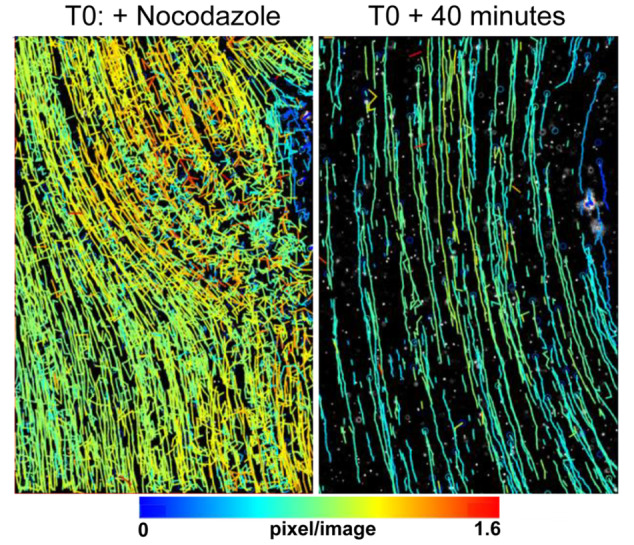 Figure 1
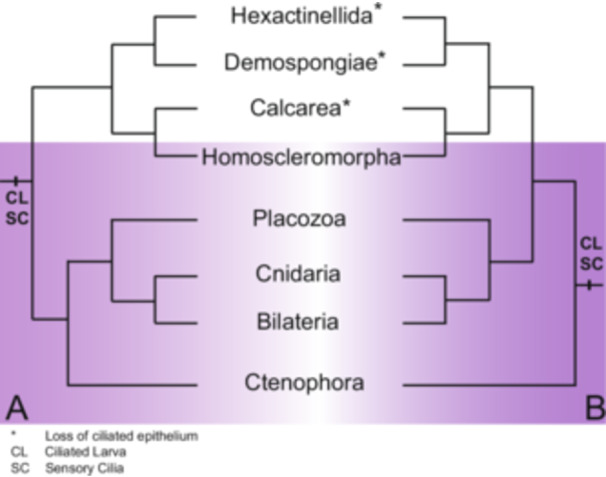 Figure 2
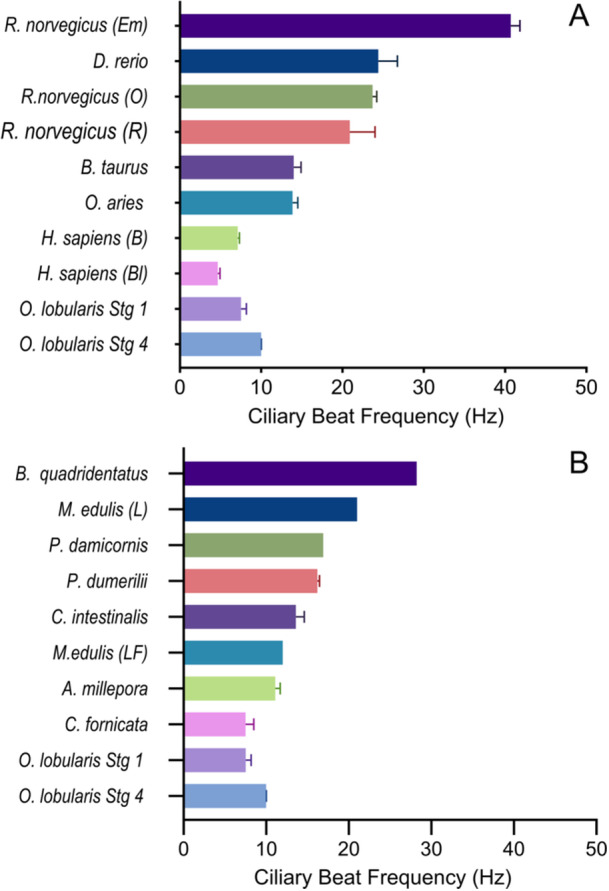 Figure 3
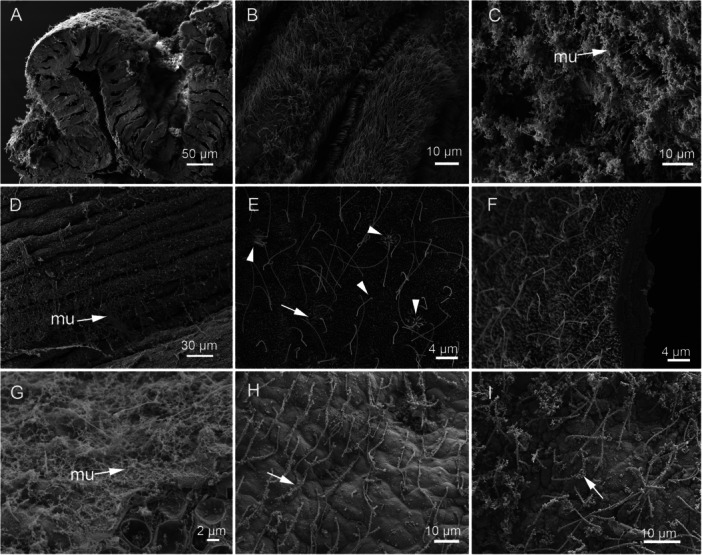 Figure 4
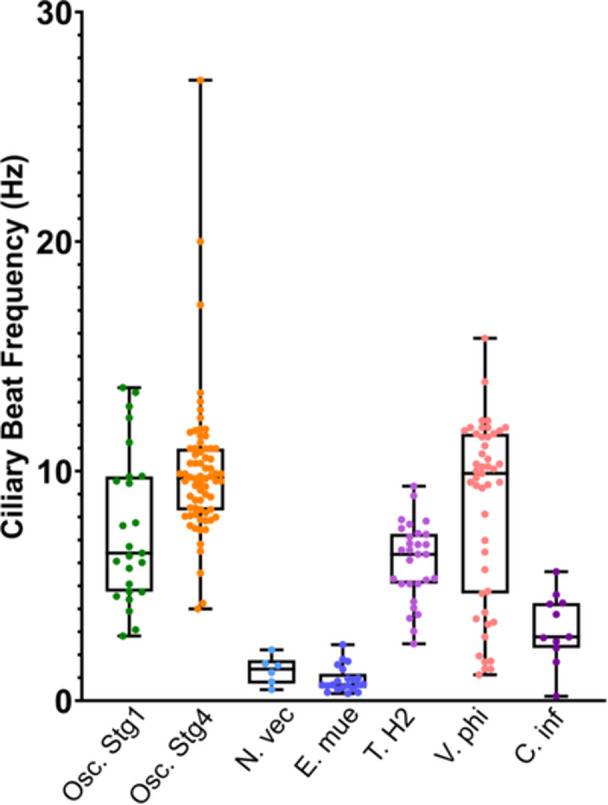 Figure 5
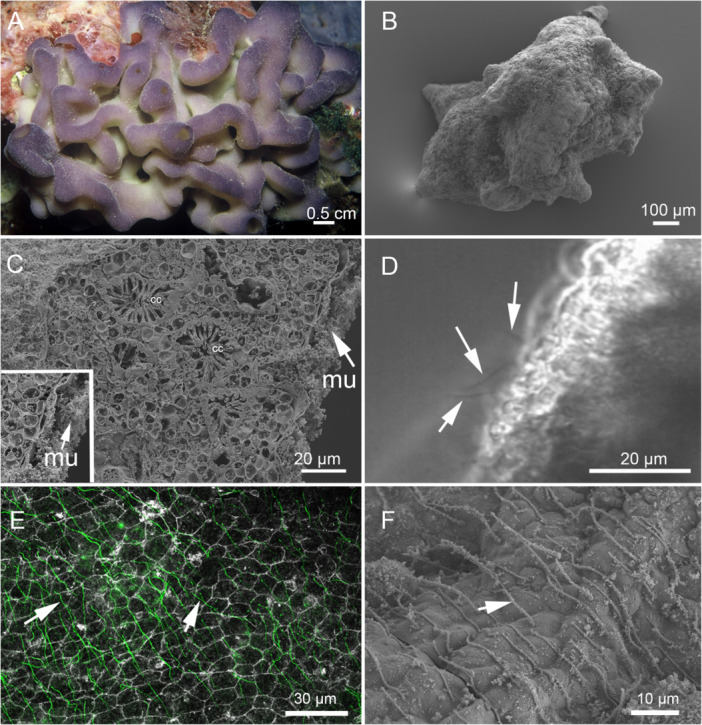 Figure 6
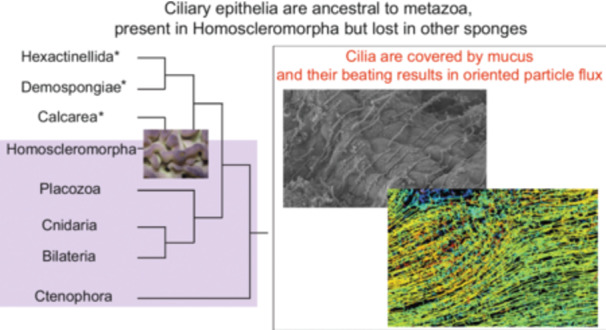 Figure 7
Peer Reviews
No public reviews on file for this paper yet. If you reviewed it on a platform where reviews are public (OpenReview, ICLR, NeurIPS, ICML), you can paste yours below so the community can read it here.
Videos
No videos yet. Explain this paper in a talk, walkthrough, or lecture? Add one.
Taxonomy
TopicsProtist diversity and phylogeny · Marine Ecology and Invasive Species · Marine Invertebrate Physiology and Ecology