Virtual Reality Headset as a Cause of Allergic Contact Dermatitis in a Child
Dalia Eid, Shaheen Akhtar, Natalie Stone

TL;DR
A 13-year-old boy developed a skin rash from a VR headset due to an allergic reaction to its foam, highlighting the growing risk of wearable devices causing allergies in children.
Contribution
This is the first reported case of allergic contact dermatitis caused by a VR headset in a child.
Findings
The boy had positive patch test reactions to multiple allergens, including the foam from the Oculus Quest 2 headset.
Symptoms resolved after replacing the foam interface with a silicone cover.
The case emphasizes the need to consider wearable electronics as potential sources of pediatric allergic contact dermatitis.
Abstract
Allergic contact dermatitis (ACD) from gaming accessories is rarely reported. With the increasing popularity of virtual reality (VR) headsets, more cases may emerge. We report the case of a 13-year-old boy with atopic eczema who developed a recurrent periorbital rash at sites contacting an Oculus Quest 2 headset (Meta Platforms, Menlo Park, CA, USA). He was otherwise healthy, on no medications, and had a family history of asthma. Patch testing included the British standard, medicament, facial, and photosensitivity series, with the headset foam added on day two. Positive reactions were observed to methylisothiazolinone, methylchloroisothiazolinone/methylisothiazolinone (MCI/MI), 2-bromo-2-nitropropane-1,3-diol, methyldibromoglutaronitrile, benzisothiazolinone, propolis, Carba Mix, and the headset foam. Symptoms resolved fully following replacement of the foam interface with a silicone…
Genes, proteins, chemicals, diseases, species, mutations and cell lines named across the full text — each resolved to its canonical identifier and authoritative record.
Click any figure to enlarge with its caption.
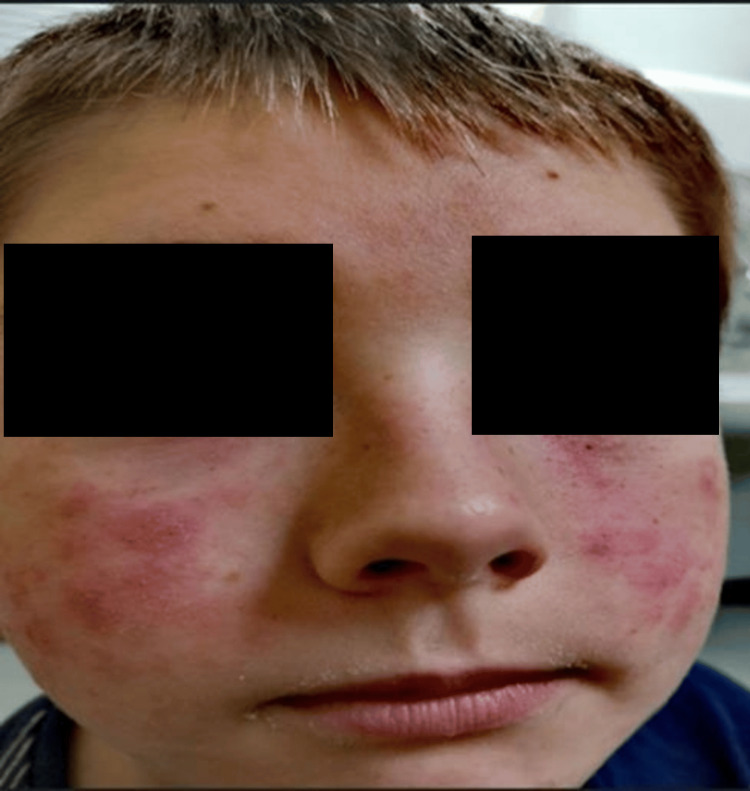 Figure 1
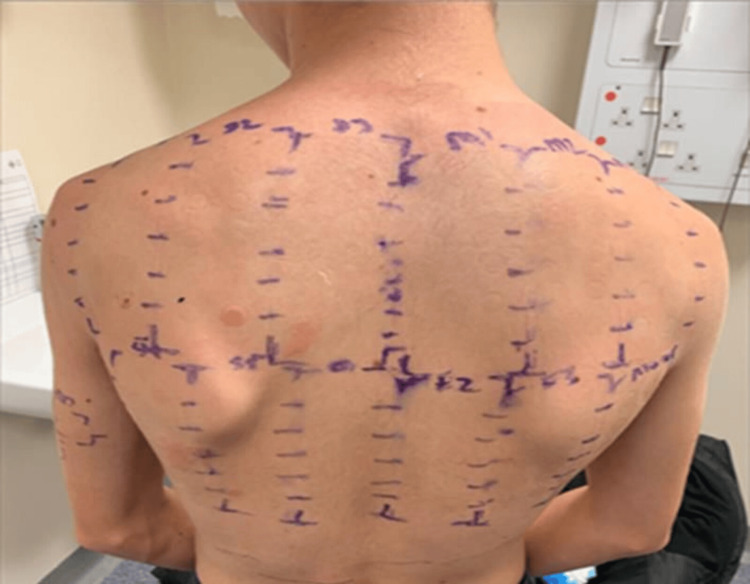 Figure 2
| Allergen | Day 2 | Day 4 | Relevance |
| Methylisothiazolinone 0.2% | ++ | ++ | Present in shampoo |
| Methylchloroisothiazolinone/Methylisothiazolinone 0.02% (MCI/MI) | + | + | Present in shampoo |
| 2-Bromo-2-Nitropropane 0.5% | + | + | Cooling spray |
| Benzisothiazolinone 0.1% | + | + | ? Relevance; possibly related to memory foam |
| Propolis | + | + | Unknown relevance |
| Carba Mix 3% | + | ++ | ? Relevance; possibly related to VR headset foam |
| VR headset foam (as is) | + | + | Present in VR headset; causing allergic contact dermatitis (ACD) |
Peer Reviews
No public reviews on file for this paper yet. If you reviewed it on a platform where reviews are public (OpenReview, ICLR, NeurIPS, ICML), you can paste yours below so the community can read it here.
Videos
No videos yet. Explain this paper in a talk, walkthrough, or lecture? Add one.
Taxonomy
TopicsFibromyalgia and Chronic Fatigue Syndrome Research · Contact Dermatitis and Allergies · Adventure Sports and Sensation Seeking
Introduction
Gaming is widespread in the United Kingdom, with video game users projected to reach 57.6 million by 2027 [1]. Among children aged seven to 18 years, over two-thirds own or have access to a console. Virtual reality (VR) headsets are increasingly popular, and repeated skin contact with these devices may trigger allergic reactions. Although allergic contact dermatitis (ACD) from gaming accessories is infrequently reported, clinicians should remain vigilant for this emerging cause of facial rashes in children.
ACD is a delayed type IV hypersensitivity reaction mediated by antigen-specific T lymphocytes, leading to localized inflammation and eczematous skin changes upon re-exposure to an allergen [2,3]. VR headsets commonly contain foam padding, rubber, polyurethane, and various plastics, which may include sensitizing agents such as formaldehyde, isocyanates, and rubber accelerators. Continuous skin contact, friction, and perspiration during gameplay may facilitate allergen absorption and trigger dermatitis in susceptible users [4-6].
We present the first reported case of VR headset-associated ACD in a paediatric patient, confirmed by patch testing. This work was presented orally at the British Association of Dermatology Annual Conference, July 2024. We report a case of VR headset-associated ACD in a 13-year-old boy.
Case presentation
A 13-year-old boy with a history of atopic dermatitis, predominantly mild with only minor dryness on the body managed with topical emollients, presented with an eight-year history of recurrent facial eczema. His facial flares had previously been intermittent and mild. He had a family history of asthma, was not on any regular medications, and his hobbies included climbing trees and playing on his Xbox console.
More recently, following use of an Oculus Quest 2 virtual reality headset (Meta Platforms, Menlo Park, CA, USA), the only VR device he had used, he developed a persistent, eczematous rash localized to the periorbital region and upper cheeks, corresponding to areas in direct contact with the headset. Despite regular use of emollients, including Epaderm ointment and Cetraben cream, the rash showed no improvement.
On examination, the eruption was eczematous, with erythema and scaling around the eyelids and extending onto the upper cheeks where the headset foam rested (Figure 1). The chronic visibility of the rash had a marked impact on his confidence and social comfort.
Eczematous rash localized to the cheeks and periorbital areas corresponding to VR headset contact sites
Given the persistent course, characteristic distribution, and suspected contact trigger, patch testing was performed. He underwent testing with the British Standard, medicament, facial, and photosensitivity series, in addition to a sample of the VR headset foam (Chemotechnique Diagnostics, Vellinge, Sweden). Tests were applied in Finn chambers with Hypafix dressings (BSN Medical, Stockholm, Sweden), and readings were taken on days two and four according to International Contact Dermatitis Research Group (ICDRG) criteria (Figure 2). Positive reactions were observed, summarized in Table 1.
Photo of the back showing positive patch test results of day four
The patient strongly suspected the headset foam as the trigger. After consultation with the manufacturer, a medical-grade silicone cover replaced the foam component, resulting in complete resolution of symptoms and allowing continued use of the device without recurrence.
Discussion
The Oculus Quest 2 headset is composed of memory foam and polyurethane leather; however, the exact chemical composition of the foam is not publicly disclosed. Chemical analysis was not feasible, as it is not routinely performed and presents logistical challenges. In this patient, positive patch test reactions were observed to Carba Mix and benzisothiazolinone, which may have been present in the foam material. Other reactions included 2-Bromo-2-nitropropane (historically used in cooling sprays), methylisothiazolinone/methylchloroisothiazolinone (MI/MCI) present in the patient’s shampoo, and propolis of uncertain relevance. Octylisothiazolinone, previously implicated in headphone-associated ACD [7], tested negative. Isocyanates, known potential allergens in memory foam, were not tested due to limited back-space availability [5].
Although literature on VR headset-induced ACD is limited, allergic reactions to other wearable electronics, including headphones, smartwatches, glucose sensors, and insulin pumps, have been described [7-9]. Barrier dysfunction in atopic individuals likely contributed to the chronic, localized eruption observed in this patient [5,9]. Previous studies have also shown that atopic children may be at higher risk for device-related ACD [8,9]. Winston FK reported wearable device dermatitis in a case of acrylate-related contact allergy [10], and one report documented acute urticaria following VR headset use [6].
Media reports highlighted that Oculus Quest 2 headset pads were recalled due to skin reactions [11,12]. The persistent facial distribution in this patient highlights the importance of recognizing wearable devices as potential sources of chronic ACD in pediatric patients. Barrier measures, such as medical-grade silicone covers, provided a simple and effective management strategy, allowing continued use of the headset without recurrence [9].
Given the expanding use of VR headsets for gaming, education, and occupational purposes, clinicians should maintain a high index of suspicion for device-related ACD in paediatric patients presenting with unexplained facial rashes. Early recognition, targeted patch testing, and practical interventions can prevent prolonged morbidity and reduce psychosocial impact [7-9].
Conclusions
This case demonstrates that VR headsets can trigger persistent, localized facial dermatitis in children. Identification of the causative allergens through patch testing, combined with practical interventions such as medical-grade silicone covers, can effectively resolve symptoms and permit continued device use. Awareness of wearable device-related contact dermatitis is important to ensure timely diagnosis and management in paediatric patients.
The reference list from the paper itself. Each links out to its DOI / PubMed record.
- 1Video gamer demographics in the United Kingdom (UK) 12 2023 Clement J 2023 https://www.statista.com/topics/8281/video-gamer-demographics-in-the-united-kingdom-uk/#topic Overview
- 2Allergic contact dermatitis Eur J Dermatol Saint-Mezard P Rosieres A Krasteva M Berard F Dubois B Kaiserlian D Nicolas JF 284295142004 https://pubmed.ncbi.nlm.nih.gov/15358566/15358566 · pubmed ↗
- 3Effector and regulatory mechanisms in allergic contact dermatitis Allergy Vocanson M Hennino A Rozières A Poyet G Nicolas JF 169917146420091983997410.1111/j.1398-9995.2009.02082.x · doi ↗ · pubmed ↗
- 4Occupational allergic and irritant contact dermatitis in workers exposed to polyurethane foam Int J Occup Med Environ Health Kieć-Świerczyńska M Kręcisz B Szymczak W Świerczyńska-Machura D Dudek B 2872932320102461973910.2478/s 13382-014-0249-9 · doi ↗ · pubmed ↗
- 5Skin exposure to isocyanates: reasons for concern Environ Health Perspect Bello D Herrick CA Smith TJ 32833511520071743147910.1289/ehp.9557 PMC 1849909 · doi ↗ · pubmed ↗
- 6Acute urticaria after using a virtual reality headset Consultant Tung P Schoch J 810622022
- 7Severe allergic contact dermatitis from octylisothiazolinone in over-ear headphones: a case series Contact Dermatitis Menanteau M Fenech G Adam B 2912989220253965915610.1111/cod.14733 PMC 11880882 · doi ↗ · pubmed ↗
- 8Allergic contact dermatitis caused by glucose sensors and insulin pumps: a full review: Part 1: sensors and pumps, adverse cutaneous reactions, allergens, and diabetes devices causing allergic contact dermatitis Contact Dermatitis de Groot A van Oers EM Ipenburg NA Rustemeyer T 871129220253960010610.1111/cod.14698 PMC 11710928 · doi ↗ · pubmed ↗