Mechanochemical Cis/Trans Isomerization of a Metal Centre Involving a Metal‐Organic Halogen‐Bonded (MOXB) Cocrystal
Katarina Lisac, Luzia S. Germann, Mihails Arhangelskis, Martin Etter, Robert E. Dinnebier, Tomislav Friščić, Dominik Cinčić

TL;DR
This paper shows how halogen bonding in a metal-organic cocrystal enables mechanochemical isomerization of a metal complex from cis to trans geometry.
Contribution
The study introduces a mechanochemical method for cis→trans isomerization enabled by metal-organic halogen-bonded (MOXB) cocrystals.
Findings
Ball-milling with halogen bonding leads to transient MOXB cocrystal formation and cis→trans isomerization.
Periodic DFT calculations confirm that halogen bonding makes the isomerization more enthalpically favorable.
MOXB cocrystals enable new responsive behaviors in metal-based systems.
Abstract
Halogen bonding enables the mechanochemical ball‐milling isomerization of an otherwise persistent cis‐coordinated metal complex into the corresponding trans‐isomer. The importance of halogen bonding for enabling the cis→trans isomerization of the metal centre is evidenced by real‐time in situ synchrotron powder X‐ray diffraction monitoring of the ball‐milling experiments that showed the transient appearance of a cis‐geometry metal‐organic halogen‐bonded (MOXB) cocrystal, which is rapidly replaced by the corresponding trans‐geometry one, with any excess, non‐halogen‐bonded cis‐geometry complex being retained throughout the milling experiment. The importance of cocrystallization for cis → trans isomerization is supported by periodic density‐functional theory calculations which show that the process becomes notably more enthalpically favourable in the presence of the halogen bond donor.…
Genes, proteins, chemicals, diseases, species, mutations and cell lines named across the full text — each resolved to its canonical identifier and authoritative record.
Click any figure to enlarge with its caption.
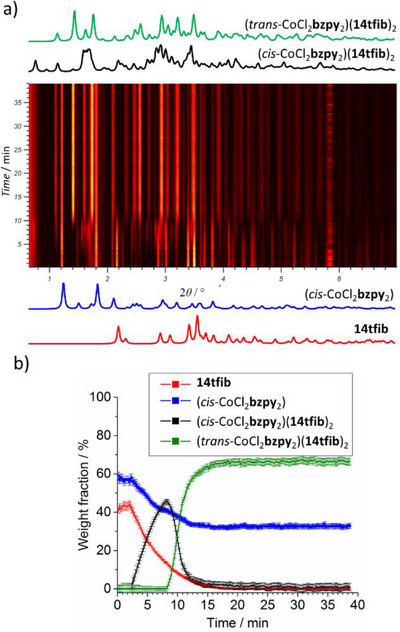 Figure 1
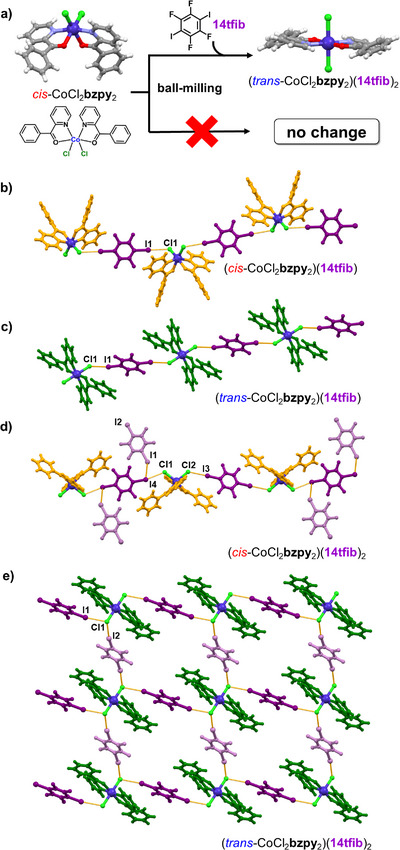 Figure 2
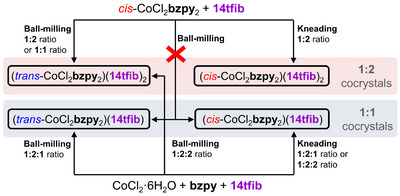 Figure 3
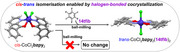 Figure 4
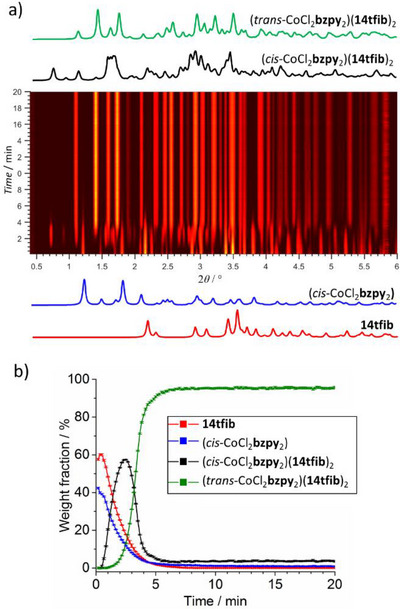 Figure 5
- —Croatian Science Foundation10.13039/501100004488
- —European Regional Development Fund‐Competitiveness and Cohesion Operational Programme
- —National Science Center of Poland
- —Leverhulme Trust10.13039/501100000275
- —University Of Birmingham10.13039/501100000855
- —McGill University10.13039/100008582
Peer Reviews
No public reviews on file for this paper yet. If you reviewed it on a platform where reviews are public (OpenReview, ICLR, NeurIPS, ICML), you can paste yours below so the community can read it here.
Videos
No videos yet. Explain this paper in a talk, walkthrough, or lecture? Add one.
Taxonomy
TopicsCrystallography and molecular interactions · X-ray Diffraction in Crystallography · Crystal structures of chemical compounds
Cocrystallization represents an important supramolecular solid‐state strategy in developing solids with improved or new properties, particularly in the contexts of pharmaceutical solids,^[^ 1, 2, 3 ^]^ agrochemicals,^[^ 4, 5, 6 ^]^ optical materials,^[^ 7, 8 ^]^ organic semiconductors,^[^ 9 ^]^ and energetic materials.^[^ 10, 11, 12 ^]^ The halogen bond has emerged as a highly versatile directional interaction with applications for crystal engineering of multicomponent solids, notably cocrystals.^[^ 13, 14 ^]^ While the majority of studies on halogen‐bonded cocrystals have focused on organic molecular systems,^[^ 13, 14, 15, 16, 17 ^]^ much less attention has been dedicated to metal‐organic ones. Metal‐organic halogen‐bonded (MOXB) cocrystals are of interest^[^ 18, 19, 20, 21 ^]^ due to the opportunity to introduce metal‐related electrical, magnetic, catalytic, optical and other properties to the self‐assembled materials.^[^ 22, 23, 24 ^]^ Furthermore, metal complexes provide geometries not usually accessible to organic molecules (e.g., square‐planar, trigonal‐bipyramidal, square pyramidal, or octahedral) which makes them desirable as building blocks for new crystal structures. Finally, many metal complexes can form different types of isomers, structural and stereo‐isomers, which expands possibilities for preparing different crystal phases with desirable properties.^[^ 15 ^]^ Our group has previously demonstrated a general strategy for the design and synthesis of MOXB cocrystals based on coordination complexes that can engage in halogen bonding via chloride ions coordinated to the metal centre as acceptors.^[^ 25, 26, 27, 28 ^]^
Here we report how the formation of a MOXB cocrystal enables mechanochemical cis→trans isomerization of an octahedral cis‐coordinated cobalt(II) complex, which does not undergo such an isomerization on its own. Specifically, whereas solution synthesis selectively provides the crystalline cis‐geometry metal complex, which does not undergo isomerization upon mechanical treatment on its own, ball‐milling in the presence of the halogen bond donor 1,4‐diiodotetraflurobenzene (14tfib) leads to cocrystallization and subsequent conversion into the corresponding trans‐coordinated complex. That the cis‐complex on its own does not undergo isomerization and that the mechanochemical cis→trans isomerization is mediated by the formation of a MOXB cocrystal is evidenced by real‐time in situ synchrotron powder X‐ray diffraction (PXRD) monitoring of milling experiments, as well as by laboratory ex situ studies. While previous studies have shown how cocrystallization can stabilize or direct the synthesis of certain isomers of organic molecules,^[^ 29, 30 ^]^ the current work is to the best of our knowledge the first to demonstrate halogen bond‐based cocrystallization as a means to impart isomerization behaviour to an otherwise inert coordination complex in the solid state.
The focus of this study is the complex bis(2‐benzoylpyridine)dichloridocobalt(II) (CoCl_2_ bzpy 2) (Figure 1), obtained as a crystalline solid by solution‐phase reaction of CoCl_2_·6H_2_O and the ligand bzpy exclusively in the cis‐form (cis‐CoCl_2_ bzpy 2), as evidenced by single crystal X‐ray diffraction analysis (see Supporting Information). In contrast, solution synthesis in the presence of 14tfib was found to lead to three distinct MOXB cocrystals, of compositions (cis‐CoCl_2_ bzpy 2)(14tfib)2, (cis‐CoCl_2_ bzpy 2)(14tfib), and (trans‐CoCl_2_ bzpy 2)(14tfib)2, sometimes in a mixture, that were all characterized by single crystal X‐ray diffraction (see Supporting Information). The appearance of the (trans‐CoCl_2_ bzpy 2)(14tfib)2 phase is surprising, considering that solution‐based synthesis and crystallization of cis‐CoCl_2_ bzpy 2 alone did not lead to the trans‐isomer, indicating a role of the XB donor in enabling the cis→trans isomerization. The crystal structures in all cases reveal one‐dimensional (1D) chains of C─I···Cl─Co halogen bonds involving 14tfib as the XB donor, with the chloride ligands of the cis‐ or the trans‐metal‐organic building block acting as the acceptor (Figure 1). In the MOXB cocrystals (cis‐CoCl_2_ bzpy 2)(14tfib)2 and (trans‐CoCl_2_ bzpy 2)(14tfib)2, in which the respective ratio of XB acceptors and donors is 1:2, the 1D chains are further modified by additional 14tfib molecules: in (cis‐CoCl_2_ bzpy 2)(14tfib)2 the 1D chains are decorated by 14tfib molecules through I···I halogen bonds, while in (trans‐CoCl_2_ bzpy 2)(14tfib)2 the additional 14tfib molecules cross‐link the 1D chains through I···Cl halogen bonds to form two‐dimensional (2D) sheets of square‐grid layer (sql) topology. The relative thermodynamic stabilities of all cocrystals and reactions leading to their formation were calculated through periodic density‐functional theory (DFT) calculations.^[^ 31, 32, 33 ^]^
Next, cocrystal synthesis was attempted mechanochemically, by either ball‐milling in the presence of a liquid additive (liquid‐assisted grinding, LAG)^[^ 34, 35, 36, 37, 38 ^]^ or by manual grinding with a liquid additive (kneading),^[^ 39, 40 ^]^ methodologies that both use a small amount of a liquid phase to facilitate transformations (Scheme 1). Kneading reactions were performed by using an agate mortar (60 mm in diameter) and a pestle (18 mm in diameter and 70 mm in length), while LAG reactions were conducted with reaction mixtures placed in stainless steel jars, and shaken at a frequency of 25 Hz using a Retsch MM200 mill using two stainless steel balls of 5 mm diameter (0.5 gram weight each). In all cases, ethanol (EtOH) was used as a liquid additive. The laboratory air temperature during experiments was ca. 25 °C, and relative humidity (RH) varied from 40%–50% (see Supporting Information). The solid reactants and products of mechanochemical screening were characterized by PXRD, differential scanning calorimetry (DSC), and thermogravimetric analysis (TGA). An overview of mechanochemical transformations observed by LAG and kneading is shown in Scheme 1.
Attempts to synthesize the (cis‐CoCl_2_ bzpy 2)(14tfib)2 cocrystal by 30 min LAG of pre‐synthesized solid cis‐CoCl_2_ bzpy 2 and 14tfib in the respective 1:2 stoichiometric ratio (see Supporting Information) unexpectedly gave the cocrystal of the corresponding trans‐isomer (trans‐CoCl_2_ bzpy 2)(14tfib)2, as evidenced by comparison of the PXRD patterns measured for the milled material and calculated for the herein determined crystal structure.^[^ 41 ^]^ The pure solid (cis‐CoCl_2_ bzpy 2)(14tfib)2 could not be obtained by ball‐milling, even upon reducing the milling time, frequency, changing the milling assembly (the balls and the jar) from stainless steel to Teflon‐covered,^[^ 42 ^]^ or seeding the reaction mixture with pre‐synthesized (cis‐CoCl_2_ bzpy 2)(14tfib)2 (see Supporting Information). To examine whether this outcome could be related to the cis→trans isomerization of the reagent cis‐CoCl_2_ bzpy 2 upon mechanical treatment, the pure solid metal complex was ball‐milled for 1 hour either neat, or in the presence of a small amount of EtOH. Analysis of the ball‐milled material by PXRD in both cases revealed no sign of isomerization (see Supporting Information), indicating that cis‐CoCl_2_ bzpy 2 alone does not undergo cis→trans isomerization by LAG, but requires the presence of 14tfib. Switching to kneading, however, enabled the synthesis of (cis‐CoCl_2_ bzpy 2)(14tfib)2, indicating that the intensity of mechanical action also plays a role in the cis→trans isomerization that happens in the presence of 14tfib.
Next, we explored the LAG reaction of equimolar amounts of cis‐CoCl_2_ bzpy 2 and 14tfib in a ball mill, in expectation to form the MOXB cocrystal containing the XB donors and acceptors in a 1:1 ratio, (cis‐CoCl_2_ bzpy 2)(14tfib) (Figure 1). However, analysis of the reaction mixture after 30 min revealed the appearance of (cis‐CoCl_2_ bzpy 2)(14tfib)2, with longer milling yielding again (trans‐CoCl_2_ bzpy 2)(14tfib)2, in each case along with residual cis‐CoCl_2_ bzpy 2.
To further understand the unexpected cis→trans isomerization of the cis‐CoCl_2_ bzpy 2 moiety upon ball‐milling in the presence of 14tfib, the mechanochemical reaction was monitored by in situ synchrotron PXRD at the Powder Diffraction and Total Scattering beamline P02.1 of the Deutsches Elektronen‐Synchrotron (DESY). For these real‐time monitoring experiments, the multicomponent reaction mixtures (300 mg of reactants solids, in the presence of 10 µL or 20 µL EtOH) were placed into X‐ray transparent poly(methyl methacrylate) (PMMA) jars, along with two stainless steel balls (7 mm diameter, ca. 1.39 grams each), and the mixtures were milled on a modified Retsch MM400 vibration mill operating at 25 Hz (see Supporting Information). The monitoring experiments were performed on the mechanochemical reactions of cis‐CoCl_2_ bzpy 2 and 14tfib in respective 1:1 and 1:2 stoichiometric ratios, and sequential Rietveld refinement was performed for each in situ experiment. Analysis of the in situ monitoring data for the mechanochemical reaction of 1:1 amounts of cis‐CoCl_2_ bzpy 2 and 14tfib (Figure 2) revealed the appearance of the elusive (cis‐CoCl_2_ bzpy 2)(14tfib)2 after ca. 3 min milling, reaching a maximum content of ca. 45% by weight after ca. 8.5 min. The initially formed (cis‐CoCl_2_ bzpy 2)(14tfib)2 is subsequently replaced by (trans‐CoCl_2_ bzpy 2)(14tfib)2. Notably, the in situ analysis shows that crystalline (cis‐CoCl_2_ bzpy 2)(14tfib)2 almost completely disappears after ca. 15 min, at which point the amount of (trans‐CoCl_2_ bzpy 2)(14tfib)2 remains constant. At the same time, the amount of residual solid cis‐CoCl_2_ bzpy 2 also remains constant after the disappearance of (cis‐CoCl_2_ bzpy 2)(14tfib)2, indicating that the mechanochemical cis→trans isomerization of the metal complex involves the transient formation of the MOXB cocrystal.
Similar behaviour was observed for the mechanochemical reaction of cis‐CoCl_2_ bzpy 2 and 14tfib in the respective 1:2 stoichiometric ratio (Figure 3). Real‐time monitoring revealed the rapid formation of (cis‐CoCl_2_ bzpy 2)(14tfib)2, with negligible amounts of residual cis‐CoCl_2_ bzpy 2, reaching a maximum abundancy of ca. 56% by weight after ∼2.5 min milling. The subsequent transformation into (trans‐CoCl_2_ bzpy 2)(14tfib)2 reached completion within ca. 7 min milling.
Overall, the outcomes of real‐time and in situ monitoring of mechanochemical cocrystallization of cis‐CoCl_2_ bzpy 2 and 14tfib indicate that, whereas the cis‐based MOXB cocrystal readily forms early in the reaction, upon milling it is replaced by the MOXB cocrystal of the corresponding trans‐isomer of the metal‐organic unit. Importantly, any residual cis‐CoCl_2_ bzpy 2 that does not form the MOXB cocrystal does not undergo isomerization upon continued milling, as evidenced by in situ, as well as ex situ analyses.
The so far outlined mechanochemical procedures gave rise to either (cis‐CoCl_2_ bzpy 2)(14tfib)2 or (trans‐CoCl_2_ bzpy 2)(14tfib)2. In contrast, solution one‐pot reactions of CoCl_2_·6H_2_O, bzpy and 14tfib have been observed to produce also the cocrystal containing the XB donor and acceptor in 1:1 stoichiometric ratio, (cis‐CoCl_2_ bzpy 2)(14tfib). Consequently, the mechanochemical synthesis of (cis‐CoCl_2_ bzpy 2)(14tfib) was attempted using the multi‐component one‐pot approach. Ball‐milling of CoCl_2_·6H_2_O, bzpy and 14tfib in the respective 1:2:1 stoichiometric ratio along with small amount of EtOH gave after 30 min a new crystalline phase, whose PXRD pattern did not match to any of the starting materials, or the MOXBs obtained from solution. Crystal structure analysis from PXRD data revealed that the new phase is the MOXB cocrystal (trans‐CoCl_2_ bzpy 2)(14tfib). The corresponding cis‐cocrystal, (cis‐CoCl_2_ bzpy 2)(14tfib), was subsequently obtained by kneading of the starting materials in the presence of EtOH (Scheme 1). Next, the one‐pot multi‐component reactions were explored using CoCl_2_·6H_2_O, bzpy and 14tfib in the respective 1:2:2 stoichiometric ratio. The LAG reaction in presence of EtOH yielded (trans‐CoCl_2_ bzpy 2)(14tfib)2, while kneading gave again the cocrystal (cis‐CoCl_2_ bzpy 2)(14tfib) along with excess of 14tfib. Overall, these experiments indicate that the herein employed ball‐milling conditions facilitate the cis→trans isomerization, leading to the MOXB cocrystal with the trans‐CoCl_2_ bzpy 2 core, while kneading enables the cocrystallization with the retention of the cis‐isomer structure.
In order to explore whether the isomerization of the cis‐CoCl_2_ bzpy 2 unit in the corresponding MOXB cocrystal could be only thermally‐driven, the complex, and all herein prepared cocrystals, were also explored by simultaneous thermogravimetric analysis and differential scanning calorimetry (TGA/DSC). Thermal analysis of solid cis‐CoCl_2_ bzpy 2 revealed a sharp endothermic signal with onset around 183 °C, simultaneous with a mass loss, indicating decomposition. The thermograms of the (cis‐CoCl_2_ bzpy 2)(14tfib)2 and the (trans‐CoCl_2_ bzpy 2)(14tfib)2 cocrystals were mutually similar, exhibiting a sharp endothermic signal with an onset around 147 and 137 °C, respectively, in both cases simultaneous with a weight change consistent with the loss of two molecules of 14tfib. The cocrystals (cis‐CoCl_2_ bzpy 2)(14tfib) and (trans‐CoCl_2_ bzpy 2)(14tfib) also exhibited similar thermal signatures, with a sharp endothermic signal around 149 and 150 °C, respectively, in both cases associated with a change in weight indicative of the loss of one equivalent of 14tfib. Overall, these experiments suggest that none of the MOXB cocrystals, or the solid cis‐CoCl_2_ bzpy 2 undergo isomerization before thermal decomposition at high temperatures. Therefore, the observed conversion of (cis‐CoCl_2_ bzpy 2)(14tfib)2 into (trans‐CoCl_2_ bzpy 2)(14tfib)2 appears to be the result of the mechanical LAG treatment.
Finally, the reactions leading to the formation of herein reported MOXB cocrystals and their interconversion were also explored through periodic and molecular density‐functional theory (DFT) calculations. The molecular DFT modelling for isolated cis‐ and trans‐CoCl_2_ bzpy 2 molecules, performed in Gaussian 16 at PBE/6–311G(d,p)^[^ 43, 44 ^]^ level of theory, revealed that for a high‐spin state the cis‐isomer should be 8.2 kJ mol^−1^ enthalpically more favorable, whereas for a low‐spin state the trans‐isomer would be preferred by 12.7 kJ mol^−1^. The preference for the formation of the trans‐geometry metal complex is, however, greatly enhanced by cocrystallization: plane‐wave periodic DFT calculations in CASTEP,^[^ 45 ^]^ performed with PBE functional combined with many‐body dispersion (MBD*)^[^ 46, 47, 48 ^]^ correction scheme (Table 1), indicated that for the herein observed MOXB cocrystals the trans‐isomers should be enthalpically preferred by 70–90 kJ mol^−1^.^[^ 31, 32, 33 ^]^ This result is consistent with observed LAG transformation of (cis‐CoCl_2_ bzpy 2)(14tfib)2 into (trans‐CoCl_2_ bzpy 2)(14tfib)2, which should be enthalpically favoured by ca. 81 kJ mol^−1^.
The results of periodic DFT calculations indicate that the formation of the MOXB cocrystal provides an enhanced enthalpic driving force for the herein observed cis→trans isomerization of CoCl_2_ bzpy 2. A detailed mechanism for this process, however, remains unclear. Tentatively, we suggest that the formation of a halogen bond directly to one of the ligand atoms of the metal complex should weaken the associated coordination bond, overall making the coordination complex more labile, facilitating isomerization to trans‐CoCl_2_ bzpy 2 that then leads to the thermodynamically more stable cocrystal. In such a scenario, MOXB cocrystal formation provides the thermodynamic driving force for cis→trans isomerization, with the formation of individual halogen bonds also making the metal complex sufficiently labile for such a process.
In summary, we have reported that halogen‐bonded cocrystallization enables ball‐milling isomerization of a cis‐geometry coordination complex which is otherwise persistent in the solid state. Specifically, whereas solution‐phase synthesis of herein explored CoCl_2_ bzpy 2 complex consistently yields the cis‐isomer only, which does not undergo isomerization upon ball‐milling neat or in the presence of a liquid, the formation of a halogen‐bonded metal‐organic (MOXB) cocrystal either from a metal salt or the pre‐synthesized cis‐CoCl_2_ bzpy 2 readily leads to cis‐trans isomerization to form the corresponding trans‐isomer as a halogen‐bonded cocrystal. The observed cis→trans isomerization is also enthalpically‐favored, with the trans‐MOXB cocrystal being ca. 70–80 kJ mol^−1^ more exothermic compared to the cis‐analogue. The necessity of forming a halogen‐bonded cocrystal prior to ball‐milling isomerization, as well as the persistence of pure solid cis‐complex to such isomerization, are supported by real‐time in situ PXRD monitoring of the process, which reveals the initial formation of a halogen‐bonded cocrystal of the cis‐complex which is rapidly replaced with the cocrystal of the trans‐isomer, whereas any excess solid cis‐complex persists throughout the milling experiment. In the context of mechanochemistry, these observations suggest a role for MOXB cocrystals as intermediates in otherwise not accessible mechanochemical transformations of coordination complexes, creating a link to cocrystal‐mediated covalent bonds transformations seen in organic mechanosynthesis.^[^ 49, 50, 51 ^]^ In the broader context of materials and supramolecular chemistry, these results provide a proof‐of‐principle for halogen bond‐driven cocrystal formation as a means to modify reactivity of metal complexes, and present MOXB cocrystals as a class of materials that can exhibit new, responsive behaviours different from those of parent coordination compounds. Further mechanistic studies, as well as systematic exploration of such behavior in other MOXB cocrystal systems, based on diverse metal‐organic complexes and halogen bond donors, are underway.
Supporting Information
The authors have cited additional references within the Supporting Information.^[^ 52, 53, 54, 55, 56, 57, 58, 59, 60, 61 ^]^ Deposition Number(s) 2081192 (for (trans‐CoCl_2_ bzpy 2)(14tfib)), 2279597 (for (trans‐CoCl_2_ bzpy 2)(14tfib)2), 2279598 (for (cis‐CoCl_2_ bzpy 2)(14tfib)), 2279599 (for (cis‐CoCl_2_ bzpy 2)(14tfib)2), and 2279600 (for cis‐CoCl_2_ bzpy 2) contain(s) the supplementary crystallographic data for this paper. These data are provided free of charge by the joint Cambridge Crystallographic Data Centre and Fachinformationszentrum Karlsruhe Structures service.
Conflict of Interests
The authors declare no conflict of interest.
Supporting information
Supporting Information
Supporting Information
The reference list from the paper itself. Each links out to its DOI / PubMed record.
- 1W. Jones , W. D. S. Motherwell , A. V. Trask , MRS Bull. 2006, 31, 875–879.
- 2S. Karki , T. Friščić , L. Fábián , P. R. Laity , G. M. Day , W. Jones , Adv. Mater. 2009, 21, 3905–3909.
- 3T. Friščić , W. Jones , J. Pharm. Pharmacol. 2010, 62, 1547–1559.21039540 10.1111/j.2042-7158.2010.01133.x · doi ↗ · pubmed ↗
- 4B. Sandhu , A. S. Sinha , J. Desper , C. B. Aakeröy , Chem. Commun. 2018, 54, 4657–4660.10.1039/C 8CC 01144 C 29564447 · doi ↗ · pubmed ↗
- 5O. Shemchuk , S. d'Agostino , C. Fiore , V. Sambri , S. Zannoli , F. Grepioni , D. Braga , Cryst. Growth Des. 2020, 20, 6796–6803.
- 6I. Brekalo , V. Martinez , B. Karadeniz , P. Orešković , D. Drapanauskaite , H. Vriesema , R. Stenekes , M. Etter , I. Dejanović , J. Baltrusaitis , K. Užarević , ACS Sustainable Chem. Eng. 2022, 10, 6743–6754.
- 7O. S. Bushuyev , T. C. Corkery , C. J. Barrett , T. Friščić , Chem. Sci. 2014, 5, 3158–3164.
- 8J. Vainauskas , F. Topić , O. S. Bushuyev , C. J. Barrett , T. Friščić , Chem. Commun. 2020, 56, 15145–15148.10.1039/d 0cc 04758 a 33210102 · doi ↗ · pubmed ↗