Early remission with rituximab in pediatric pemphigus foliaceous
Reshma Gupte, Asharbh Raman

Abstract
Genes, proteins, chemicals, diseases, species, mutations and cell lines named across the full text — each resolved to its canonical identifier and authoritative record.
Click any figure to enlarge with its caption.
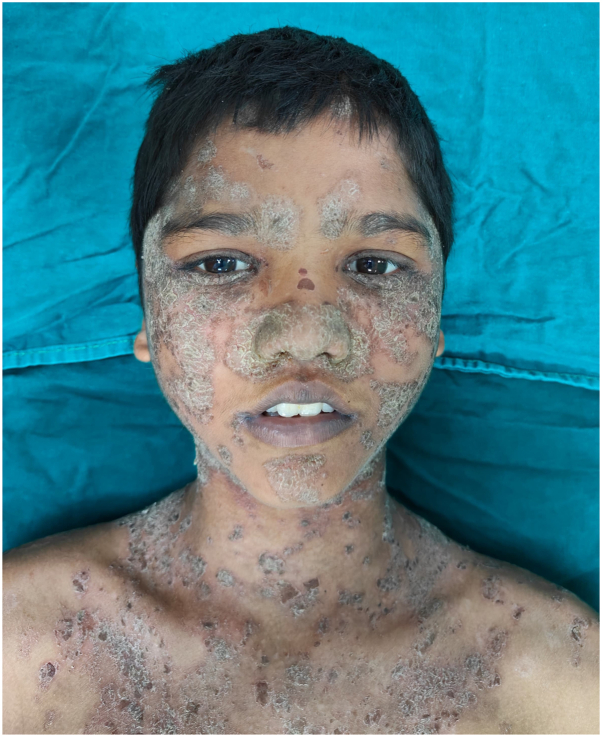 Figure 1
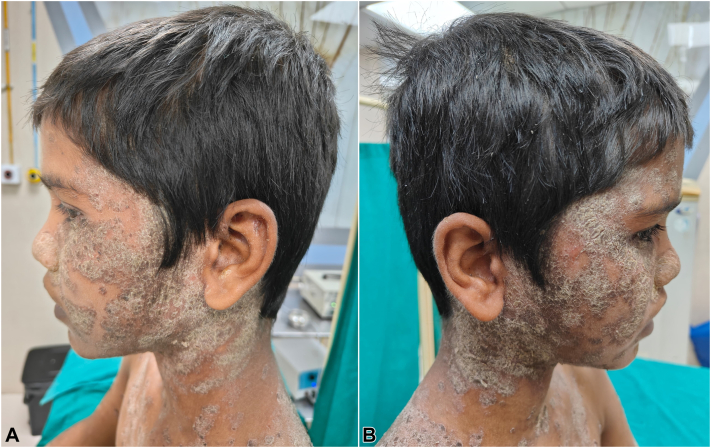 Figure 2
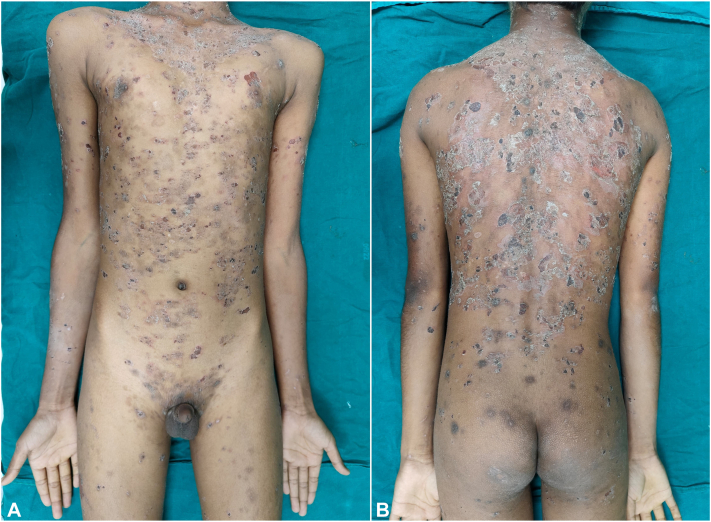 Figure 3
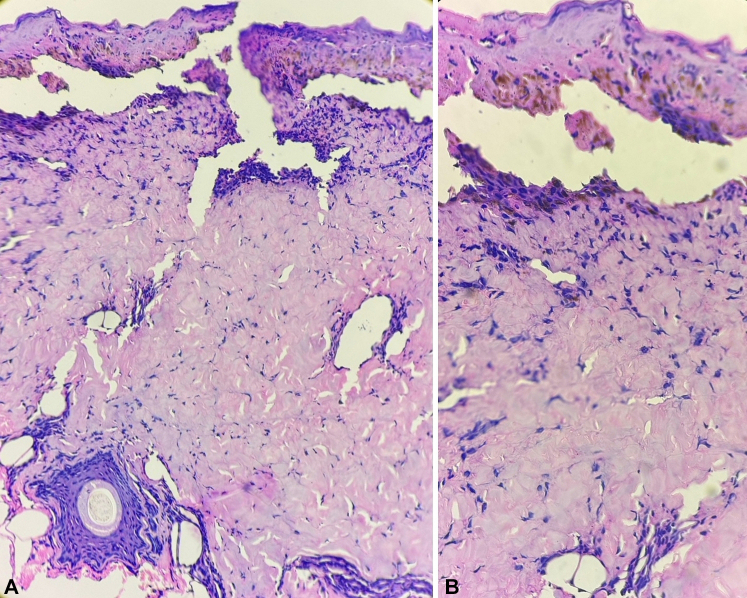 Figure 4
Peer Reviews
No public reviews on file for this paper yet. If you reviewed it on a platform where reviews are public (OpenReview, ICLR, NeurIPS, ICML), you can paste yours below so the community can read it here.
Videos
No videos yet. Explain this paper in a talk, walkthrough, or lecture? Add one.
Taxonomy
TopicsAutoimmune Bullous Skin Diseases · Coagulation, Bradykinin, Polyphosphates, and Angioedema · Urticaria and Related Conditions
To the Editor: We read “Pediatric pemphigus herpetiformis treated with rituximab” by Hamed et al with great interest.1 The case reports a rare occurrence successfully controlled by rituximab, after attempts to taper corticosteroids caused disease relapse. While rituximab is Food and Drug Administration approved for pemphigus vulgaris in adults, studies have shown its safety and effectiveness in pediatric patients as well.2, 3, 4, 5 Desmoglein 1 (Dsg 1) levels were not measured by the author, which could have predicted disease severity and guided treatment with early rituximab intervention.
We recently came across a case of pediatric pemphigus foliaceous in a 12-year-old boy with extensive erosions and crusted adherent scaly plaques, concentrated over the face, ears, scalp, neck, and trunk (Fig 1, Fig 2, Fig 3). Mucosae were not involved. Histopathology revealed intraepidermal acantholytic bullae with lymphocytic dermal infiltrate (Fig 4). Dsg 1 levels were significantly raised (>200 RU/mL), confirming the diagnosis. Prednisolone (1 mg/kg/day) and azathioprine (50 mg/day) prescribed over a month showed minimal improvement. Similar to the reported case, remission was eventually achieved with 2 sequential doses of rituximab 375 mg/m^2^, administered 2 weeks apart.Fig 1. Multiple erosions and crusted scaly plaques over face, scalp, neck, and upper chest.Fig 2. Multiple crusted scaly plaques over: (A) left half of the face, ear, and neck; (B) right half of the face, ear, and neck.Fig 3. Multiple erosions and crusted scaly plaques over: (A) chest, abdomen, and anterior aspect of arms and thighs; (B) back, buttocks, and posterior aspect of arms.Fig 4. Histopathological examination showing intraepidermal acantholytic bulla with sparse dermal lymphocytic infiltrate [hematoxylin and eosin, (A) 40×; (B) 100×].
Early administration of rituximab is associated with a better long-term outcome and prolonged remission.6, 7, 8, 9 Yuval et al recommend it as a first-line treatment, owing to a better side effect profile compared to long-term corticosteroid usage, especially in the pediatric population.5 High Dsg 1 levels should prompt clinicians to intervene early with rituximab rather than waiting for the disease to become recalcitrant. Dsg 1 levels on follow-up can additionally guide maintenance therapy if required.
Conflicts of interest
None disclosed.
The reference list from the paper itself. Each links out to its DOI / PubMed record.
- 1Hamed M.Krausz J.Ziv M.Barak E.C.Pediatric pemphigus herpetiformis treated with rituximab JAAD Case Rep 542024981043968706910.1016/j.jdcr.2024.09.009PMC 11648185 · doi ↗ · pubmed ↗
- 2Fermin C.R.Smidt A.C.28137 Pediatric pemphigus foliaceus and rituximab treatment J Am Acad Dermatol 8532021 AB 175
- 3Patel M.H.Brumfiel C.M.Bohrer N.Marsch A.F.Efficacy of rituximab in pediatric pemphigus: a literature review JAAD Int 620226103482523110.1016/j.jdin.2021.10.002PMC 8605268 · doi ↗ · pubmed ↗
- 4Santiago-Vázquez M.González-Molina V.J.Rodriguez-Ramos F.M.Colón-Fontanez F.Carrasquillo O.Y.Successful treatment of recalcitrant pediatric pemphigus vulgaris with rituximab Clin Pediatr (Phila)62620235415473644737510.1177/00099228221140801 PMC 10676037 · doi ↗ · pubmed ↗
- 5Renert-Yuval Y.Baum S.Greenberger S.Diagnosis, treatment, and long-term outcomes of pediatric pemphigus: a retrospective study at tertiary medical centers Int J Dermatol 63122024175517603881903410.1111/ijd.17251 PMC 11589010 · doi ↗ · pubmed ↗
- 6Balighi K.Daneshpazhooh M.Mahmoudi H.Comparing early and late treatments with rituximab in pemphigus vulgaris: which one is better?Arch Dermatol Res 3111201963693050642210.1007/s 00403-018-1881-1 · doi ↗ · pubmed ↗
- 7Balighi K.Daneshpazhooh M.Akbari Z.Tavakolpour S.Azimi P.Azizpour A.Comparing the short-term therapeutic effects and safety profiles of rituximab therapy in pemphigus vulgaris patients either early treated or later than six months J Dermatol Treat 304201934634910.1080/09546634.2018.150904930081690 · doi ↗ · pubmed ↗
- 8Song A.Jang J.Lee A.Clinical impact and a prognostic marker of early rituximab treatment after rituximab reimbursement in Korean pemphigus patients Front Immunol 13202293290910.3389/fimmu.2022.932909 PMC 937932535983042 · doi ↗ · pubmed ↗