Comparison of the Catquest-9SF and Cat-PROM5 Patient-Reported Outcome Measures: A Literature Review
Jesse M Britt, Austin C Ellyson

TL;DR
This paper compares two patient-reported outcome measures for cataract surgery, highlighting their strengths and weaknesses for assessing quality of life improvements.
Contribution
A systematic review comparing the psychometric properties and practical advantages of Catquest-9SF and Cat-PROM5 for postoperative cataract patients.
Findings
Both Catquest-9SF and Cat-PROM5 show excellent psychometric performance with high reliability and responsiveness.
Cat-PROM5 is preferred by patients due to fewer questions and larger font size, while Catquest-9SF is more versatile for other ocular conditions.
Catquest-9SF is validated in multiple languages and has more data, making it suitable for broader use.
Abstract
Patient-reported outcome measures (PROMs) have become increasingly more popular in modern medicine. The use of validated, precise, and succinct PROMs is necessary to accurately assess for changes in patients’ quality of life (QoL) postoperatively and keep pace with high-volume surgery clinics. Cataract surgery is one of the most performed surgeries worldwide. The Catquest-9SF and Cat-PROM5 are PROM tools for assessing QoL improvement in postoperative cataract patients. The aim of this review is to present the advantages and disadvantages of the Catquest-9SF and the Cat-PROM5 and to discuss the clinical relevance of each. A PubMed search was performed without field restrictions for “Catquest-9SF” and “Cat-PROM5”, dated January 2009 to March 14, 2025. This identified 105 articles: 95 of those referenced the Catquest-9SF, 11 of those referenced the Cat-PROM5, and one of those referenced…
Genes, proteins, chemicals, diseases, species, mutations and cell lines named across the full text — each resolved to its canonical identifier and authoritative record.
Click any figure to enlarge with its caption.
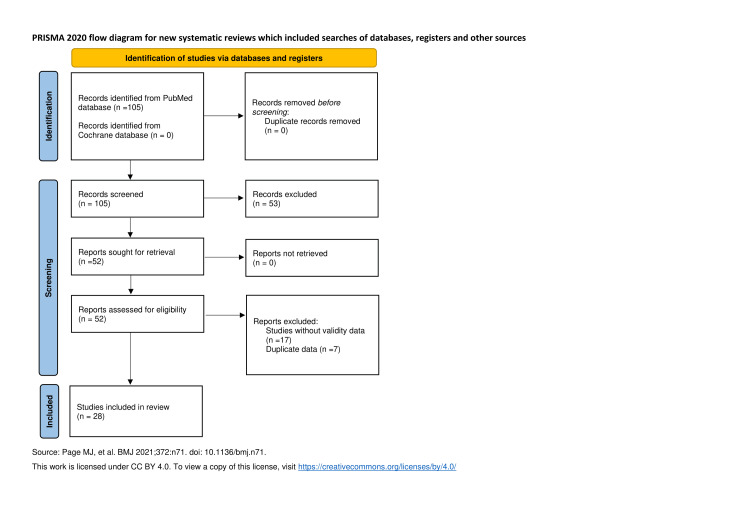 Figure 1
| PROM | Years in service | Response items | Length in one-sided pages | Validity studies * | Languages | Adaptability studies ** | Test-Retest Reliability *** |
| Catquest-9SF | 16 | 9 | 2 | 32 | 12 | 3 | 0.85-0.93 |
| Cat-PROM5 | 7 | 5 | 6 | 4 | 2 | 2 | 0.87-0.89 |
Peer Reviews
No public reviews on file for this paper yet. If you reviewed it on a platform where reviews are public (OpenReview, ICLR, NeurIPS, ICML), you can paste yours below so the community can read it here.
Videos
No videos yet. Explain this paper in a talk, walkthrough, or lecture? Add one.
Taxonomy
TopicsHealth Systems, Economic Evaluations, Quality of Life · Pelvic floor disorders treatments · Clinical practice guidelines implementation
Introduction and background
Cataracts are the leading cause of blindness worldwide and account for half of all blindness in developing countries and 5% in developed countries. As such, cataract surgery is one of the most performed procedures globally [1]. The traditional outcome metric of monocular visual acuity is not perfect at assessing patient improvement post-operatively, and an effort has been made to focus on patient-reported outcome measures (PROMs) to gauge quality of life improvement [2]. In the field of ophthalmology, the two PROMs deemed to be most useful in assessing post-operative cataract patients are the Catquest-9SF, originally developed by Lundström and Pesudovs (2009) [3], and the Cat-PROM5, originally developed by Sparrow et al., (2018) [4] which can be seen in Appendix Figures 2-3 and Appendix Figures 4-9, respectively. Several advantages and disadvantages of Catquest-9SF and Cat-PROM5 exist, but only one study was found that directly compared the two [5]. This review will discuss the potential pros and cons of either PROM tool regarding length, validity, adaptability, and psychometric properties.
Review
Methods
A literature search was performed on PubMed database without field restrictions for search terms of “Catquest-9SF” and “Cat-PROM5”, dated January 2009 to March 14, 2025. A review of Cochrane database was also performed using the same terms on March 14, 2025, that yielded no additional items. Inclusion criteria included randomized control trials, meta-analyses, systematic reviews, clinical studies, comparative studies, reviews, observational studies, and validity studies. Exclusion criteria included articles that did not publish validity data. This identified 105 articles: 95 of those referenced the Catquest-9SF, 11 of those referenced the Cat-PROM5, and one of those referencing both. These were screened by both authors independently for relevance using aforementioned inclusion criteria. This provided a total of 52 studies, eight studies focused on Cat-PROM5, 46 focused on Catquest-9SF, and one study with both. Of these 52 studies, 35 studies were determined to have published validity data with 32 studies evaluating Catquest-9SF, four studies evaluating Cat-PROM5, and one study evaluating both. The remaining 35 articles were then screened for duplicate data. It was determined that seven of those articles had data published in a previous systematic review. These were excluded as the data were accessible in the review and the source articles did not further contribute to the discussion. The remaining 28 articles were then screened for languages each PROM tool was validated in and validation studies outside of traditional postoperative cataract assessment. Given the narrative scope of the study, data from these studies was unaltered and presented as a range. Preferred Reporting Items for Systematic reviews and Meta-Analyses (PRISMA) flowchart is given in Figure 1 [6].
PRISMA 2020 flow diagram for new systematic reviews which included searches of databases, registers and other sourcesSource: Page et al. (2021) [6]. This work is licensed under CC BY 4.0. To view a copy of this license, visit https://creativecommons.org/licenses/by/4.0/. PRISMA: Preferred Reporting Items for Systematic reviews and Meta-Analyses.
Catquest-9SF
The Catquest-9SF is a nine-item PROM assessment tool that was developed in 2009 by Lundstrom and Pesudovs looking at data collected from 1995 to 2005 from 10,486 questionnaires [3]. Since that time, the Catquest-9SF has been used in over 100 studies and applied to millions of postoperative cataract patients [7]. Despite having nine items, the survey fits on two single-sided sheets or one double-sided sheet of paper with a font size ranging from 12 to 18 (Appendix Figures 2-3). The Caquest-9SF has been validated via Rasch analysis in 12 different languages (Chinese, Danish, Dutch, English, French, German, Italian, Malay, Portuguese, Russian, Spanish, and Swedish) and proven useful when delivered through electronic means [7-9]. The Catquest-9SF has been used in numerous studies and is considered the standard PROM by the International Consortium for Health Outcomes Measurement (ICHOM) for assessing quality of life (QoL) improvement in postoperative cataract patients [10-12]. The Catquest-9SF has also been adapted and used as a PROM for other ocular conditions and interventions such as postoperative corneal transplant or endothelial keratoplasty patients, patients with a diagnosis of Fuchs dystrophy, and post-yttrium aluminum garnet (YAG) laser capsulotomy for posterior capsular opacification (PCO) [13-16]. The Catquest-9SF also repeatably demonstrated excellent psychometric properties in numerous studies [3,5,7,10,17-23].
Cat-PROM5
The Cat-PROM5 is a five-item PROM assessment tool that was developed in 2018 by Sparrow et al. with data collected from 822 participants yielding 1,266 questionnaires demonstrating excellent responsiveness and test-retest reliability with an intra-class correlation coefficient of 0.89 [4]. The Cat-PROM5 has been used in 11 PubMed indexed studies, eight of which are cited here [4,5,24-29]. Given the overall format and larger font size ranging from 14.02-36, the Cat-PROM5 requires six single-sided sheets of paper or three double-sided sheets of paper (Appendix Figures 4-9). The Cat-PROM5 has been validated and directly compared to the Catquest-9SF and found to have similar psychometric properties [5]. In a study by Faneli et al., the Cat-PROM5 was recently translated and validated via Rasch analysis in Brazilian Portuguese [29]. The Cat-PROM5 also demonstrated additional utility for assessing patient QoL measures regarding giant cell arteritis [25].
Results
Comparison
The Catquest-9SF and Cat-PROM5 were compared (Table 1) using some basic metrics to provide a broad overview of the two assessment tools. The Catquest-9SF has been functioning over twice as long as the Cat-PROM5 and as such also has eight times as many validation studies. However, the Cat-PROM5 has nearly half the response items when compared to the Catquest-9SF. Although the Catquest-9SF has more response items, the Cat-PROM5 takes up three times as many pages likely due to the larger font size. Regarding languages, Catquest-9SF has been translated and validated in 12 distinct languages [7] and validated for use on electronic platforms [7-9], whereas the Cat-PROM5 has been translated and validated in English [4] and Portuguese [29]. However, both the Catquest-9SF and the Cat-PROM5 display additional functions aside from assessing postoperative cataract patients with four studies identified for the Catquest-9SF and two for the Cat-PROM5 that were not pertaining to the assessment of pre- and postoperative cataract patients [13-16,25,26]. The psychometrics of the two QoL assessment tools does not differ drastically with Catquest-9SF having a test-retest reliability range of 0.85-0.93 and the Cat-PROM5 having a range of 0.87-0.89 (Table 1). The primary disadvantage of both the Catquest-9SF and the Cat-PROM5 would be design focused around the assessment of postoperative cataract patients. This differs from a more general and comprehensive QoL assessment tool of ocular health and vision impairment, like the National Eye Institute Visual Function Questionnaire 25 (NEI-VFQ-25) [2].
Discussion
The Catquest-9SF has the advantage over the Cat-PROM5 in that it has been functioning for a longer period and thus has more studies supporting it and the endorsement of ICHOM as the “standard” PROM for assessment of QoL improvement in postoperative cataract patients [2,10,11]. However, the Cat-PROM5 has fewer response items with a larger font that was preferred by patients over the Catquest-9SF [5]. Likewise, the age of the Catquest-9SF could be perceived as a disadvantage given that the wording and phrasing of response items such as Item C (Appendix Figures 2-3) “…seeing to do handicrafts, woodwork” can seem a bit dated. This has been reported as a point of confusion for some patients and can seem redundant as “…seeing to engage in an activity/hobby that you are interested in” is an item as well that appears similar. The Catquest-9SF could be improved upon by removing and/or editing some of these items and would likely still achieve excellent psychometric results. When compared to the Catquest-9SF, the Cat-PROM5 takes up more pages which is likely due to overall format and increased font size (Appendix Figures 2-3, Appendix Figures 4-9). In a clinical setting, this presents issues for the Cat-PROM5 with increased printing requirements and potentially longer times for patients to complete. These factors can be important in the high-volume setting of ophthalmology. Similarly, the Cat-PROM5 has not been validated in as many different languages, cultures, or electronic mediums as the Catquest-9SF suggesting that the Catquest-9SF is likely more broadly applicable in most cases. This is not to say that the Cat-PROM5 is not equally useful, but rather that it should be applied and validated in similar context to the Catquest-9SF for a more accurate comparison. The Cat-PROM5 does offer utility outside of the traditional PROM and QoL assessment in the postoperative cataract patient [25,26], and it may perform similarly to Catquest-9SF in assessing QoL change in postoperative corneal transplants and endothelial keratoplasty, post-YAG laser procedure for PCO treatment, and measuring Fuchs dystrophy severity and impact on QoL [13-16]. Regarding test-retest reliability, the person reliability index of Catquest-9SF ranges from 0.85 to 0.93, whereas the person reliability index of Cat-PROM5 ranges from 0.87 to 0.89 (Table 1). As illustrated in Table 1, this range was reported from a list of studies available on PubMed database where Catquest-9SF has 32 validity studies compared to four validity studies for Cat-PROM5.
Future Research
Future studies comparing the Catquest-9SF and Cat-PROM5 should be conducted assessing factors such as ease of use, patient preference, psychometrics, and validity. Studies could be modeled after study done by Sparrow et al. [4]. These QoL assessment tools could also stand to be improved to increase ease of use and patient preference. For example, the Catquest-9SF could reduce the number of response items from nine to five as there is some redundancy. As for the Cat-PROM5, it may benefit from reformatting to allow the survey to fit on fewer pages. Additionally, the two tools could be combined to include the best qualities of each to form a new PROM that theoretically should have comparable psychometric properties and improved ease of use.
Conclusions
The Catquest-9SF and Cat-PROM5 were compared and determined to have similar metrics. The Catquest-9SF has been functioning over twice as long as the Cat-PROM5 and as such also has eight times as many validation studies. However, the Cat-PROM5 has nearly half the response items when compared to the Catquest-9SF. Although the Catquest-9SF has more response items, the Cat-PROM5 takes up three times as many pages likely due to the larger font size. Regarding languages, Catquest-9SF has been translated and validated in 12 distinct languages and validated for use on electronic platforms, whereas the Cat-PROM5 has been translated and validated in English and Portuguese. However, both the Catquest-9SF and the Cat-PROM5 display additional functions aside from assessing postoperative cataract patients with four studies identified for the Catquest-9SF and two for the Cat-PROM5 that were not pertaining to the assessment of pre- and postoperative cataract patients. The psychometrics of the two QoL assessment tools does not differ drastically with Catquest-9SF having a test-retest reliability range of 0.85-0.93 and the Cat-PROM5 having a range of 0.87-0.89. Ultimately, the choice of which QoL assessment to use should be individualized based on patient population, the goal of the assessment, and provider preference.
The reference list from the paper itself. Each links out to its DOI / PubMed record.
- 1Cataract and systemic disease: a review Clin Exp Ophthalmol Ang MJ Afshari NA 1181274920213342678310.1111/ceo.13892 · doi ↗ · pubmed ↗
- 2The use of patient-reported outcome research in modern ophthalmology: impact on clinical trials and routine clinical practice Patient Relat Outcome Meas Braithwaite T Calvert M Gray A Pesudovs K Denniston AK 9241020193077448910.2147/PROM.S 162802 PMC 6352858 · doi ↗ · pubmed ↗
- 3Catquest-9SF patient outcomes questionnaire: nine-item short-form Rasch-scaled revision of the Catquest questionnaire J Cataract Refract Surg Lundström M Pesudovs K 5045133520091925114510.1016/j.jcrs.2008.11.038 · doi ↗ · pubmed ↗
- 4Cat-PROM 5: a brief psychometrically robust self-report questionnaire instrument for cataract surgery Eye (Lond) Sparrow JM Grzeda MT Frost NA 7968053220182952195210.1038/eye.2018.1PMC 5898878 · doi ↗ · pubmed ↗
- 5Cataract surgery patient-reported outcome measures: a head-to-head comparison of the psychometric performance and patient acceptability of the Cat-PROM 5 and Catquest-9SF self-report questionnaires Eye (Lond) Sparrow JM Grzeda MT Frost NA 7887953220182938661910.1038/eye.2017.297PMC 5898871 · doi ↗ · pubmed ↗
- 6The PRISMA 2020 statement: an updated guideline for reporting systematic reviews Br Med J Page MJ Mc Kenzie JE Bossuyt PM 0372202110.1186/s 13643-021-01626-4PMC 800853933781348 · doi ↗ · pubmed ↗
- 7Validation and application of Catquest-9SF in various populations: a systematic review Surv Ophthalmol Kabanovski A Hatch W Chaudhary V El-Defrawy S Reid R Ahmed II Schlenker MB 3483606520203186220610.1016/j.survophthal.2019.12.002 · doi ↗ · pubmed ↗
- 8Web-based telemonitoring of visual function and self-reported postoperative outcomes in cataract care: international multicenter randomized controlled trial J Cataract Refract Surg Claessens JL Wanten JC Bauer NJ 9479555020243880901410.1097/j.jcrs.0000000000001492 PMC 11338021 · doi ↗ · pubmed ↗