Jaw Functional Orthopedics and Osteopathic Approaches As Adjunctive Treatment for Idiopathic Scoliosis: A Case Report
Patricia Valério, Maria Vasilyeva

TL;DR
A patient with idiopathic scoliosis showed improved posture after combining osteopathy with jaw functional orthopedics, suggesting this approach could enhance traditional treatments.
Contribution
This case report demonstrates the potential of jaw functional orthopedics as an effective adjunct to osteopathic treatment for idiopathic scoliosis.
Findings
The patient showed evident postural improvement within 11 months using osteopathy and jaw functional orthopedics.
Jaw functional orthopedic appliances can improve maxillo-mandibular relationships and masticatory physiology.
Mandible posture significantly influences body posture, supporting its role in scoliosis treatment.
Abstract
In this case report, we present a patient with idiopathic scoliosis who had been treated with a traditional Chenault corset for seven years without good results. After starting with osteopathy associated with jaw functional orthopedics as adjuvant therapeutics, in 11 months, the difference in posture was evident. It enhanced the effectiveness of the treatment and provided a more complete equilibrium to the patient. Jaw functional orthopedic appliances are able to change the maxillo-mandibular relationship and improve the physiology of the masticatory apparatus, including the position of the condyle inside the articular cavity. Since mandible posture has a great influence on body posture, it can be very helpful as a co-adjuvant therapy.
Genes, proteins, chemicals, diseases, species, mutations and cell lines named across the full text — each resolved to its canonical identifier and authoritative record.
Click any figure to enlarge with its caption.
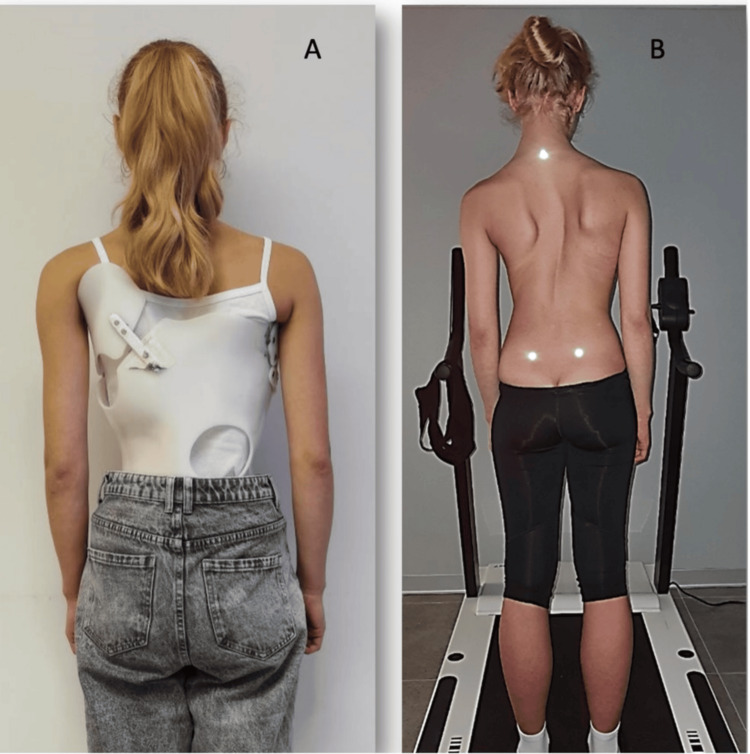 Figure 1
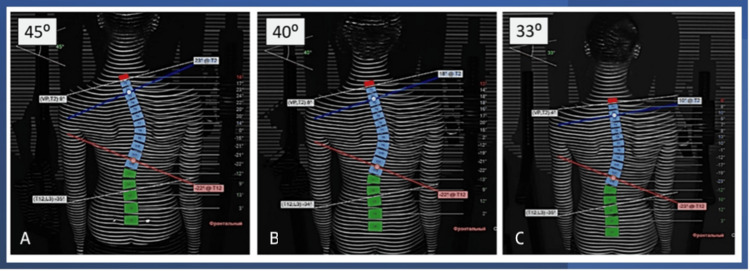 Figure 2
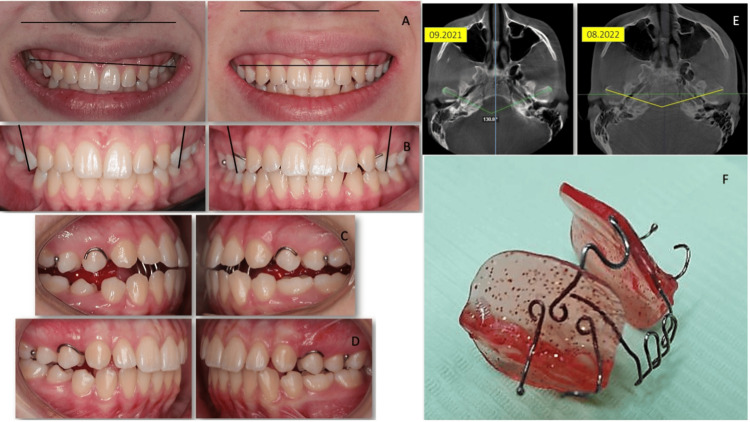 Figure 3
Peer Reviews
No public reviews on file for this paper yet. If you reviewed it on a platform where reviews are public (OpenReview, ICLR, NeurIPS, ICML), you can paste yours below so the community can read it here.
Videos
No videos yet. Explain this paper in a talk, walkthrough, or lecture? Add one.
Taxonomy
TopicsTemporomandibular Joint Disorders · Scoliosis diagnosis and treatment · Orthodontics and Dentofacial Orthopedics
Introduction
Over the last 20 years, many articles have been published emphasizing the interface between the stomatognathic system functioning and the body's balance. Musculoskeletal disorders can influence occlusion and temporomandibular biomechanics and vice versa [1-3].
Jaw functional orthopedic appliances can change the maxillo-mandibular relationship and improve the physiology of the masticatory apparatus, including the position of the condyle inside the articular cavity [4]. Osteopathic manipulative treatment has been proven to be effective in the treatment of musculoskeletal disorders [5].
In this case report, we highlight the relevance of using both therapies in an idiopathic scoliosis patient, enhancing the effectiveness of the treatment and providing a more complete equilibrium to the patient. To our knowledge, reports combining osteopathy and jaw functional orthopedics in idiopathic scoliosis are scarce.
Case presentation
A 15-year-old girl presented to our clinic with severe scoliosis. The girl was a gymnast up to eight years old when the scoliosis appeared. From that time, she started to use the Chenault corset and stay under the Katharina Schroth method of treatment (Figure 1).
Severe scoliosis.Posterior view of the patient: (A) With corset; (B) without corset.
However, no significant improvement was observed, and the family tried to search for other specialists. Finally, she attended a consultation with an osteopath (Dr. Grigory S. Perevezentsev), who realized that the stomatognathic system imbalance had an important influence on the maintenance of the scoliosis. He referred the patient to the first author, who is also an osteopath and functional orthodontist (also called a jaw functional orthopedist). The patient started to use a jaw functional appliance created by the author (patent RU221179U1), which provided mandible and tongue posture changes, blocking the lateral movements for some time, aiming to recover the correct functioning of muscles from the spinal and lateral chains, which are directly connected to the stomatognathic system muscles. The improvement in the severity of scoliosis was evident, as shown by the sequence of images (Figure 2).
Scoliosis evolution.(A) Before treatment: VP-DM lateral deviation in the thoracic region: 48 mm; vertical deviation: -24 mm; pelvic tilt: 5 mm; kyphosis angle: 22°; lordosis angle: -24°; Cobb angle: 45°.(B) After seven months: VP-DM lateral deviation in the thoracic region: 26 mm; vertical deviation: -19 mm; pelvic tilt: 0 mm; kyphosis angle: 23°; lordosis angle: -22°; Cobb angle: 40°.(C) After 11 months: VP-DM lateral deviation in the thoracic region: 26 mm; vertical deviation: -3 mm; pelvic tilt: 0 mm; kyphosis angle: 16°; lordosis angle: -19°; Cobb angle: 33°.VP-DM: vertebral prominence-dorsal median line distance
The evolution of occlusion and position of the condyle on the temporomandibular joint, as well as the functional appliance used, is shown in Figure 3.
Jaw functional orthopedics treatment.Left panel: Occlusion of the patient before (A, B) and after Jaw Functional Orthopedics treatment (C, D).Right panel: Upper: CBCT images of the temporomandibular joint before and after treatment (E). Lower: Jaw Functional Orthopedics appliance (F).CBCT: cone beam computed tomography
Discussion
Static and dynamic body postures are a complex process. For the correct establishment of posture, the integration of afferences from the somesthetic, visual, and vestibular systems to the central nervous system, where information is decodified and generates efferences to adjust posture, is necessary [6]. Idiopathic scoliosis is a deformity without a clear etiology, and in recent years, many researchers have focused on the influence of the stomatognathic system on body posture and specifically the interface between occlusal alterations and scoliosis [7]. A recent study confirmed that there is a connection between malocclusion and scoliosis, suggesting that multi-professional approaches must be adopted, as early as possible, to avoid the progression of the pathology [8]. Another recent study revealed that rapid palatal expansion (a very common procedure adopted in orthodontics where the palatal suture is forced to open using high levels of mechanical force) worsened the degree of scoliosis in patients under orthopedic treatment [9]. Our case reinforces all these points. While therapeutics have focused only on the spine, the results have been poor. As soon as the stomatognathic system was equilibrated, the case completely changed in evolution. Unlike prior studies that have primarily explored rapid palatal expansion or traditional orthodontics, this case illustrates how a non-invasive, functional orthopedic approach, when combined with osteopathy, can lead to measurable postural improvement. Jaw functional orthopedics uses mandible and tongue posture changes to equilibrate the occlusion [10]. The appliance used in this study was constructed according to the protocol described in Appendix A. In addition to traditional methods, DIERS Formetric 4D (DIERS International GmbH, Schlangenbad, Germany) was used to evaluate the improvement in the severity of scoliosis. This examination elucidates, via dynamic images, the changes in posture and has recognized reliability [11]. Mouth and foot evaluations were also extremely important, considering that the first author had previously reported that the inclination of the tibia is closely related to the patient's dental occlusion [12].
Conclusions
In general, our result emphasizes the necessity of the integration of osteopathic and jaw functional orthopedic approaches in connection with orthopedics to improve the results of the treatment and, consequently, the quality of life of patients with idiopathic scoliosis. This is a single case, and further studies are needed to confirm generalizability.
The reference list from the paper itself. Each links out to its DOI / PubMed record.
- 1The relationship between the stomatognathic system and body posture Clinics (Sao Paulo) Cuccia A Caradonna C 61666420091914255310.1590/S 1807-59322009000100011 PMC 2671973 · doi ↗ · pubmed ↗
- 2Posture and posturology, anatomical and physiological profiles: overview and current state of art Acta Biomed Carini F Mazzola M Fici C Palmeri S Messina M Damiani P Tomasello G 111688201710.23750/abm.v 88i 1.5309 PMC 616619728467328 · doi ↗ · pubmed ↗
- 3Methods of postural analysis in connection with the stomatognathic system. A systematic review J Med Life IonițăC Petre AE Cononov RS Covaleov A Mitoiu BI Nica AS 5075141620233730582110.25122/jml-2022-0327 PMC 10251373 · doi ↗ · pubmed ↗
- 4An assessment of masticatory efficiency and occlusal load distribution in adolescent patients undergoing orthodontic treatment with functional jaw orthopedics: a prospective cohort study J Stomatol Oral Maxillofac Surg Ashok S Batra P Sharma K Raghavan S Talwar A Srivastava A Duggal I 1015701242023 http://10.1016/j.jormas.2023.1015703750701010.1016/j.jormas.2023.101570 · doi ↗ · pubmed ↗
- 5Efficacy and safety of osteopathic manipulative treatment: an overview of systematic reviews BMJ Open Bagagiolo D Rosa D Borrelli F 012202210.1136/bmjopen-2021-053468 PMC 902177535414546 · doi ↗ · pubmed ↗
- 6To evaluate whether there is a relationship between occlusion and body posture as delineated by a stabilometric platform: a systematic review Cranio Álvarez Solano C González Camacho LA Castaño Duque SP Cortés Velosa T Vanoy Martin JA Chambrone L 3683794120233335714610.1080/08869634.2020.1857614 · doi ↗ · pubmed ↗
- 7Scoliosis and dental occlusion: a review of the literature Scoliosis Saccucci M Tettamanti L Mummolo S Polimeni A Festa F Tecco S 15620112180135710.1186/1748-7161-6-15PMC 3162939 · doi ↗ · pubmed ↗
- 8Malocclusion and scoliosis: is there a correlation?J Pers Med Saccomanno S Saran S Paskay LC Giannotta N Mastrapasqua RF Pirino A Scoppa F 1013202310.3390/jpm 13081249 PMC 1045508637623498 · doi ↗ · pubmed ↗