Asymmetric learning and adaptability to changes in relational structure during transitive inference
Thomas A. Graham, Bernhard Spitzer

TL;DR
Humans update beliefs more about winners than losers, which helps infer relationships but can hinder adapting when high-ranking items drop in rank.
Contribution
The study shows how winner-biased learning affects adaptability to changes in relational structures during transitive inference.
Findings
Participants learned better when a low-ranking item rose in rank than when a high-ranking item dropped.
A reinforcement learning model captured participants' winner-biased learning and adaptability.
Well-performing participants could reduce or reverse their winner bias to adapt to changes.
Abstract
Humans and other animals can generalise from local to global relationships in a transitive manner. Recent research has shown that asymmetrically biased learning, where beliefs about only the winners (or losers) of local comparisons are updated, is well-suited for inferring relational structures from sparse feedback. However, less is known about how belief-updating biases intersect with humans’ capacity to adapt to changes in relational structure, where re-valuing an item may have downstream implications for inferential knowledge pertaining to unchanged items. We designed a transitive inference paradigm involving one of two possible changepoints for which an asymmetric (winner- or loser-biased) learning rule was more or less optimal. Participants (N = 83) exhibited differential sensitivity to changes in relational structure: whereas participants readily learned that a hitherto…
Genes, proteins, chemicals, diseases, species, mutations and cell lines named across the full text — each resolved to its canonical identifier and authoritative record.
Click any figure to enlarge with its caption.
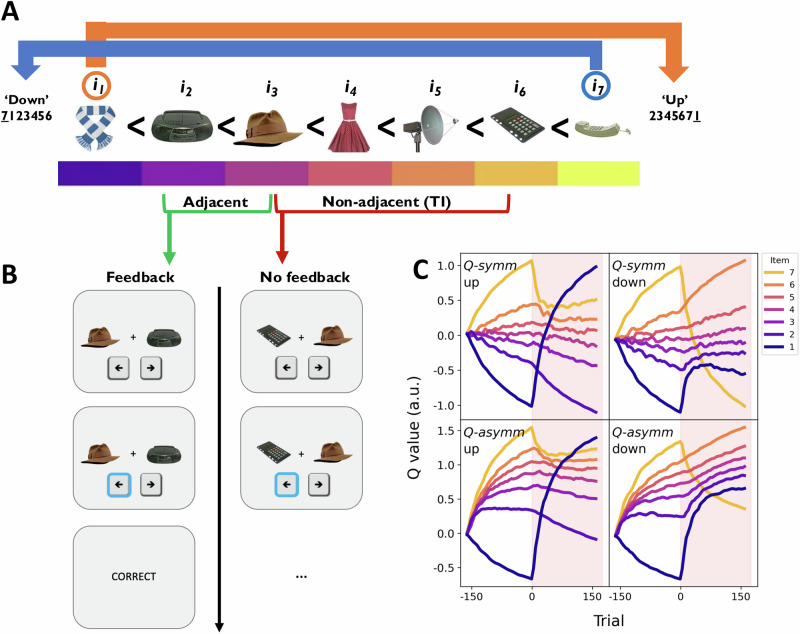 Figure 1
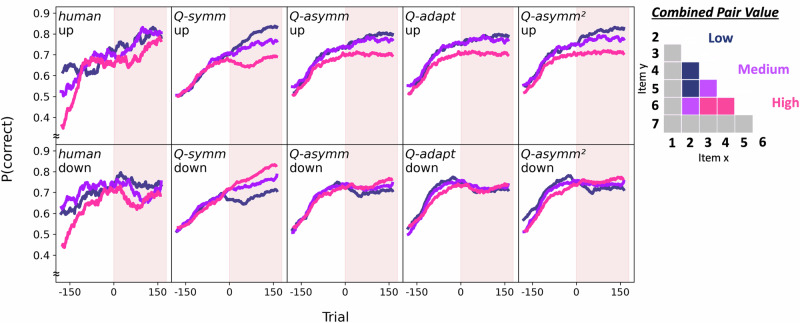 Figure 2
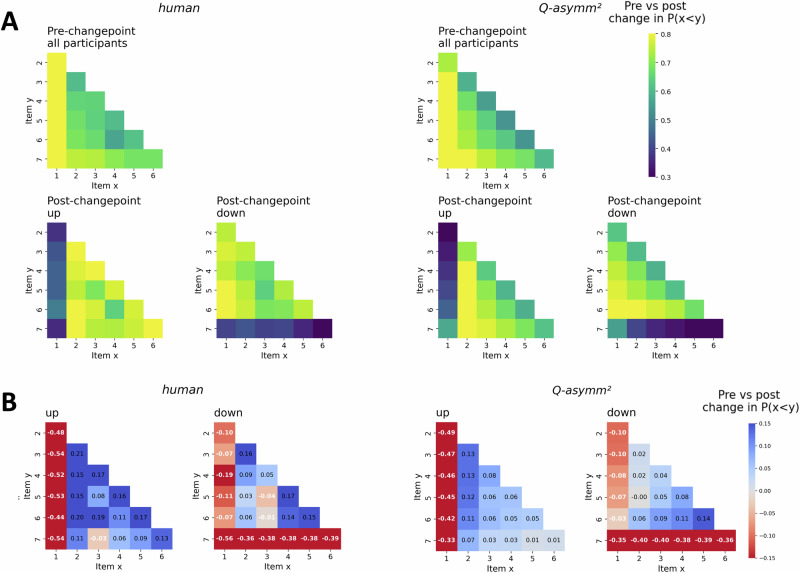 Figure 3
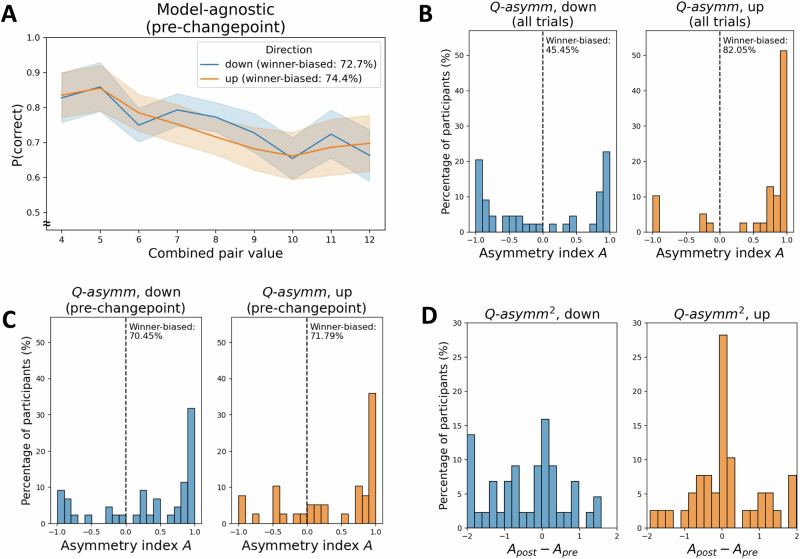 Figure 4
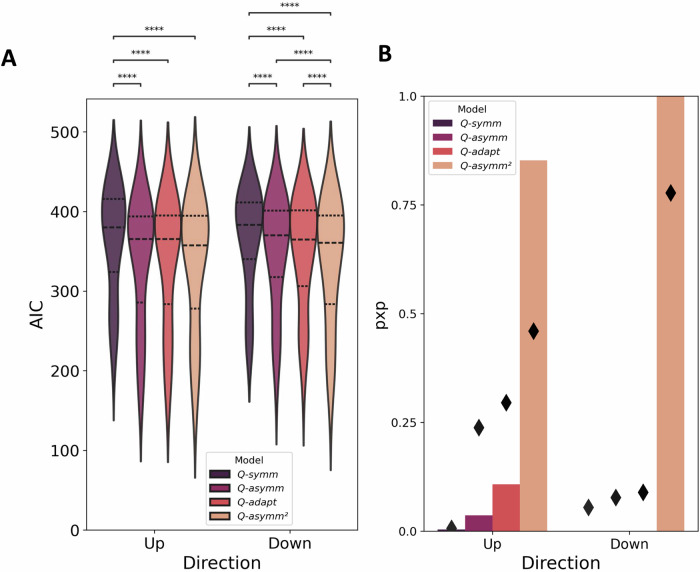 Figure 5
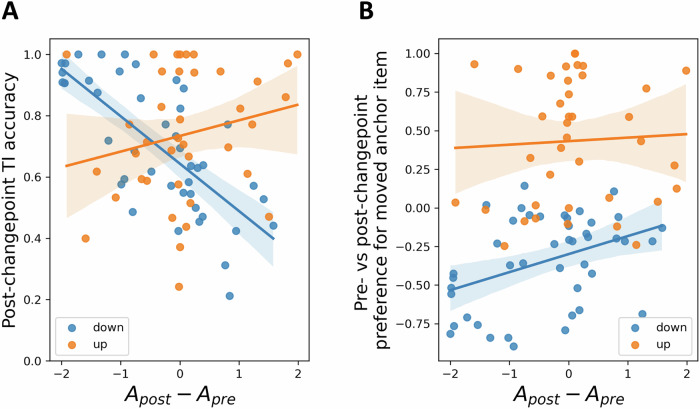 Figure 6
Peer Reviews
No public reviews on file for this paper yet. If you reviewed it on a platform where reviews are public (OpenReview, ICLR, NeurIPS, ICML), you can paste yours below so the community can read it here.
Videos
No videos yet. Explain this paper in a talk, walkthrough, or lecture? Add one.
Taxonomy
TopicsChild and Animal Learning Development · Behavioral and Psychological Studies · Language and cultural evolution