Characterization of PIVKA‐II Molecular Forms via Size Exclusion Chromatography and Hydrophobic Interaction Chromatography in HCC Patients
Yoshiyuki Kitamura, Katsumi Aoyagi

TL;DR
This study shows that PIVKA-II, a biomarker for liver cancer, exists in different molecular forms, which could improve diagnosis accuracy.
Contribution
The study reveals the molecular diversity of PIVKA-II in HCC patients using chromatography techniques.
Findings
PIVKA-II exists in two distinct molecular forms with different hydrophobicity levels.
Each form reacts differently with specific prothrombin fragments and antibodies.
This molecular diversity could enhance HCC diagnosis accuracy.
Abstract
Protein induced by the absence of vitamin K or antagonist‐II (PIVKA‐II) is an important serological biomarker for the diagnosis of hepatocellular carcinoma (HCC). The crucial epitope of PIVKA‐II comprises a series of Glu residues located in the Glu‐Gla domain. The other antibody required for the PIVKA‐II sandwich immunoassay recognizes prothrombin fragments 1 and 2. However, the molecular diversity of these regions has not been well documented. PIVKA‐II immuno‐reactivities in blood taken from HCC patients were analyzed by size exclusion chromatography (SEC) and hydrophobic interaction chromatography (HIC). Obtained fractions were subsequently tested using MU‐3 monoclonal antibody (mAb) and a polyclonal anti‐prothrombin antibody (pAb). Immuno‐reactivity in each fraction was analyzed by an inhibition assay using prothrombin fragments and by a sandwich immunoassay. SEC analysis of three…
Genes, proteins, chemicals, diseases, species, mutations and cell lines named across the full text — each resolved to its canonical identifier and authoritative record.
Click any figure to enlarge with its caption.
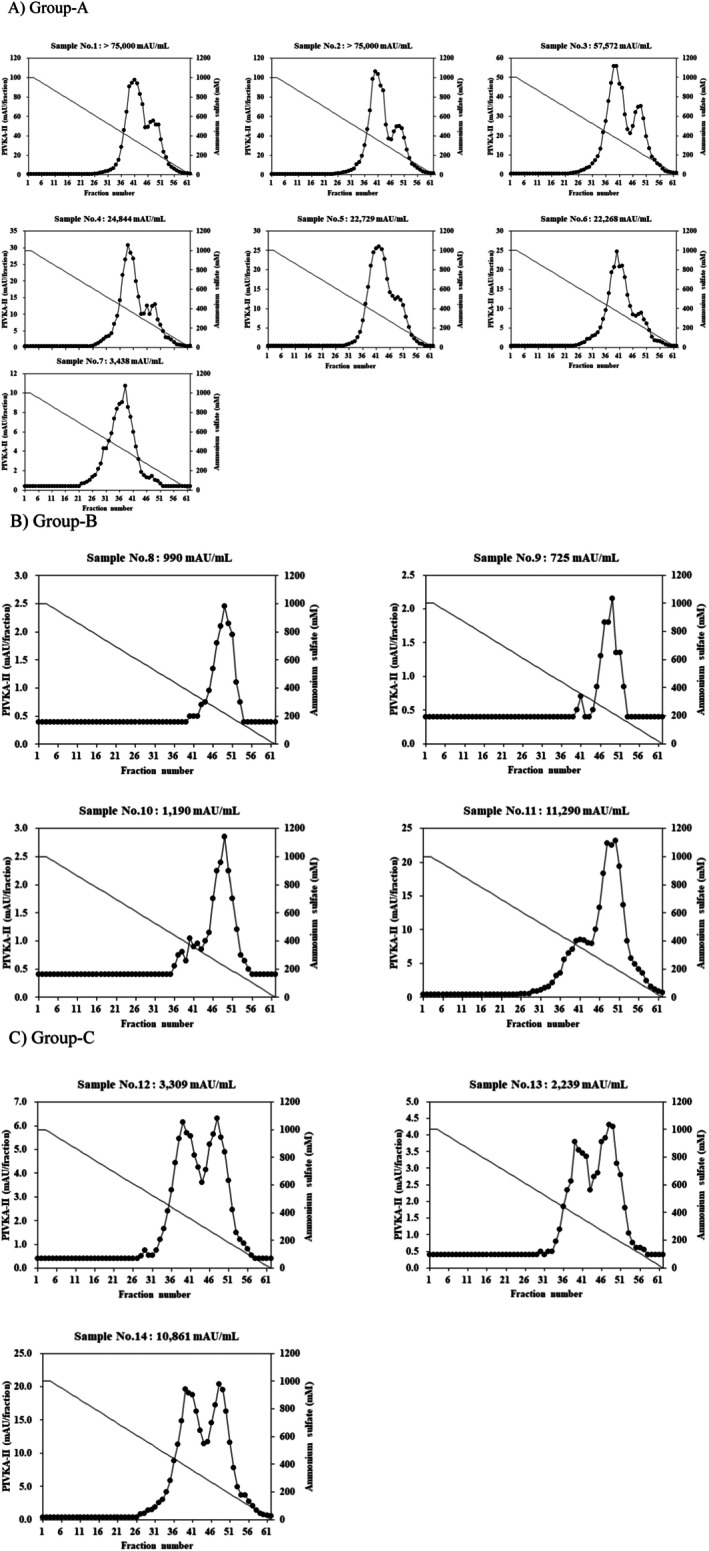 Figure 1
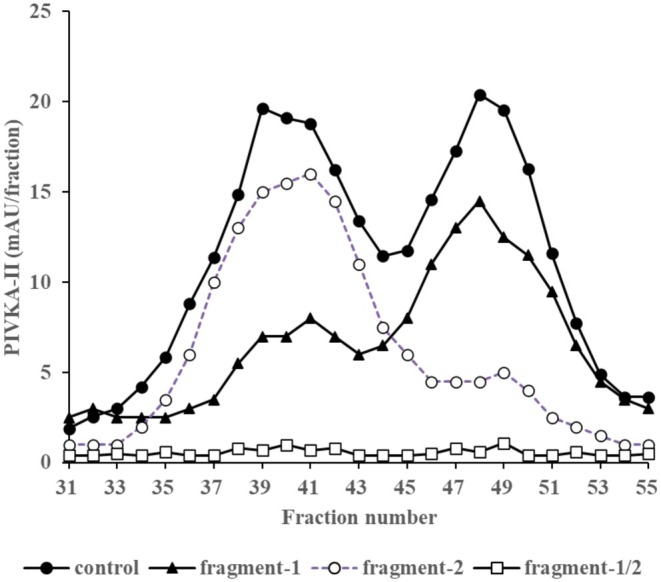 Figure 2
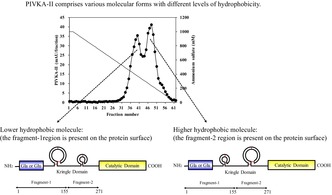 Figure 3
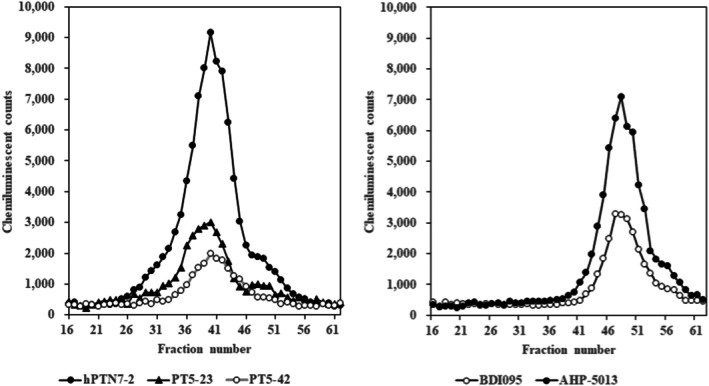 Figure 4
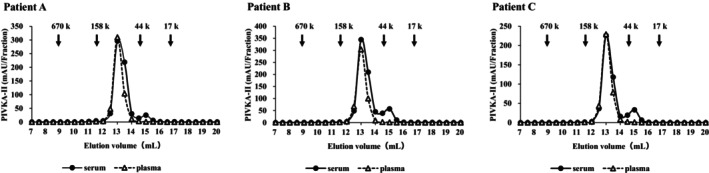 Figure 5
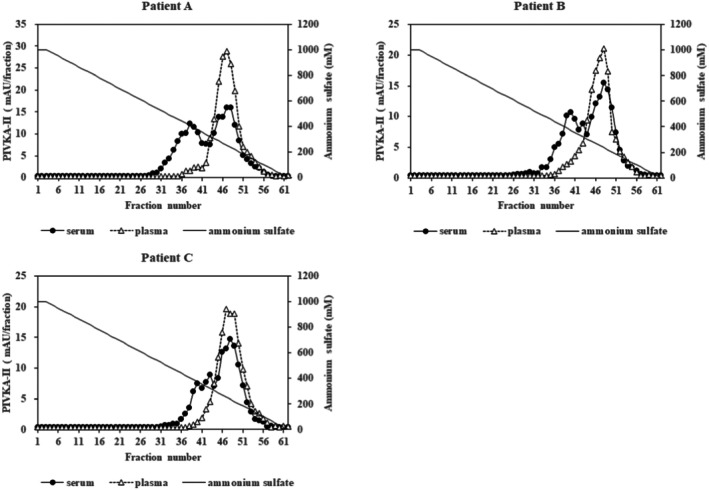 Figure 6
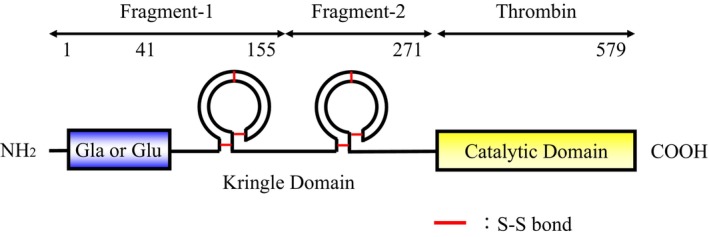 Figure 7
Peer Reviews
No public reviews on file for this paper yet. If you reviewed it on a platform where reviews are public (OpenReview, ICLR, NeurIPS, ICML), you can paste yours below so the community can read it here.
Videos
No videos yet. Explain this paper in a talk, walkthrough, or lecture? Add one.
Taxonomy
TopicsMonoclonal and Polyclonal Antibodies Research · Protein purification and stability · Hepatitis C virus research