Penile urethral anastomosis to the vesico‐urethral junction, after transabdominal wall passage of the penis, as treatment for intrapelvic stent‐related urethral obstruction in a dog
Armando Foglia, Veronica Cola, Sara Del Magno, Francesco Dondi, Roberta Troia, Stefano Zanardi, Filippo Cinti, Luciano Pisoni

TL;DR
A new surgical technique was successfully used to treat urethral obstruction in a dog by bypassing the blocked area through the abdominal wall.
Contribution
A novel surgical approach for treating stent-related urethral obstruction in dogs is described and successfully applied.
Findings
The transabdominal wall urethral anastomosis successfully bypassed the obstruction and restored urethral patency.
The dog showed no signs of recurrent urinary tract infections and maintained bladder function post-surgery.
The technique could be a viable option for dogs with severe pelvic urethral damage or obstructive lesions.
Abstract
The objective of the present study was to report the outcome of a novel technique of urethral intra‐abdominal anastomosis after transabdominal wall passage of the penis in a dog with stent‐related urethral obstruction. Case report. A seven‐year‐old neutered male Cocker Spaniel. The dog was evaluated for urinary retention and overflow incontinence of approximately 1‐year duration. The dog had a urethral self‐expanding metallic stent placed 6 years prior as treatment for pelvic urethral stricture, secondary to severe pelvic trauma. Stent fracture and stent‐related tissue hyperplasia were diagnosed leading to intrapelvic urethral obstruction and concomitant atonic bladder complicated by cystolithiasis and urinary tract infection. An intra‐abdominal urethral anastomosis was performed to restore urethral patency, after passing the penis through the abdominal wall, into the inguinal area;…
Genes, proteins, chemicals, diseases, species, mutations and cell lines named across the full text — each resolved to its canonical identifier and authoritative record.
Click any figure to enlarge with its caption.
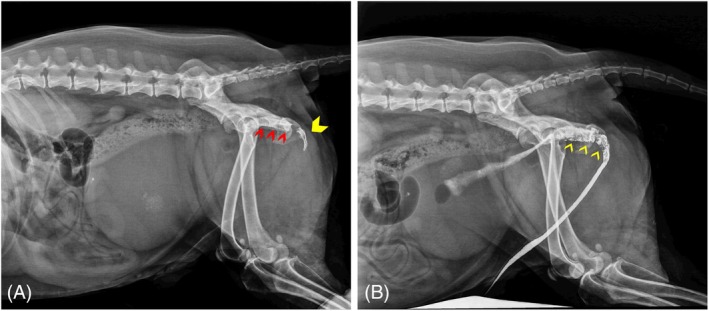 Figure 1
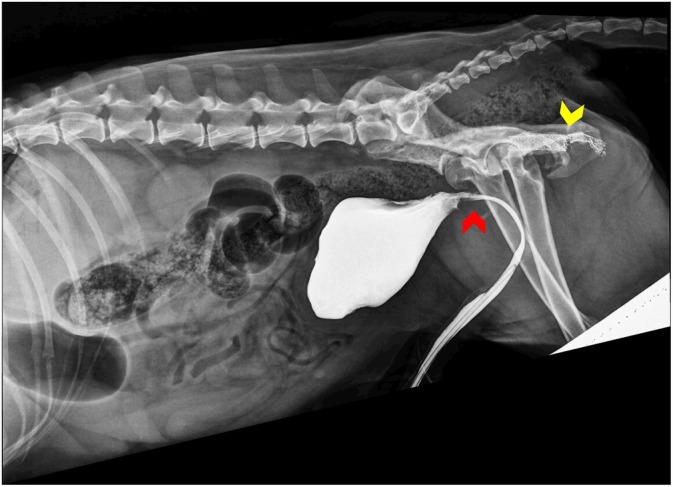 Figure 2
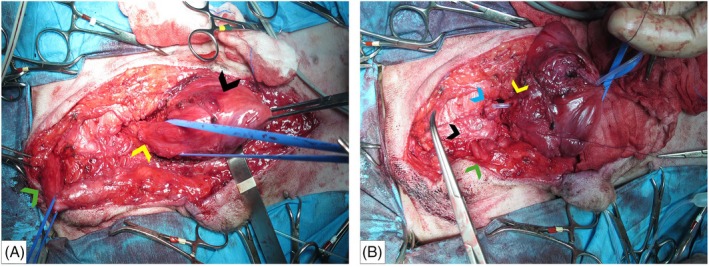 Figure 3
Peer Reviews
No public reviews on file for this paper yet. If you reviewed it on a platform where reviews are public (OpenReview, ICLR, NeurIPS, ICML), you can paste yours below so the community can read it here.
Videos
No videos yet. Explain this paper in a talk, walkthrough, or lecture? Add one.
Taxonomy
TopicsUrological Disorders and Treatments · Veterinary Medicine and Surgery · Urinary Bladder and Prostate Research