A Triplex Propidium Monoazide (PMA) qPCR Assay Enables Rapid Discrimination of Live Porcine Reproductive and Respiratory Syndrome Viruses
Xiaoyang Zhu, Wenhao Qi, Hong Lin, Yuan Wang, Yuejia Qiu, Ming Qiu, Meng Cui, Shuai Yang, Yanhan Lin, Yifan Meng, Wanglong Zheng, Jianzhong Zhu, Zeji Lu, Kewei Fan, Nanhua Chen

TL;DR
A new triplex PMA-qPCR assay can rapidly detect live PRRSV strains in swine, improving disease control by distinguishing infectious from non-infectious samples.
Contribution
Development of the first triplex PMA-qPCR assay for rapid discrimination of live PRRSV isolates in clinical samples.
Findings
The triplex PMA-qPCR assay successfully detected infectious PRRSV isolates with high specificity and sensitivity.
Out of 452 clinical samples, 65 were identified as live PRRSV-positive using the PMA-qPCR method.
Eighteen qPCR-positive but PMA-qPCR-negative samples were confirmed to be non-infectious.
Abstract
The devastating swine disease, porcine reproductive and respiratory syndrome (PRRS), can only be caused by live PRRS virus (PRRSV) infection. However, the most commonly used detection methods cannot discriminate PRRSV infectivity. Here we developed a triplex propidium monoazide (PMA) qPCR assay for differential detection of infectious PRRSV isolates (NADC34-like PRRSV-2, NADC30-like PRRSV-2, and HP-PRRSV-2) prevalent in China. First, the PRRSV inactivation strategy was selected by comparing distinct inactivation methods. Subsequently, we optimized PMA pretreatment parameters and concentrations of primers and probes. The triplex PMA-qPCR assay displayed favorable specificity, sensitivity, and reproducibility. Moreover, 452 clinical samples (environmental feces, lungs, lymph nodes (LNs), and sera) were submitted to differential detection by triplex qPCR and triplex PMA-qPCR assays. A…
Genes, proteins, chemicals, diseases, species, mutations and cell lines named across the full text — each resolved to its canonical identifier and authoritative record.
Click any figure to enlarge with its caption.
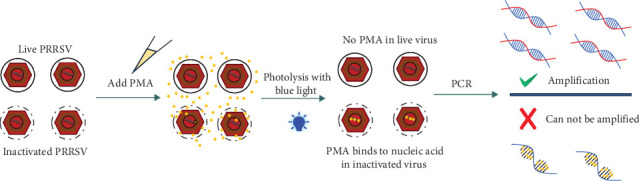 Figure 1
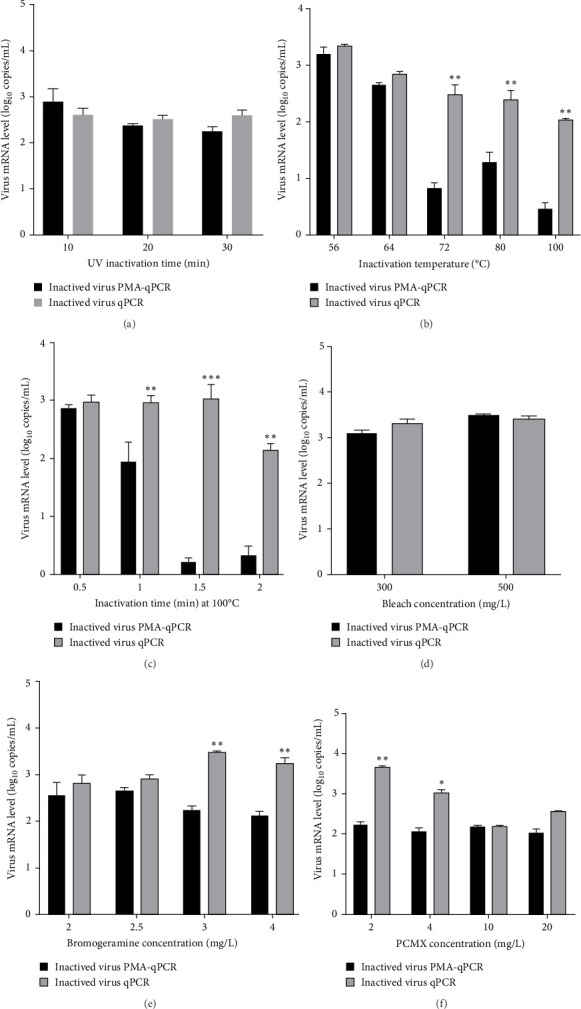 Figure 2
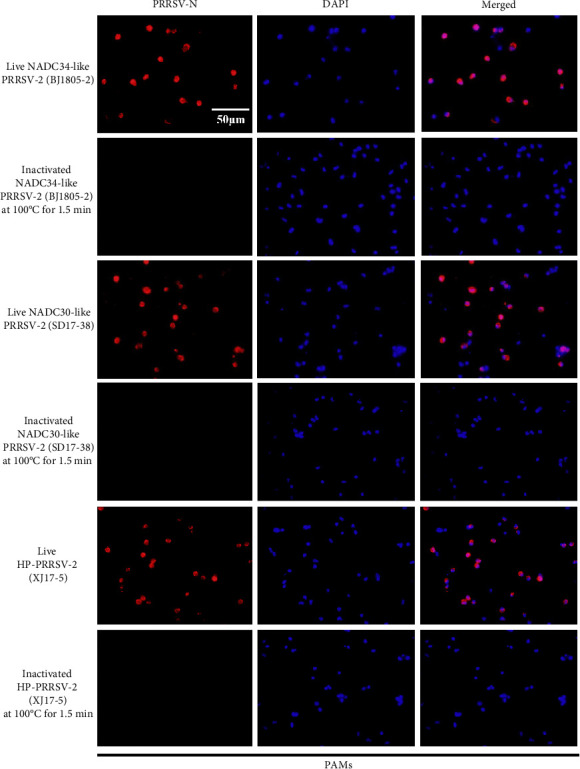 Figure 3
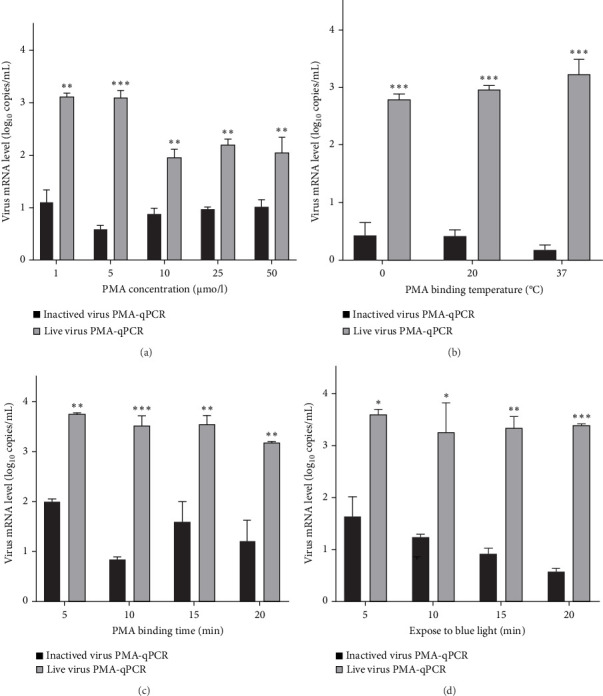 Figure 4
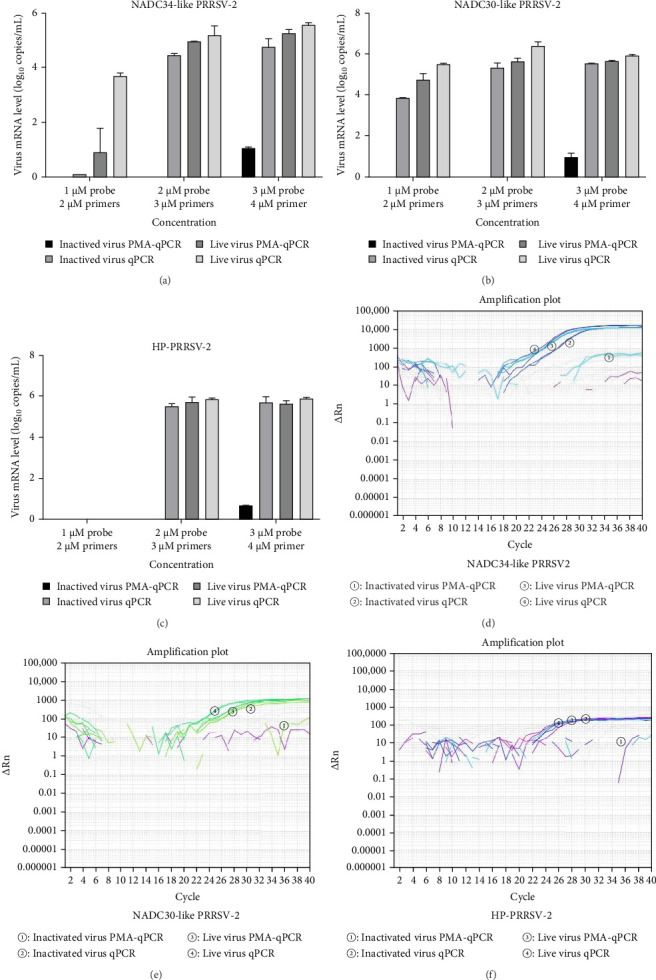 Figure 5
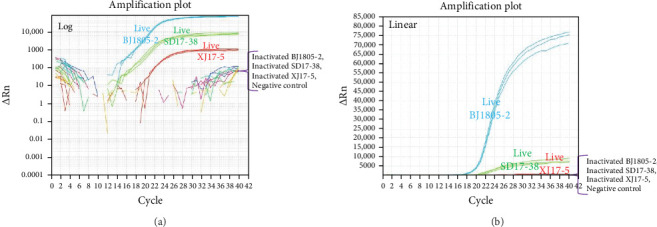 Figure 6
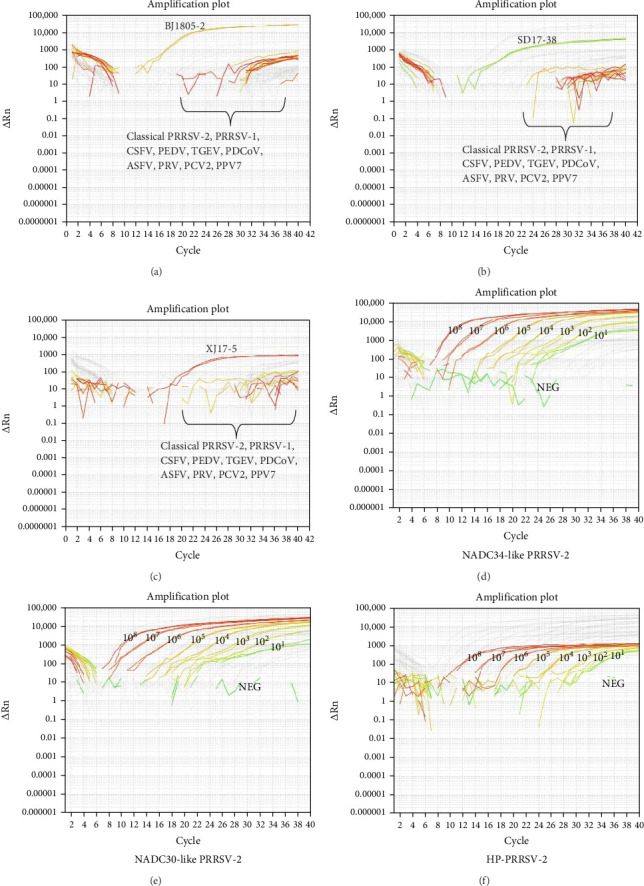 Figure 7
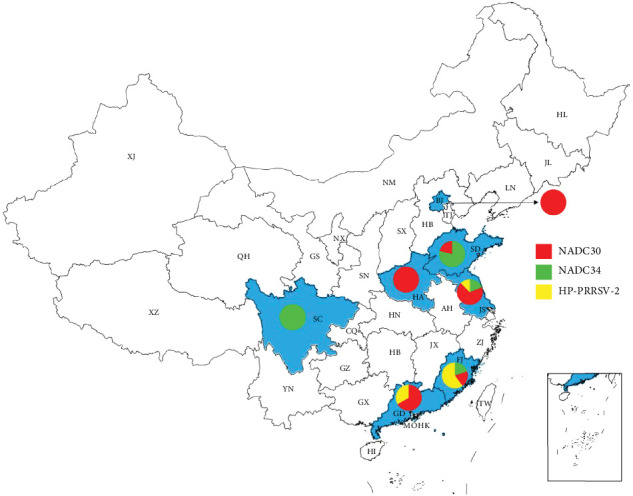 Figure 8
Peer Reviews
No public reviews on file for this paper yet. If you reviewed it on a platform where reviews are public (OpenReview, ICLR, NeurIPS, ICML), you can paste yours below so the community can read it here.
Videos
No videos yet. Explain this paper in a talk, walkthrough, or lecture? Add one.
Taxonomy
TopicsAnimal Virus Infections Studies · SARS-CoV-2 and COVID-19 Research · Viral Infections and Immunology Research