Deepithelialized punched tissue for buccal soft tissue augmentation in implant placement
Dler Ali Khursheed

TL;DR
A new technique reuses removed tissue to augment buccal soft tissue during implant placement, avoiding donor site morbidity.
Contribution
A novel, donor-site-free grafting technique using deepithelialized keratinized mucosa in guided implant workflows.
Findings
The technique improved buccal soft tissue thickness without donor site complications.
Both delayed and immediate loading cases showed stable healing and bone levels at 6 months.
Abstract
Adequate buccal soft tissue thickness is essential for long-term implant stability and aesthetics. Conventional augmentation with palatal connective tissue grafts is effective but increases morbidity and surgical time. This report presents a novel technique in which keratinized mucosa, routinely removed during guided implant placement, was preserved, deepithelialized, and reused as an autogenous graft. Two cases were treated: one with delayed loading and one with immediate loading. In both, the graft was placed into a buccal pouch and stabilized with a healing abutment. Clinical and radiographic follow-up showed uneventful healing, improved buccal soft tissue thickness, and stable peri-implant bone levels at 6 months. This technique highlights the feasibility of reusing discarded tissue as a donor-site-free grafting material within guided workflows.
Genes, proteins, chemicals, diseases, species, mutations and cell lines named across the full text — each resolved to its canonical identifier and authoritative record.
Click any figure to enlarge with its caption.
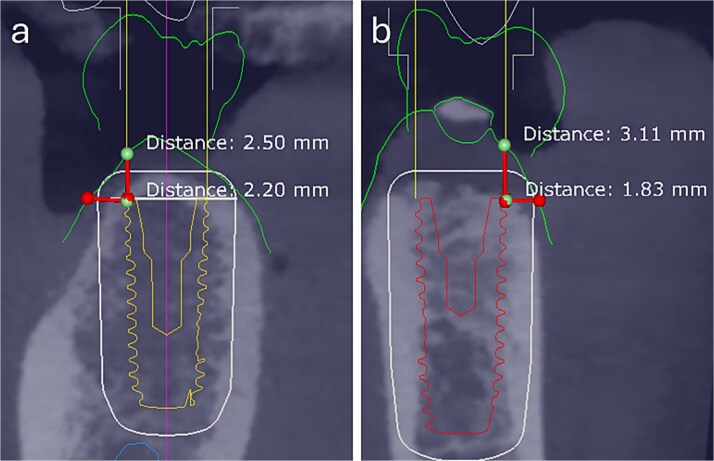 Figure 1
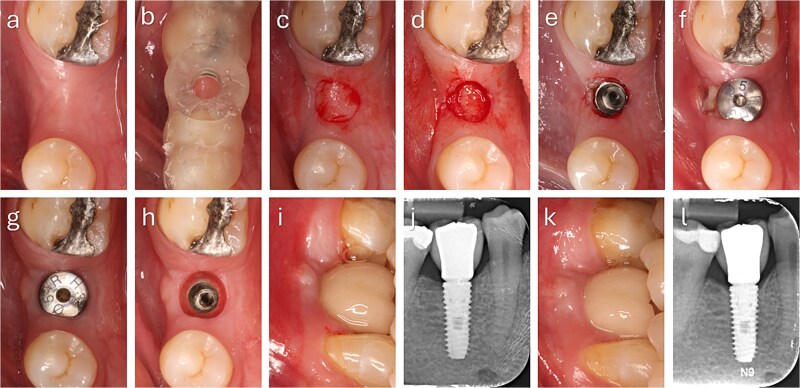 Figure 2
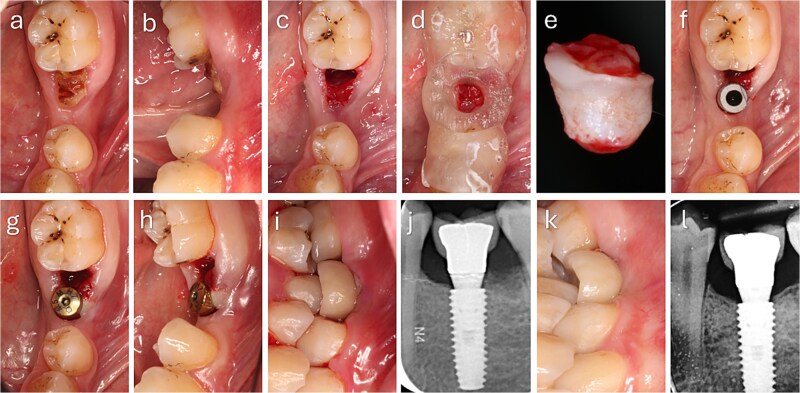 Figure 3
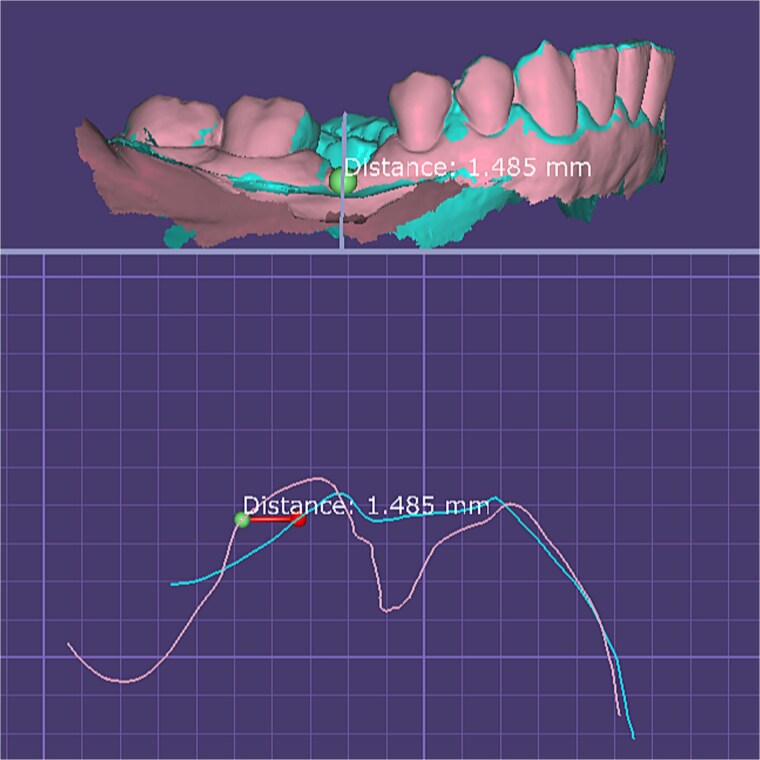 Figure 4
Peer Reviews
No public reviews on file for this paper yet. If you reviewed it on a platform where reviews are public (OpenReview, ICLR, NeurIPS, ICML), you can paste yours below so the community can read it here.
Videos
No videos yet. Explain this paper in a talk, walkthrough, or lecture? Add one.
Taxonomy
TopicsDental Implant Techniques and Outcomes · Cleft Lip and Palate Research · Periodontal Regeneration and Treatments