Antihyperglycaemic Activity of Standardised Ethanolic Extract of Swietenia macrophylla King Seeds on Goto-Kakizaki Type 2 Diabetic Rats
Meyyammai Swaminathan, Mariam Ahmad, Khairul Niza Abdul Razak, Nor Adlin Yusoff, Gabriel Akyirem Akowuah, Elaine Hui-Chien Lee, Syed Azhar Syed Sulaiman, Mun Fei Yam, Faradianna E. Lokman, Sue Hay Chan, Bey Hing Goh, Vikneswaran Murugaiyah

TL;DR
This study shows that an ethanolic extract from Swietenia macrophylla seeds helps reduce blood sugar in diabetic rats, supporting its traditional use as an anti-diabetic remedy.
Contribution
The study validates a method to quantify key bioactive compounds in the extract and demonstrates its antihyperglycemic effects in a rat model of Type 2 diabetes.
Findings
A 500 mg/kg dose of SMEE significantly reduced fasting blood glucose levels in diabetic rats.
The extract improved glucose regulation during oral glucose tolerance tests over eight days.
The RP-HPLC method accurately quantified swietenine and 3,6-O,O diacetyl swietenolide in the extract.
Abstract
Swietenia macrophylla (S. macrophylla), commonly known as “sky fruit”, belongs to the Meliaceae family and is predominantly distributed in the neotropical areas of Central America, Southern Asia and the Pacific region. The plant has a rich tradition of being utilised for its anti-diabetic properties and other health benefits. This study focused on the S. macrophylla seeds ethanolic extract (SMEE) to explore its antihyperglycemic effects in Goto-Kakizaki (GK) Type 2 diabetic rats. Bioactive compounds were extracted using maceration, and a reversed-phase high-performance liquid chromatography (RPHPLC) method was validated to separate two limonoids, swietenine and 3,6-O,O diacetyl swietenolide, from the extracts. The 500 mg/kg SMEE dosage significantly reduced fasting blood glucose levels, making it the selected treatment dose. The SMEE group consistently improved glucose regulation during…
Genes, proteins, chemicals, diseases, species, mutations and cell lines named across the full text — each resolved to its canonical identifier and authoritative record.
Click any figure to enlarge with its caption.
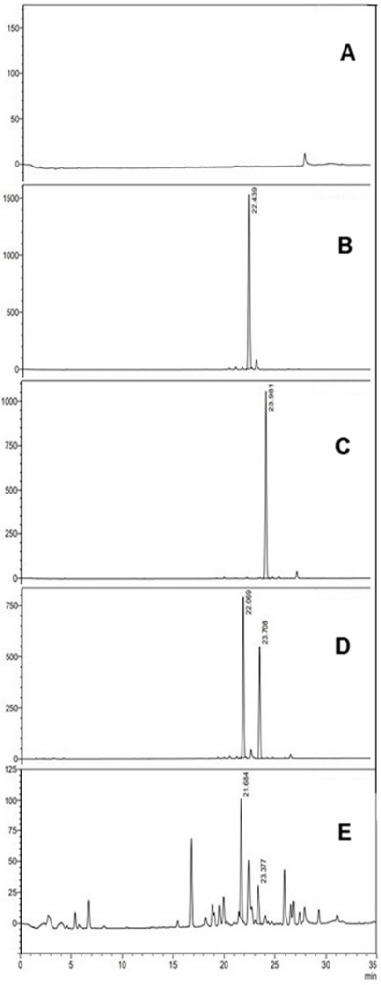 Figure 1
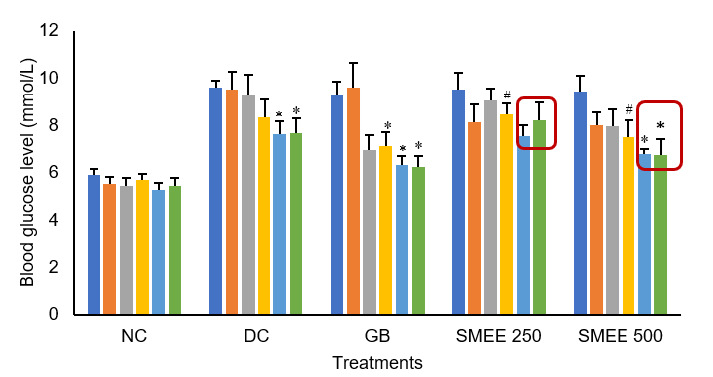 Figure 2
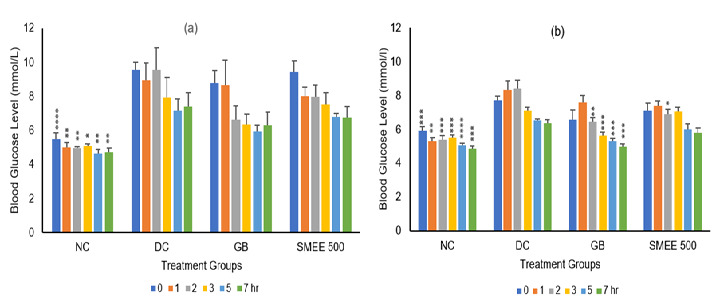 Figure 3
Peer Reviews
No public reviews on file for this paper yet. If you reviewed it on a platform where reviews are public (OpenReview, ICLR, NeurIPS, ICML), you can paste yours below so the community can read it here.
Videos
No videos yet. Explain this paper in a talk, walkthrough, or lecture? Add one.
Taxonomy
TopicsPhytochemical compounds biological activities · Multicomponent Synthesis of Heterocycles · Pineapple and bromelain studies