Establishment of High-Throughput Screening Assay using 384-Well Plate for Identification of Potent Antioxidants from Malaysian Local Plants Repository and Phytochemical Profile of Tetracera Scandens
Amyra Amat Sain, Azimah Amanah, Mohd Hasnan Mohd Noor, Wai Kwan Lau, Olalere Olusegun Abayomi, Zafarina Zainuddin

TL;DR
This study developed a high-throughput screening method to find antioxidant-rich plants in Malaysia, identifying Tetracera scandens as a potent source.
Contribution
A validated HTS-DPPH assay was established for rapid antioxidant screening of plant extracts, leading to discovery of T. scandens as a non-toxic antioxidant source.
Findings
A high-throughput DPPH assay was optimized with Z’ values of 0.72 and 0.63 for primary and secondary screening.
Tetracera scandens showed the highest antioxidant activity with an EC50 of 13.04 μg/mL in methanol extract.
The aqueous extract of T. scandens was non-toxic to normal cells with an IC50 > 100 μg/mL.
Abstract
The increasing prevalence of chronic diseases and oxidative stress-related conditions has led to a growing interest in natural products with potent antioxidant properties. High-throughput screening (HTS) assays offer a promising solution for the rapid evaluation of numerous samples. This study aims to establish a robust HTS assay using the 2-Diphenyl-1-Picrylhydrazyl (DPPH) method to identify natural products with significant antioxidant capabilities, ensuring their safety profiles through cytotoxicity screening and phytochemical profiling. An automated liquid handler with the usage of a 384-well assay plate was employed in optimising and validating the 2,2-diphenyl-1-picrylhydrazyl (DPPH)-HTS assay by calculating the metrics. The HTS metrics include Z-prime (Z’) values of 0.72 and 0.63, signal to background (S/B) ratios of 3.54 and 9.02, and coefficient of variation percentages (%C/V)…
Genes, proteins, chemicals, diseases, species, mutations and cell lines named across the full text — each resolved to its canonical identifier and authoritative record.
Click any figure to enlarge with its caption.
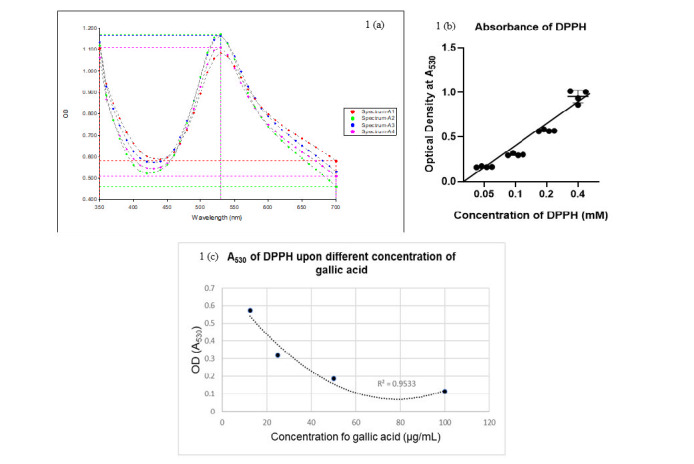 Figure 1
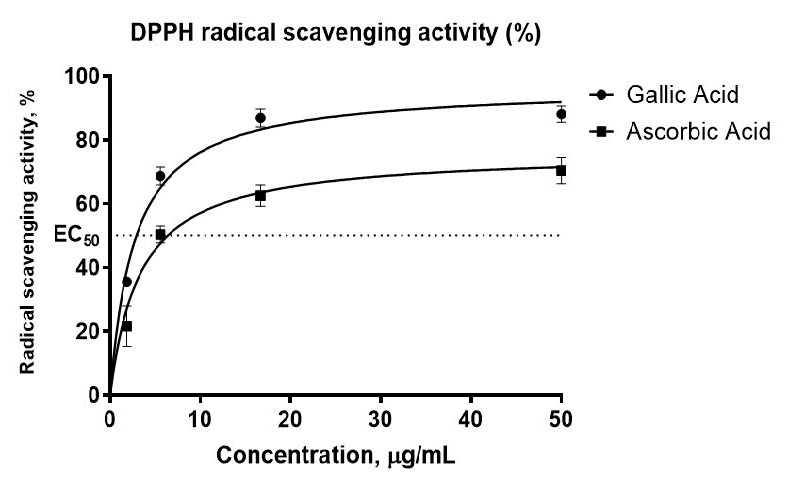 Figure 2
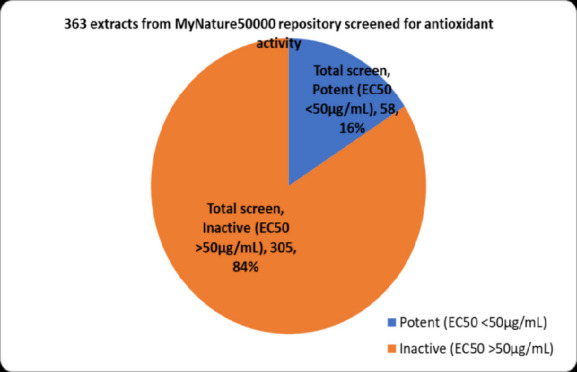 Figure 3
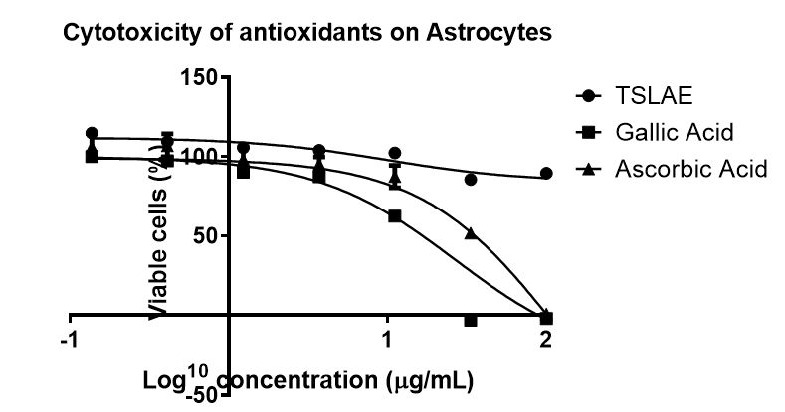 Figure 4
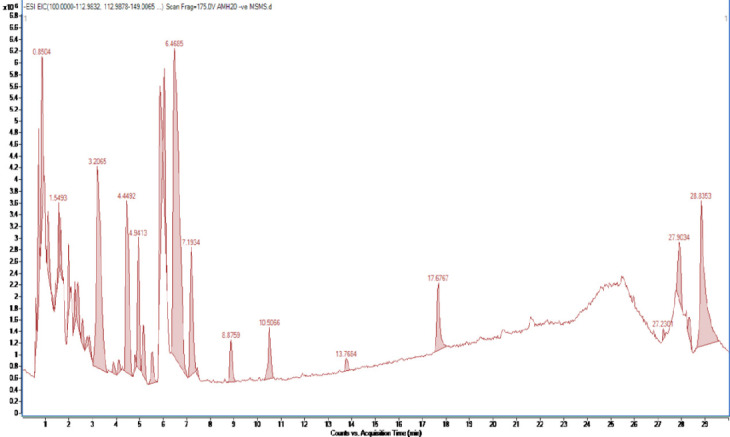 Figure 5
Peer Reviews
No public reviews on file for this paper yet. If you reviewed it on a platform where reviews are public (OpenReview, ICLR, NeurIPS, ICML), you can paste yours below so the community can read it here.
Videos
No videos yet. Explain this paper in a talk, walkthrough, or lecture? Add one.
Taxonomy
TopicsComputational Drug Discovery Methods · Medicinal Plant Research · Pharmacology and Nanomedicine Research