Transcriptomics insights into the functional role of tick Ixodes ricinus proteins metalloprotease and antigen p23
Rita Vaz-Rodrigues, Vincent C. Duru, Ard M. Nijhof, José de la Fuente

TL;DR
This study explores the roles of two tick proteins in feeding and reproduction, revealing their potential impact on tick physiology and allergy-related diseases.
Contribution
The study functionally characterizes two tick proteins using RNA interference and transcriptomics, revealing novel roles in midgut cell homeostasis and oxidative stress response.
Findings
Silencing antigen p23 upregulates protein production pathways and suppresses ion transport and lipid metabolism.
Metalloprotease knockdown affects RNA splicing and detoxification pathways, suggesting a role in oxidative stress regulation.
Neither protein knockdown significantly affects tick engorgement or egg production.
Abstract
Ixodes ricinus ticks (Acari: Ixodidae) are hematophagous ectoparasites and a major European vector of zoonotic diseases affecting global health. Tick salivary and midgut proteins antigen p23 (A0A0K8RKR7) and metalloprotease (A0A0K8RCY8) were previously implicated in the pathophysiology of the tick-borne allergy alpha-Gal syndrome (AGS). This study aimed to functionally characterize these two biomolecules, focusing on their role in I. ricinus tick feeding and reproduction through gene knockdown by RNA interference and midgut transcriptomic analysis. Validation of RNA-seq data was conducted using RT-qPCR analysis on tick midgut and salivary gland tissues. Silencing the expression of p23 and metalloprotease did not result in any significant differences in tick engorgement and egg batch weights compared to the control group. Gene set enrichment analysis following antigen p23 gene knockdown…
Genes, proteins, chemicals, diseases, species, mutations and cell lines named across the full text — each resolved to its canonical identifier and authoritative record.
Click any figure to enlarge with its caption.
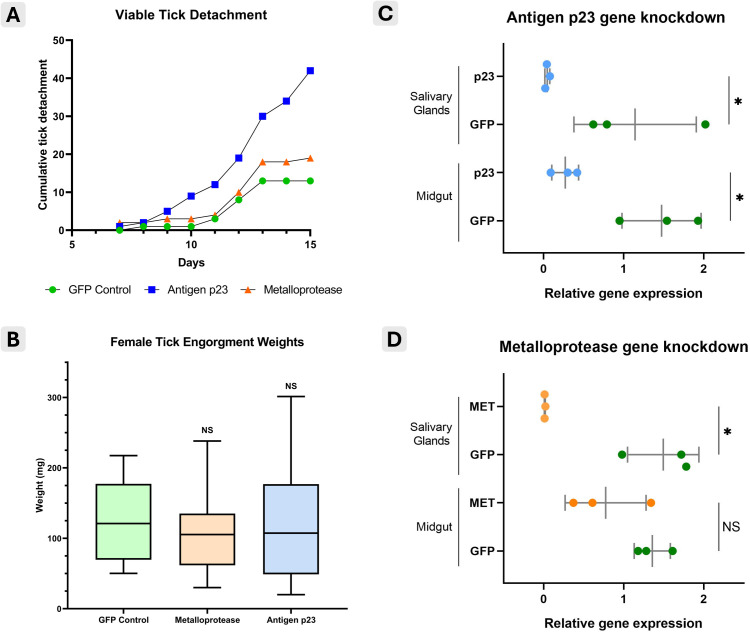 Figure 1
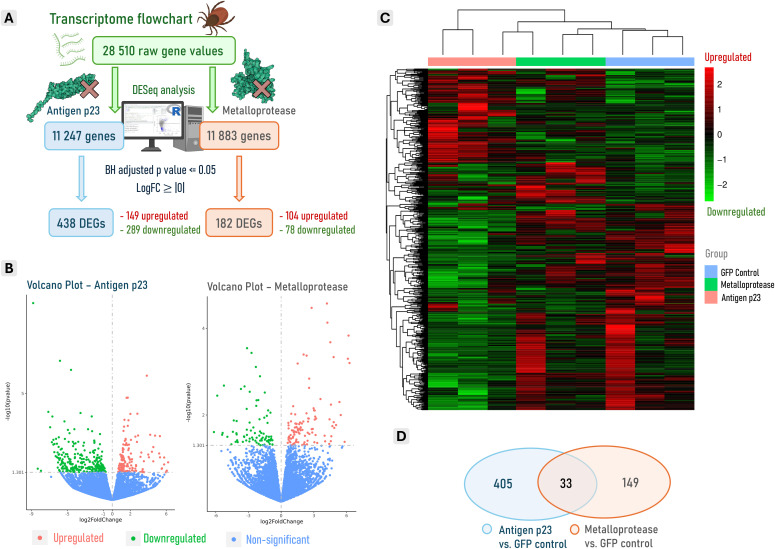 Figure 2
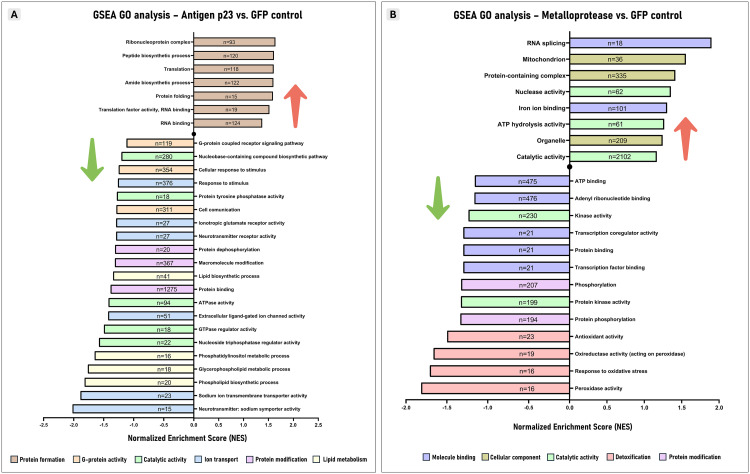 Figure 3
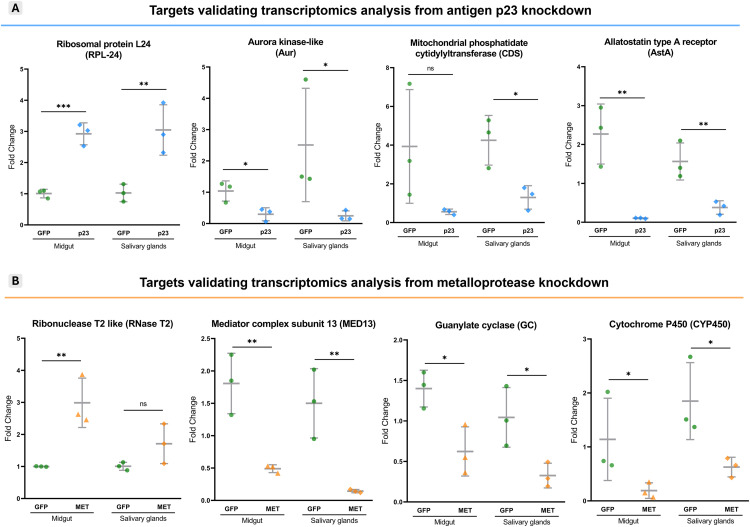 Figure 4
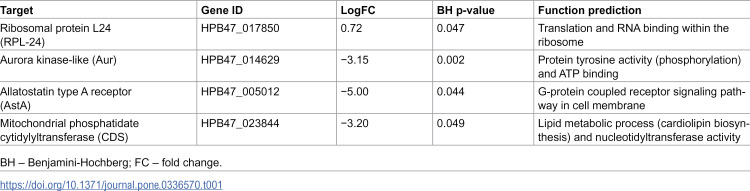 Figure 5
 Figure 6
Peer Reviews
No public reviews on file for this paper yet. If you reviewed it on a platform where reviews are public (OpenReview, ICLR, NeurIPS, ICML), you can paste yours below so the community can read it here.
Videos
No videos yet. Explain this paper in a talk, walkthrough, or lecture? Add one.
Taxonomy
TopicsVector-borne infectious diseases · Bartonella species infections research · Heat shock proteins research