Design, 3D printing, and preclinical validation of an extraglottic ramp to facilitate blind orotracheal intubation in emergency airway management
Jorman H. Tejada-Perdomo, Valentina Gutierrez-Perdomo, Juana V. Agudelo-Castro, Jorge A. Pérez-Gamboa, Alejandro Weinstein, Sebastián San Martín, Rodrigo Salas, Jorge A. Ramos-Castaneda, Jeyasakthy Saniasiaya, Jeyasakthy Saniasiaya, Jeyasakthy Saniasiaya

TL;DR
This paper introduces a 3D-printed medical device designed to help first responders perform blind intubation more easily and safely in emergency situations.
Contribution
The study presents a novel extraglottic ramp designed and validated for blind orotracheal intubation using 3D printing and iterative testing.
Findings
The device was optimized for low friction and minimal cervical manipulation through ten iterations.
BioMed Flex 80A material showed high strength and anatomical compatibility.
The final design is safe, reusable, and suitable for emergency and resource-limited settings.
Abstract
The use of devices that facilitate rapid airway isolation is essential when managing critical patients in emergencies. In recent years, additive manufacturing has emerged as an innovative, versatile, and accessible technology for developing medical devices. This study presents the design, development, and validation of an extraglottic medical device created using computer-aided design tools and stereolithographic 3D printing to facilitate blind intubation by first responders. The device was iteratively modeled and fabricated with biocompatible materials; validation in airway simulators and human cadaveric specimens assessed dimensions, friction, intubation technique, and learning curve, and ease of use was rated with a Likert scale. Ten iterations led to a final design with low friction and minimal cervical manipulation; ramp angle, cup geometry, and distal tip were optimized for tube…
Genes, proteins, chemicals, diseases, species, mutations and cell lines named across the full text — each resolved to its canonical identifier and authoritative record.
Click any figure to enlarge with its caption.
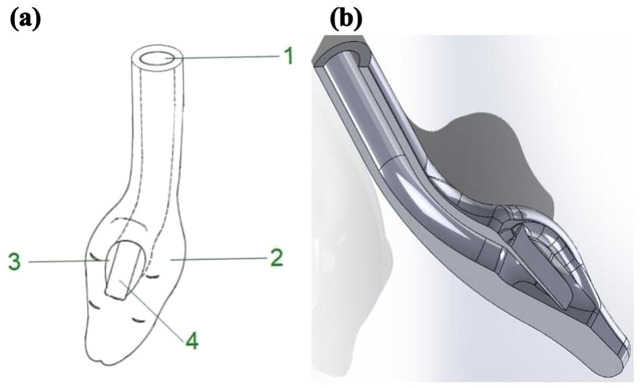 Figure 1
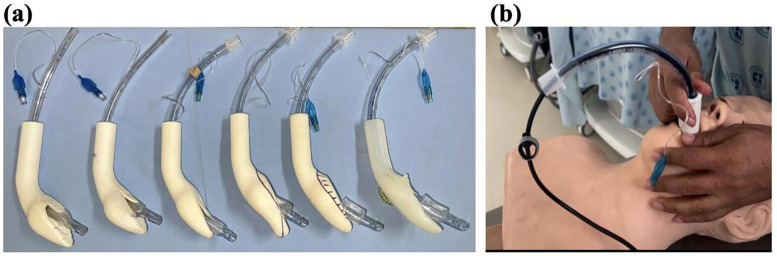 Figure 2
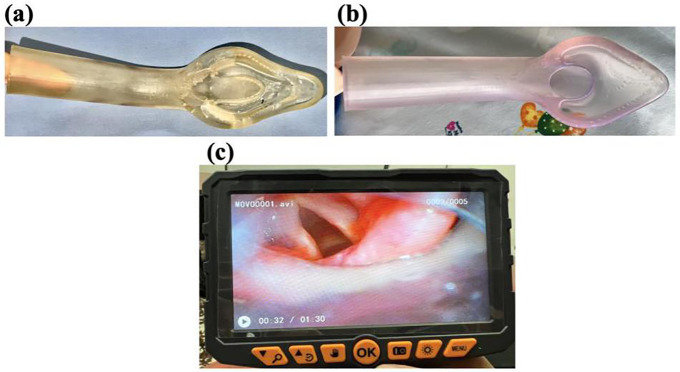 Figure 3
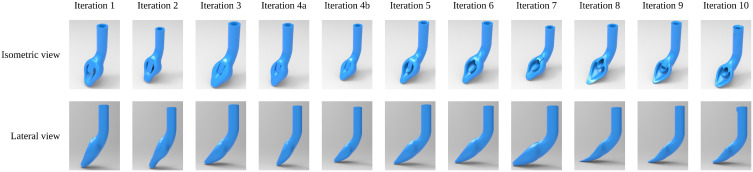 Figure 4
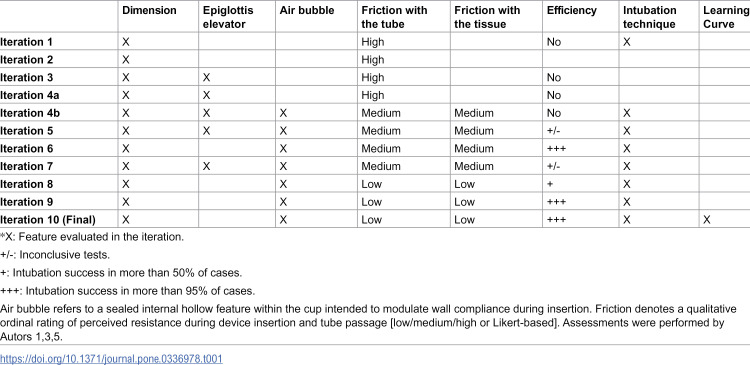 Figure 5
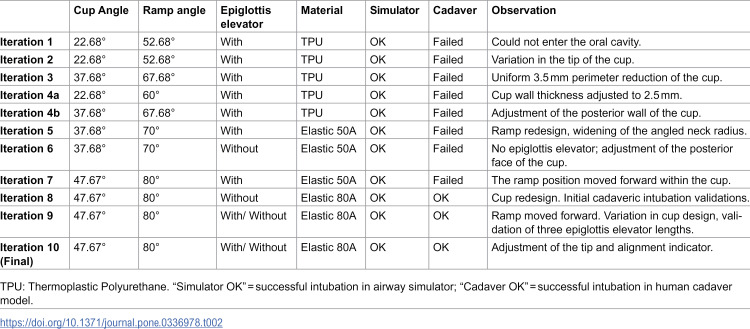 Figure 6
Peer Reviews
No public reviews on file for this paper yet. If you reviewed it on a platform where reviews are public (OpenReview, ICLR, NeurIPS, ICML), you can paste yours below so the community can read it here.
Videos
No videos yet. Explain this paper in a talk, walkthrough, or lecture? Add one.
Taxonomy
TopicsAirway Management and Intubation Techniques · Tracheal and airway disorders · Anatomy and Medical Technology