CHIP/STUB1 suppresses the transcription and latent reactivation of HIV-1 via the TRAF6-NF-κB-HIV-LTR axis
Wei-Hua Zheng, Sen-Ying Lin, Ze-Lan He, Run-Ze Ni, Dan Mu

TL;DR
This study shows that the protein CHIP suppresses HIV-1 replication and latency by inhibiting the TRAF6-NF-κB signaling pathway, offering a potential new target for HIV treatment.
Contribution
The study reveals a novel mechanism by which CHIP inhibits HIV-1 transcription and latency through TRAF6 degradation.
Findings
CHIP suppresses HIV-1 LTR transcription by degrading TRAF6 via the ubiquitin–proteasome pathway.
The TPR domain of CHIP independently facilitates TRAF6 degradation via K48-linked polyubiquitination.
CHIP inhibits HIV-1 latency reactivation in multiple models by repressing NF-κB signaling.
Abstract
HIV-1 replication, transcription and latency are correlated with the activation of NF-κB signaling. C-terminus of Hsc70-interacting protein (CHIP or STUB1), a cellular E3 ligase, has been reported to inhibit Tat-mediated HIV-1 LTR promoter activity by degrading Tat. In this study, we demonstrated that CHIP modulates HIV infection by limiting viral transcription through an uncharacterized mechanism involving the negative regulation of TRAF6-NF-κB signaling. Mechanistically, CHIP targets the NF-κB signaling transducer TRAF6 but not TRAF2 or p65 for degradation via the ubiquitin–proteasome pathway, leading to the inhibition of TRAF6-mediated NF-κB signaling, which in turn suppresses NF-κB-dependent HIV-1 LTR transcription. Notably, in addition to the U-box domain, which is well known for protein degradation, the TPR domain of CHIP plays an independent role in facilitating the…
Genes, proteins, chemicals, diseases, species, mutations and cell lines named across the full text — each resolved to its canonical identifier and authoritative record.
Click any figure to enlarge with its caption.
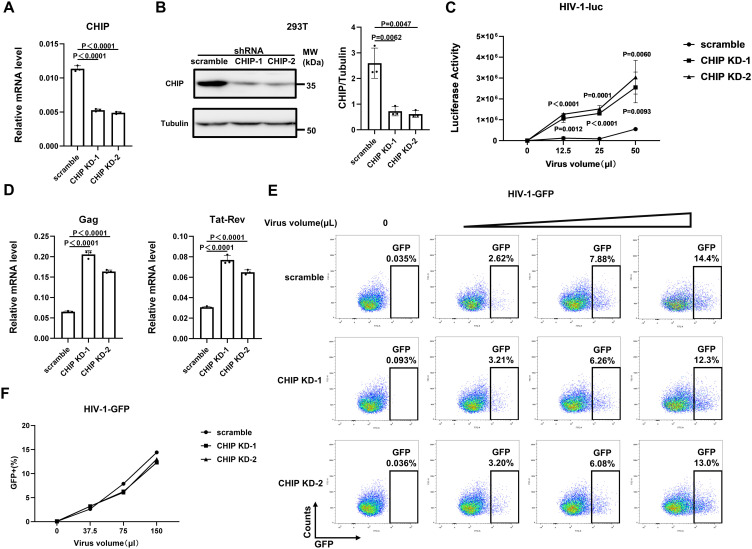 Figure 1
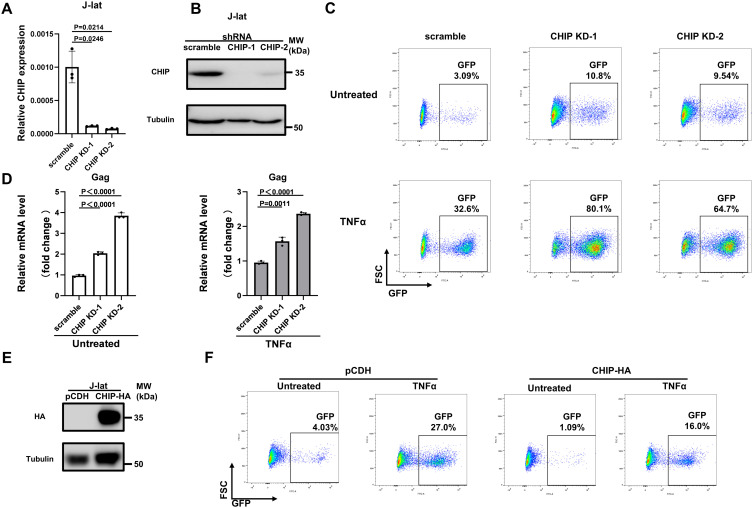 Figure 2
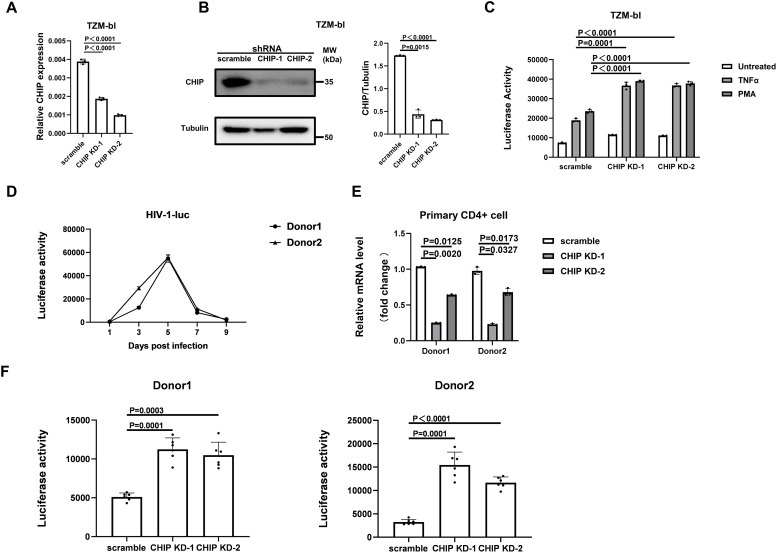 Figure 3
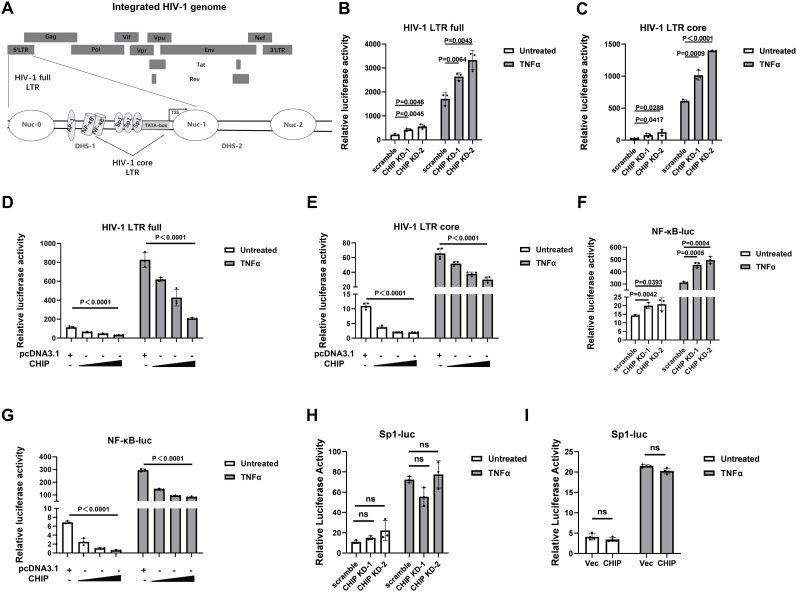 Figure 4
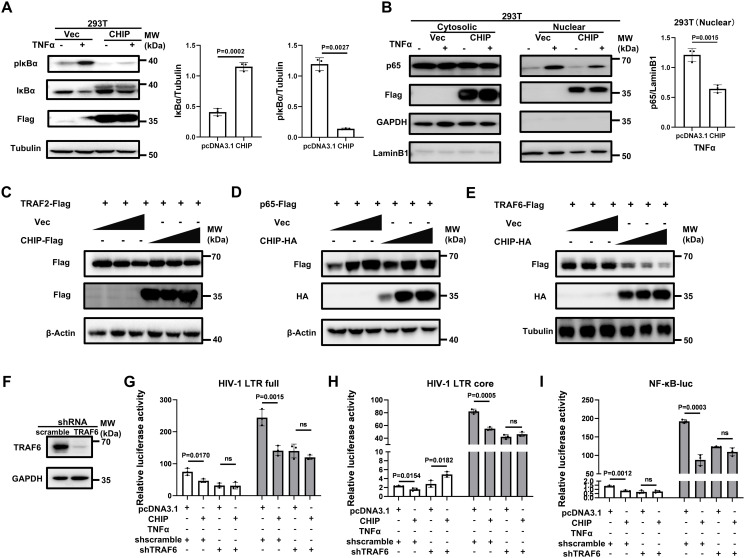 Figure 5
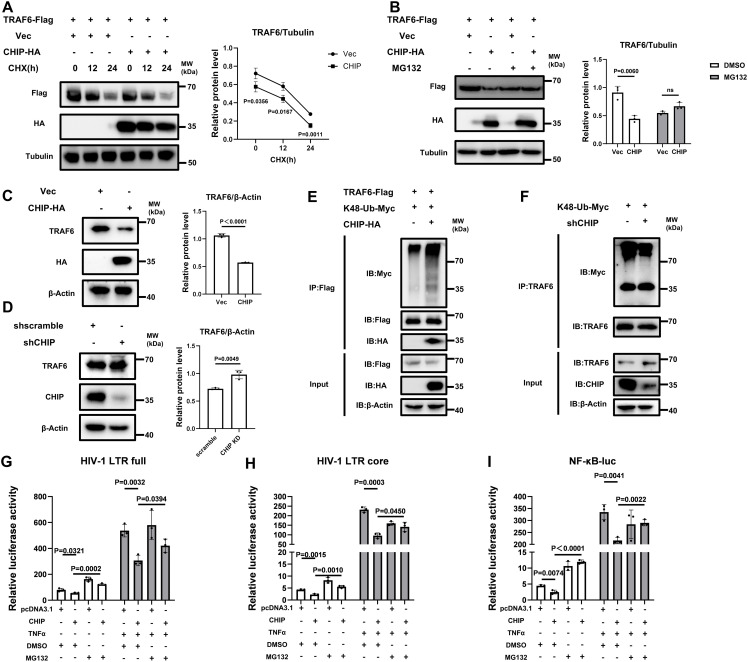 Figure 6
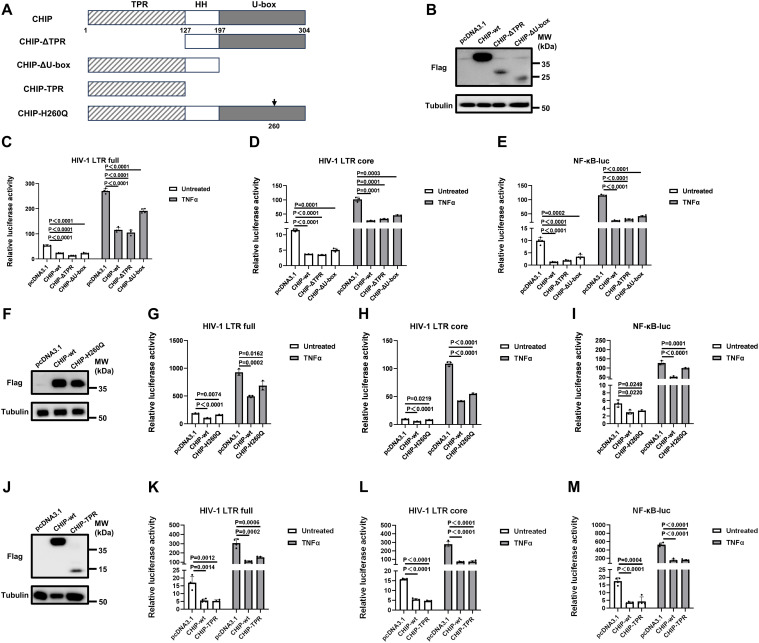 Figure 7
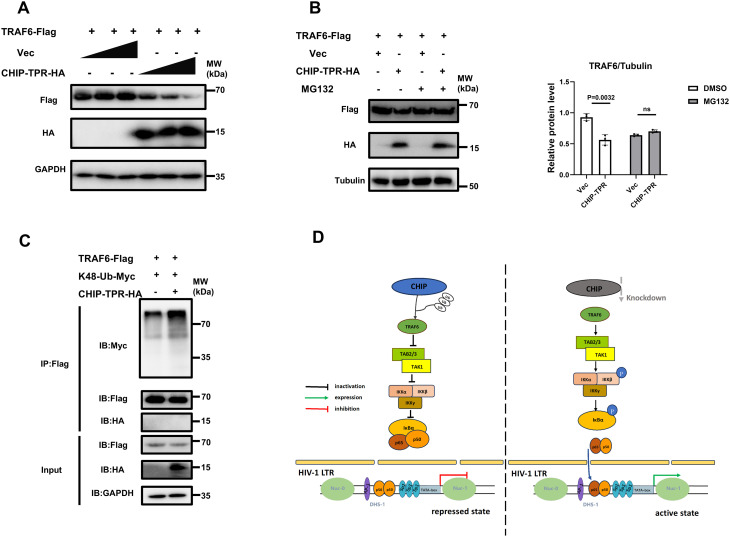 Figure 8
Peer Reviews
No public reviews on file for this paper yet. If you reviewed it on a platform where reviews are public (OpenReview, ICLR, NeurIPS, ICML), you can paste yours below so the community can read it here.
Videos
No videos yet. Explain this paper in a talk, walkthrough, or lecture? Add one.
Taxonomy
TopicsUbiquitin and proteasome pathways · HIV Research and Treatment · Cancer-related Molecular Pathways