First-principles calculation of adsorption of cadmium and lead on the surface of a 1T-MnO2 monolayer
Julieth V. Dita-Casiano, Mario L. Arteaga-Calderón, Gladys R. Casiano-Jiménez, César Ortega-Lopez, Miguel J. Espitia-Rico, Veer Singh, Veer Singh, Veer Singh, Veer Singh

TL;DR
This study uses computational methods to show that a 1T-MnO2 monolayer can effectively adsorb toxic metals cadmium and lead.
Contribution
The paper identifies the most favorable adsorption site and energy for Cd and Pb on 1T-MnO2 using first-principles calculations.
Findings
The PMn site is the most energetically favorable for Cd and Pb adsorption on 1T-MnO2.
Pb has a significantly higher adsorption energy (−5.918 eV) compared to Cd (−0.883 eV) on the monolayer.
The 1T-MnO2 monolayer is thermodynamically, mechanically, and dynamically stable.
Abstract
Manganese dioxide is a material with varied and interesting applications, especially including energy storage, the elimination of organic contaminants, and the removal of toxic atoms and molecules that pollute the environment. In this paper, the adsorption of toxic atoms of cadmium (Cd) and lead (Pb) on the surface of a 1T-MnO2 monolayer is investigated using first-principles calculations. The calculated values of the adsorption energy show that the most energetically favorable site for the Cd and Pb atoms is PMn. This occurs when a Cd or Pb atom is located just above a Mn atom, with adsorption energies of −0.883 eV and −5.918 eV, respectively. The charge transfer in the 1T-MnO2 adsorbate/monolayer interaction is determined via the Bader charge. Additionally, the thermodynamic, mechanical, and dynamic stability of a pristine 1T-MnO2 monolayer is determined through calculations of the…
Genes, proteins, chemicals, diseases, species, mutations and cell lines named across the full text — each resolved to its canonical identifier and authoritative record.
Click any figure to enlarge with its caption.
 Figure 1
 Figure 2
 Figure 3
 Figure 4
 Figure 5
 Figure 6
 Figure 7
 Figure 8
 Figure 9
 Figure 10
 Figure 11
 Figure 12
 Figure 13
 Figure 14
 Figure 15
 Figure 16
 Figure 17
 Figure 18
 Figure 19
 Figure 20
 Figure 21
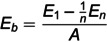 Figure 22
 Figure 23
 Figure 24
 Figure 25
 Figure 26
 Figure 27
 Figure 28
 Figure 29
 Figure 30
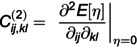 Figure 31
 Figure 32
 Figure 33
 Figure 34
 Figure 35
 Figure 36
 Figure 37
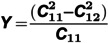 Figure 38
 Figure 39
 Figure 40
 Figure 41
 Figure 42
 Figure 43
 Figure 44
 Figure 45
 Figure 46
 Figure 47
 Figure 48
 Figure 49
 Figure 50
Peer Reviews
No public reviews on file for this paper yet. If you reviewed it on a platform where reviews are public (OpenReview, ICLR, NeurIPS, ICML), you can paste yours below so the community can read it here.
Videos
No videos yet. Explain this paper in a talk, walkthrough, or lecture? Add one.
Taxonomy
TopicsSupercapacitor Materials and Fabrication · Graphene research and applications · Boron and Carbon Nanomaterials Research