Do children allocated to different methods of complementary feeding introduction have distinct food preferences and flavor acceptance in the first years of life? A randomized clinical trial
Renata Oliveira Neves, Elma Izze da Silva Magalhães, Cátia Regina Ficagna, Paula Ruffoni Moreira, Christy Hannah Sanini Belin, Larissa de Oliveira Silveira, Rogério Boff Borges, Leandro Meirelles Nunes, Juliana Rombaldi Bernardi, António Raposo, António Raposo, António Raposo

TL;DR
This study found that children introduced to solid foods using different methods may have varying taste preferences, but differences were not consistently significant after adjustments.
Contribution
The study introduces a randomized clinical trial comparing three complementary feeding methods and their impact on early food preferences and flavor acceptance.
Findings
Children in the Mixed group showed higher unadjusted preference for sour-taste foods compared to Parent-Led Weaning.
Preferences for bitter tastes were linked to bitter solution acceptance in unadjusted analysis but not after adjustment.
Strong associations were found between taste preferences and acceptance of corresponding flavor solutions for sweet, sour, salty, and umami.
Abstract
This study aimed to analyze the food preferences and flavor acceptance among children allocated to different methods of complementary feeding (CF) introduction in the first years of life. This randomized clinical trial (RCT) involved three distinct groups of children regarding the method of CF introduction: Parent-Led Weaning (PLW); Baby-Led Introduction to SolidS (BLISS); and Mixed (both PLW and BLISS methods). The intervention occurred at 5.5 months old, and food preferences were analyzed between the ages of 12–35 months using the Food Preferences Questionnaire and the Taste Acceptance Test. The analysis was performed by intention-to-treat, using Pearson’s chi-square test, Mann-Whitney test and Poisson regression. A d irected a cyclic g raph (DAG) was used to define the covariates. A total of 140 mother-infant pairs were randomized for the study (PLW n = 45; BLISS: n = 48; and Mixed:…
Genes, proteins, chemicals, diseases, species, mutations and cell lines named across the full text — each resolved to its canonical identifier and authoritative record.
Click any figure to enlarge with its caption.
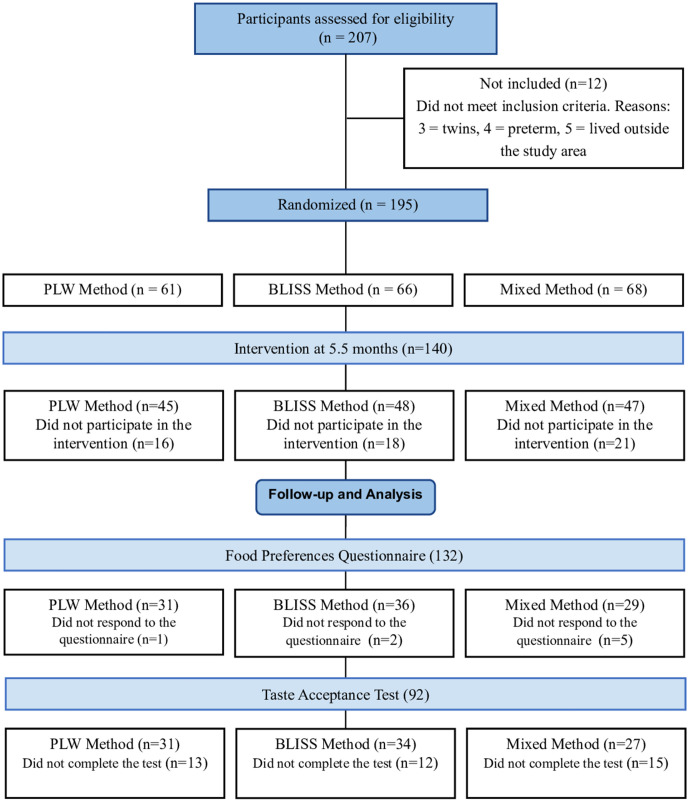 Figure 1
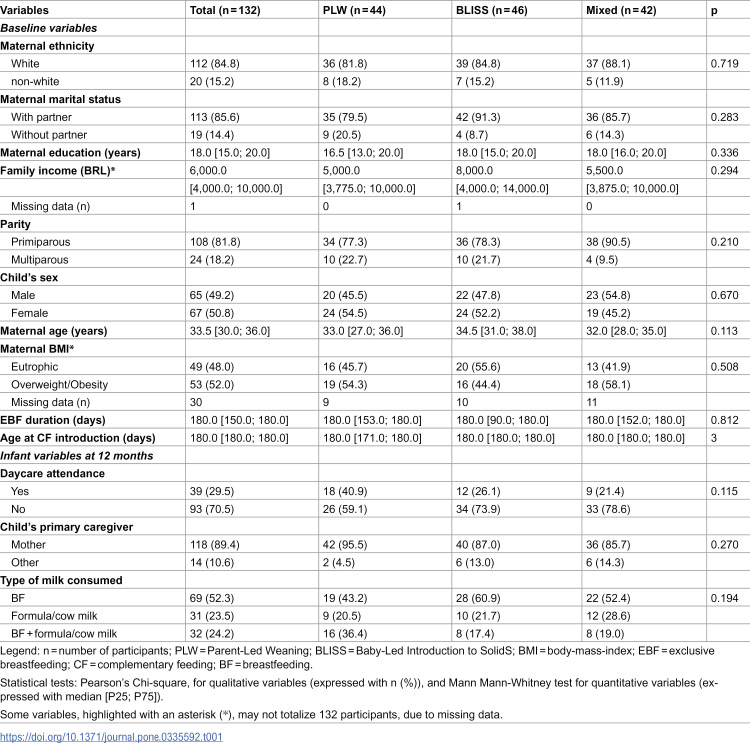 Figure 2
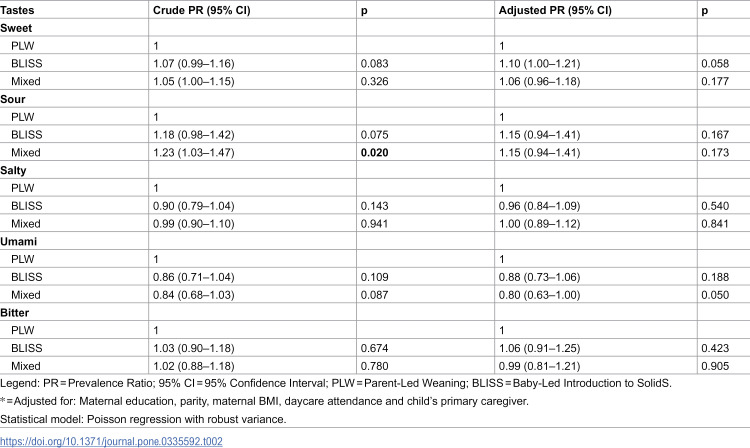 Figure 3
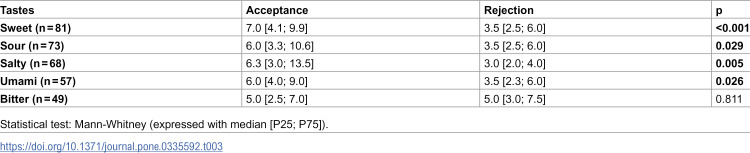 Figure 4
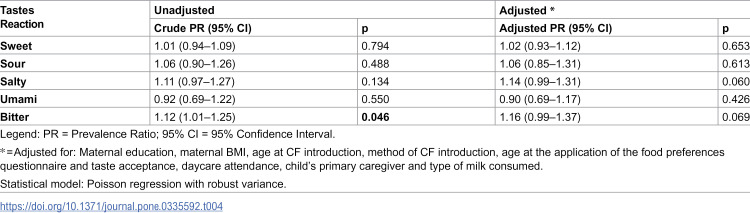 Figure 5
Peer Reviews
No public reviews on file for this paper yet. If you reviewed it on a platform where reviews are public (OpenReview, ICLR, NeurIPS, ICML), you can paste yours below so the community can read it here.
Videos
No videos yet. Explain this paper in a talk, walkthrough, or lecture? Add one.
Taxonomy
TopicsBreastfeeding Practices and Influences · Infant Development and Preterm Care · Child Nutrition and Feeding Issues