Combining quantum cascade lasers and plasmonic metasurfaces to monitor de novo lipogenesis with vibrational contrast microscopy
Steven H. Huang, Dias Tulegenov, Gennady Shvets

TL;DR
A new microscopy technique using quantum cascade lasers and plasmonic metasurfaces allows non-destructive monitoring of fat synthesis in living cells.
Contribution
A novel MIRIAM platform enables high-content metabolic imaging with molecular specificity in hydrated cells.
Findings
MIRIAM enables non-destructive imaging of de novo lipogenesis in adipocytes.
13C-labeled glucose tracking reveals spatial and temporal lipid and protein synthesis.
Red-shifted vibrational peaks confirm 13C incorporation into biomolecules.
Abstract
The combination of a tunable quantum cascade laser (QCL) and plasmonic mid-infrared (MIR) metasurface is a powerful tool enabling high-content microscopy of hydrated cells using the vibrational contrast of their constituent biomolecules. While the QCL provides a high-brightness source whose frequency can be rapidly tuned to that of the relevant molecular vibration, the metasurface is used to overcome water absorption of MIR light. Here we employ the resulting metasurface-enabled inverted reflected-light infrared absorption microscopy (MIRIAM) tool for non-destructive monitoring of the vital process of de novo lipogenesis (DNL), by which fat tissue cells (adipocytes) synthesize fatty acids from glucose and store them inside lipid droplets. Using 13C-labeled glucose as a metabolic probe, we produce spatially- and temporally-resolved images of 13C incorporation into lipids and proteins,…
Genes, proteins, chemicals, diseases, species, mutations and cell lines named across the full text — each resolved to its canonical identifier and authoritative record.
Click any figure to enlarge with its caption.
 Figure 1
 Figure 2
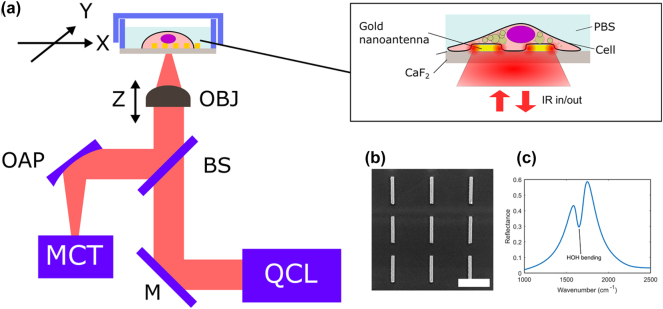 Figure 1
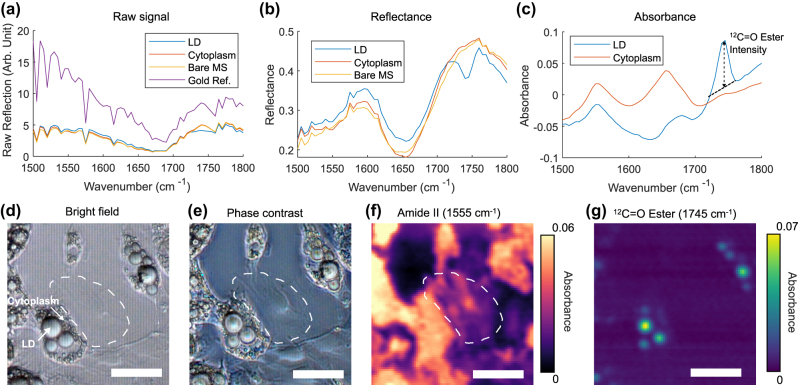 Figure 2
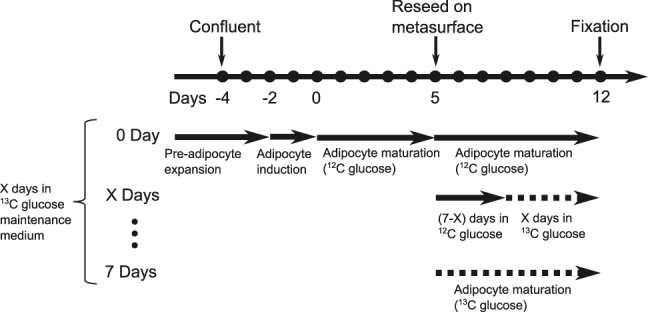 Figure 3
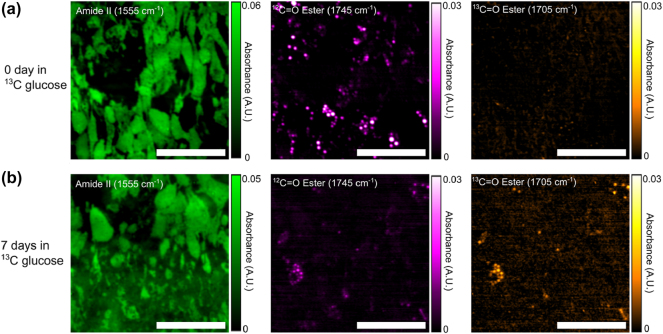 Figure 4
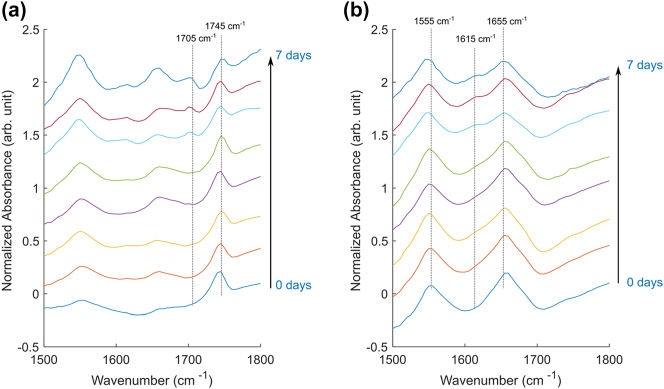 Figure 5
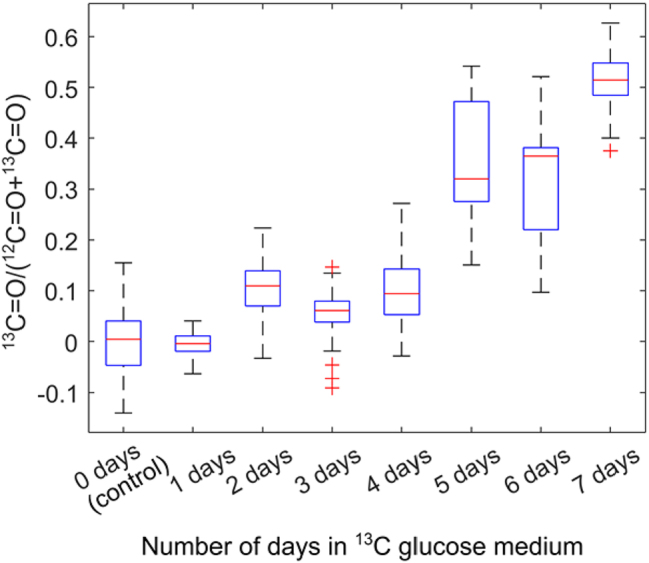 Figure 6
 Figure 9
 Figure 10
 Figure 11
 Figure 12
Peer Reviews
No public reviews on file for this paper yet. If you reviewed it on a platform where reviews are public (OpenReview, ICLR, NeurIPS, ICML), you can paste yours below so the community can read it here.
Videos
No videos yet. Explain this paper in a talk, walkthrough, or lecture? Add one.
Taxonomy
TopicsSpectroscopy Techniques in Biomedical and Chemical Research · Antioxidant Activity and Oxidative Stress · Photoacoustic and Ultrasonic Imaging