Topological chiral-gain in a Berry dipole material
Filipa R. Prudêncio, Mário G. Silveirinha

TL;DR
This paper explores how electric bias in a material can create chiral gain and topological edge states, enabling new photonic applications like unidirectional light propagation.
Contribution
The paper reveals the topological origin of chiral gain and shows how it can be used to create boundary-confined lasing modes with controlled orbital angular momentum.
Findings
Static electric bias induces topological bandgaps with unidirectional edge states.
Chiral gain can be used to engineer lasing modes with orbital angular momentum locked to the electric field orientation.
The results enable lossless edge-wave propagation and structured light generation.
Abstract
Recent studies have shown that low-symmetry conductors under static electric bias offer a pathway to realize chiral gain, where the non-Hermitian optical response of the material is controlled by the spin angular momentum of the wave. In this work, we uncover the topological nature of chiral gain and demonstrate how a static electric bias induces topological bandgaps that support unidirectional edge states at the material boundaries. In our system, these topological edge states consistently exhibit dissipative properties. However, we show that, by operating outside the topological gap, the chiral gain can be leveraged to engineer boundary-confined lasing modes with orbital angular momentum locked to the orientation of the applied electric field. Our results open new possibilities for loss-compensated photonic waveguides, enabling advanced functionalities such as unidirectional, lossless…
Genes, proteins, chemicals, diseases, species, mutations and cell lines named across the full text — each resolved to its canonical identifier and authoritative record.
Click any figure to enlarge with its caption.
 Figure 1
 Figure 2
 Figure 3
 Figure 4
 Figure 5
 Figure 6
 Figure 7
 Figure 8
 Figure 9
 Figure 10
 Figure 11
 Figure 12
 Figure 13
 Figure 14
 Figure 15
 Figure 16
 Figure 17
 Figure 18
 Figure 19
 Figure 20
 Figure 21
 Figure 22
 Figure 23
 Figure 24
 Figure 25
 Figure 26
 Figure 1
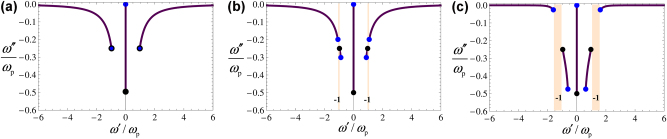 Figure 2
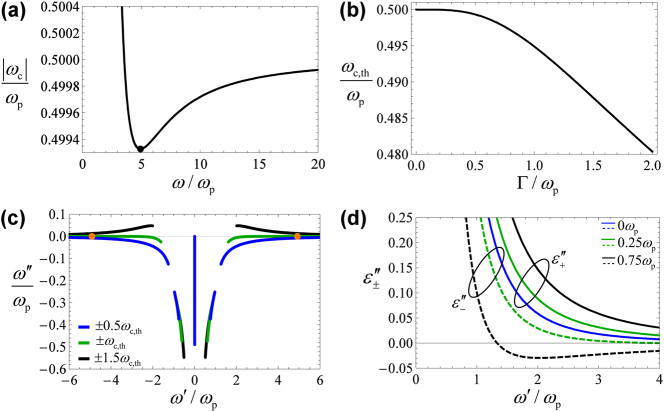 Figure 3
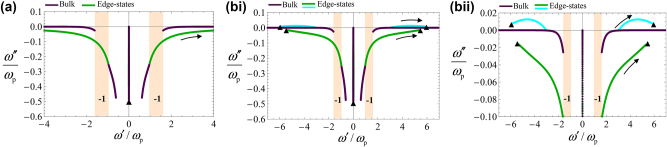 Figure 4
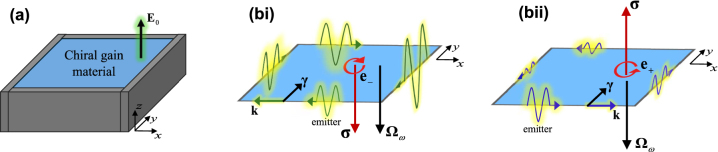 Figure 5
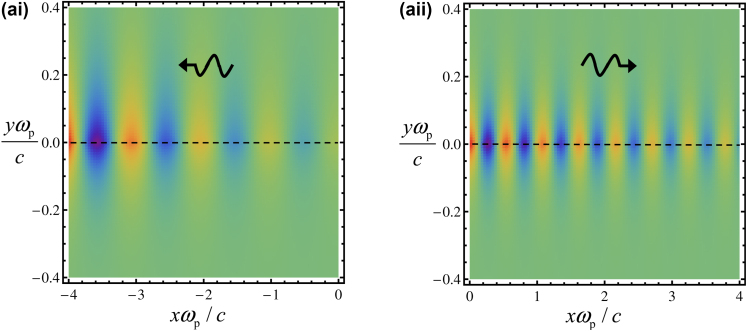 Figure 6
 Figure 33
 Figure 34
 Figure 35
 Figure 36
 Figure 37
 Figure 38
 Figure 39
 Figure 40
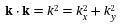 Figure 41
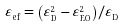 Figure 42
 Figure 43
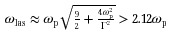 Figure 44
 Figure 45
 Figure 46
 Figure 47
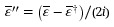 Figure 48
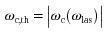 Figure 49
 Figure 50
Peer Reviews
No public reviews on file for this paper yet. If you reviewed it on a platform where reviews are public (OpenReview, ICLR, NeurIPS, ICML), you can paste yours below so the community can read it here.
Videos
No videos yet. Explain this paper in a talk, walkthrough, or lecture? Add one.
Taxonomy
TopicsTopological Materials and Phenomena · Quantum Mechanics and Non-Hermitian Physics · Metamaterials and Metasurfaces Applications