On the generalized Snell–Descartes laws, shock waves, water wakes, and Cherenkov radiation
Patrice Genevet, Nate Wright, Jayden Johnson, Aloke Jana, Emil Marinov, Loubnan Abou-Hamdan

TL;DR
This paper explains the Snell-Descartes laws of light refraction using simple analogies to shock waves, water wakes, and Cherenkov radiation, making the concepts accessible to a wide audience.
Contribution
A novel, intuitive derivation of classical and generalized Snell-Descartes laws using unrelated wave phenomena.
Findings
A surface perturbation excited by light can be used to derive refraction laws.
The derivations rely on Huygens interference and are accessible to non-experts.
The approach bridges classical optics with other wave systems like Cherenkov radiation.
Abstract
The modification of light’s trajectory after refracting through a boundary separating two media is a ubiquitous phenomenon in nature. The laws governing such refraction/reflection, known today as the Snell–Descartes laws of reflection and refraction, were established over four centuries ago and have since become foundational to the field of classical optics. Presently, with the advent of nano-photonic technology, a generalized version of these laws has been developed and implemented, vastly broadening the breadth of light manipulation methods. Despite their popularity, however, a simple and accessible derivation of the Snell–Descartes laws is still lacking, and their generalization is still largely missing from the physics curricula. Here, we use simple analogies between light’s refraction and reflection and other a priori unrelated radiating wave systems, namely, shock waves, water…
Genes, proteins, chemicals, diseases, species, mutations and cell lines named across the full text — each resolved to its canonical identifier and authoritative record.
Click any figure to enlarge with its caption.
 Figure 1
 Figure 2
 Figure 3
 Figure 4
 Figure 5
 Figure 6
 Figure 7
 Figure 8
 Figure 9
 Figure 10
 Figure 11
 Figure 12
 Figure 13
 Figure 14
 Figure 15
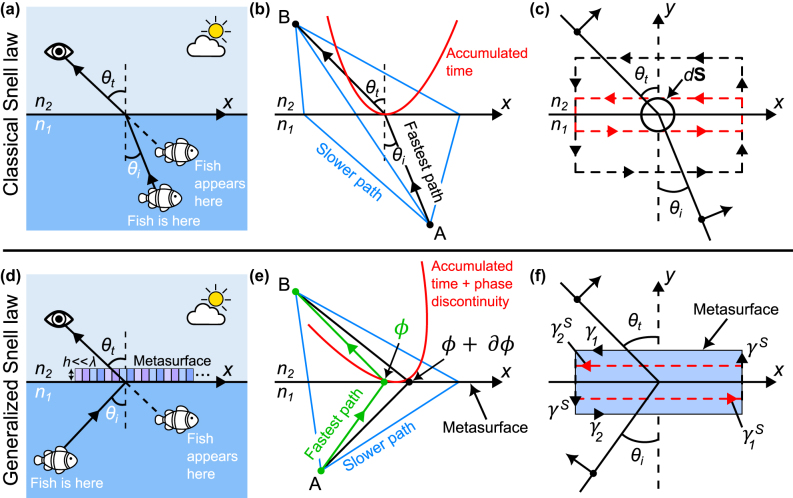 Figure 1
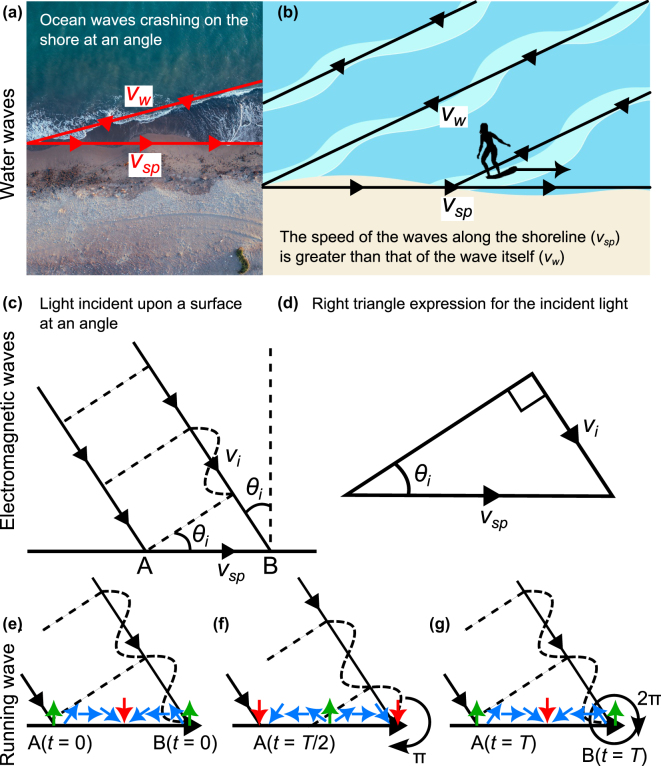 Figure 2
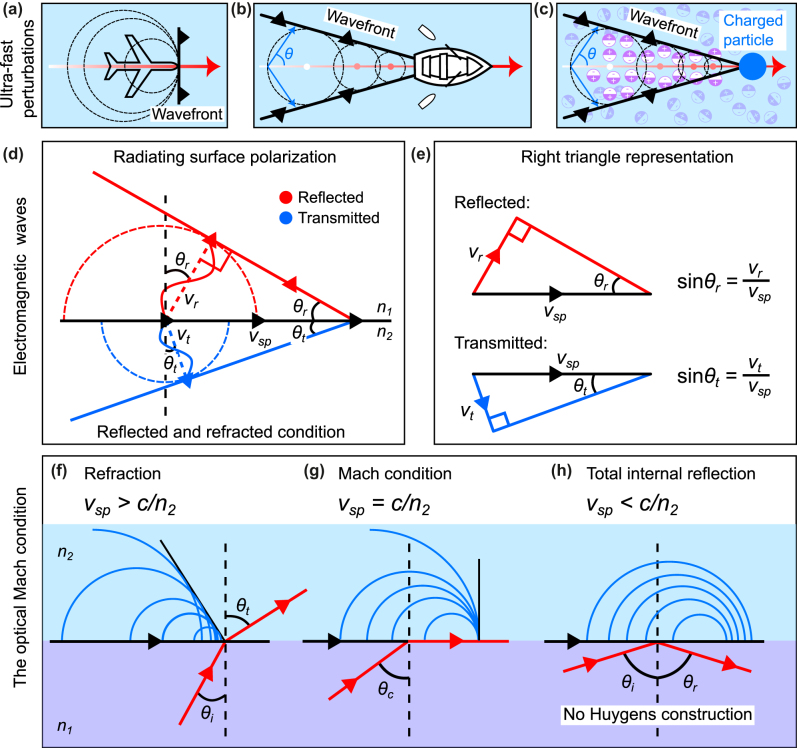 Figure 3
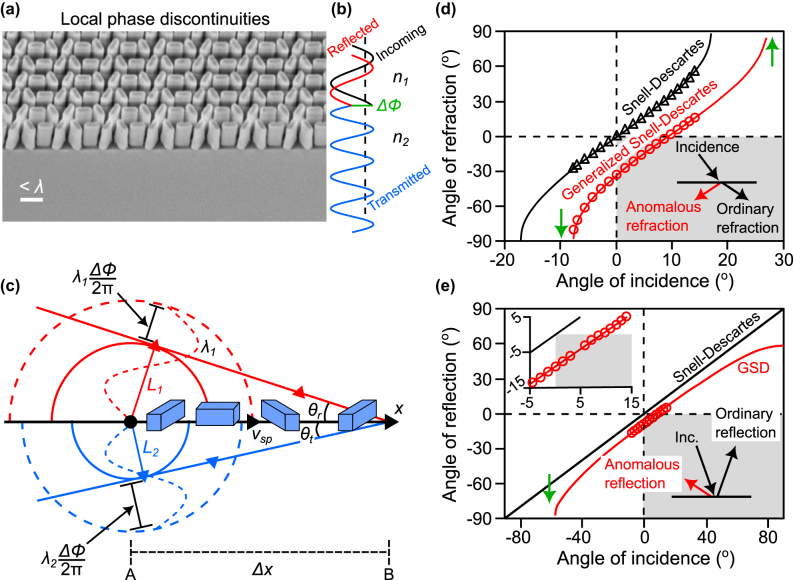 Figure 4
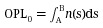 Figure 20
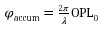 Figure 21
 Figure 22
 Figure 23
 Figure 24
 Figure 25
 Figure 26
 Figure 27
 Figure 28
 Figure 29
Peer Reviews
No public reviews on file for this paper yet. If you reviewed it on a platform where reviews are public (OpenReview, ICLR, NeurIPS, ICML), you can paste yours below so the community can read it here.
Videos
No videos yet. Explain this paper in a talk, walkthrough, or lecture? Add one.
Taxonomy
TopicsOrbital Angular Momentum in Optics · Mechanical and Optical Resonators · Thermal Radiation and Cooling Technologies