Exciton–polariton condensation in MAPbI3 films from bound states in the continuum metasurfaces
Marco Marangi, Andrea Zacheo, Alexander M. Dubrovkin, Giorgio Adamo, Cesare Soci

TL;DR
Researchers demonstrated efficient light condensation in perovskite films using a silicon metasurface, enabling ultra-coherent light states.
Contribution
Exciton–polariton condensation is achieved in perovskite films using bound states in the continuum metasurfaces for the first time.
Findings
Polariton condensation shows low fluence threshold and narrow linewidth.
High coherence is achieved in both space and time.
Integration with silicon photonic platforms is demonstrated.
Abstract
Exciton–polariton condensation in optical resonators is a fascinating pathway to realise ultra-coherent states of light, underpinned by Bose–Einstein quasiparticles. Bearing inherently non-radiative nature, bound states in continuum (BIC) have proven to be an excellent platform to achieve polariton condensation. Here, we report exciton–polariton condensation in a solution-processed perovskite thin film hybridized with a silicon BIC metasurface. Thanks to the high quality factor of the BIC, the polariton condensation exhibits low fluence threshold, narrow linewidth, and large spatial and temporal coherence. These results demonstrate the feasibility of integration of perovskite polaritonic devices in scalable silicon photonic platforms.
Genes, proteins, chemicals, diseases, species, mutations and cell lines named across the full text — each resolved to its canonical identifier and authoritative record.
Click any figure to enlarge with its caption.
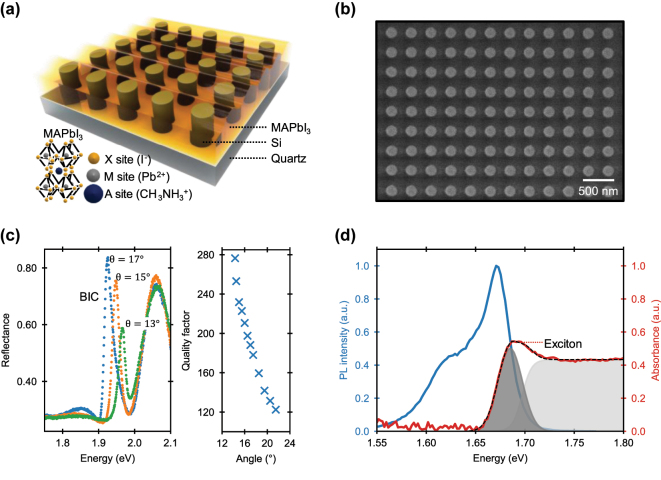 Figure 1
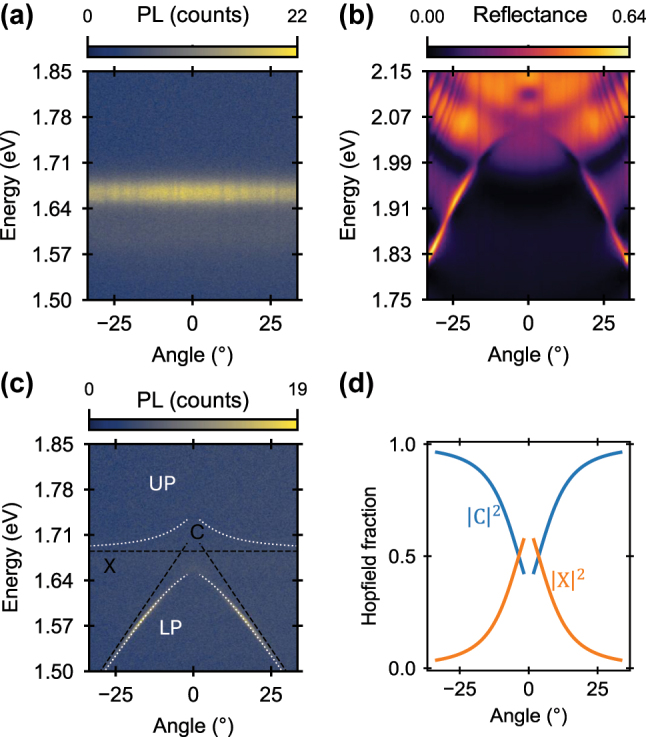 Figure 2
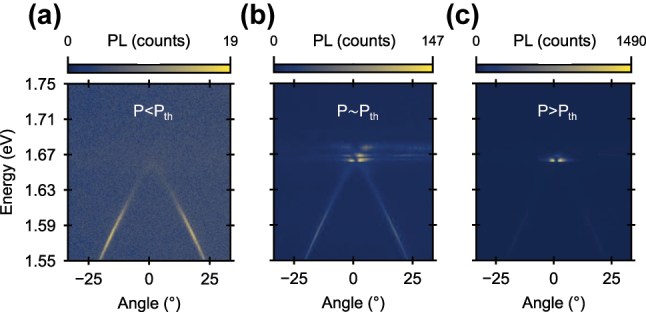 Figure 3
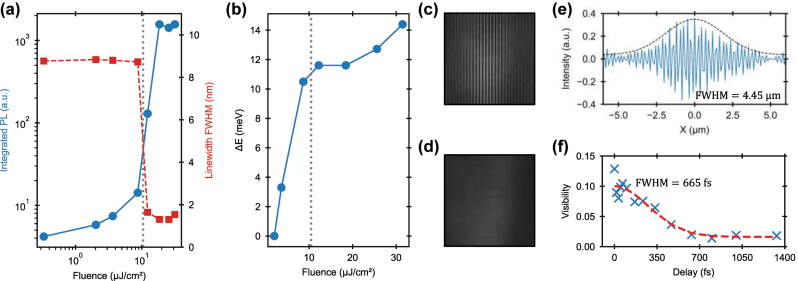 Figure 4
 Figure 5
 Figure 6
 Figure 7
 Figure 8
Peer Reviews
No public reviews on file for this paper yet. If you reviewed it on a platform where reviews are public (OpenReview, ICLR, NeurIPS, ICML), you can paste yours below so the community can read it here.
Videos
No videos yet. Explain this paper in a talk, walkthrough, or lecture? Add one.
Taxonomy
TopicsStrong Light-Matter Interactions · Thermal Radiation and Cooling Technologies · Perovskite Materials and Applications