Unraveling the pathway of copper delivery to cytochrome c oxidases in the free-living bacterium Caulobacter vibrioides
Hala Kasmo, Jacquie Abolia Tepusa, Rubén Garcia-Dominguez, Chloe Piette, Marc Dieu, Damien Devos, Jean-Yves Matroule

TL;DR
This study explores how the bacterium Caulobacter vibrioides delivers copper to its cytochrome c oxidases, revealing a unique pathway involving a novel outer membrane protein.
Contribution
The discovery of a novel outer membrane TonB-dependent receptor (TccA) involved in copper delivery to aa3-Cox in C. vibrioides.
Findings
C. vibrioides uses a FixI-type Cu transporter and PccA for cbb3-Cox activity.
A novel outer membrane receptor TccA is required for aa3-Cox function.
cbb3-Cox is upregulated under microaerobic conditions, while aa3-Cox dominates under normoxic conditions.
Abstract
Copper (Cu) is an essential micronutrient that serves as a cofactor for many enzymes but becomes toxic when present in excess. In most bacteria, CopA-like P1B-type ATPases mediate Cu detoxification by exporting cytoplasmic Cu to the periplasm or extracellular environment. In this study, we show that Caulobacter vibrioides lacks a canonical CopA-like ATPase but encodes a single FixI/CcoI-type Cu-transporting ATPase, previously implicated in Cu delivery to the cbb3-type cytochrome c oxidase (Cox) in species such as Rhodobacter capsulatus. C. vibrioides harbors two terminal cytochrome c oxidases in its cytoplasmic membrane: an aa3-type and a cbb3-type Cox. We also demonstrate that the activity of cbb3-Cox requires the FixI-type Cu transporter and the periplasmic Cu chaperone PccA. In contrast, aa3-Cox activity depends on PccA and the inner membrane-bound protein CtaG. Since the mechanism…
Genes, proteins, chemicals, diseases, species, mutations and cell lines named across the full text — each resolved to its canonical identifier and authoritative record.
Click any figure to enlarge with its caption.
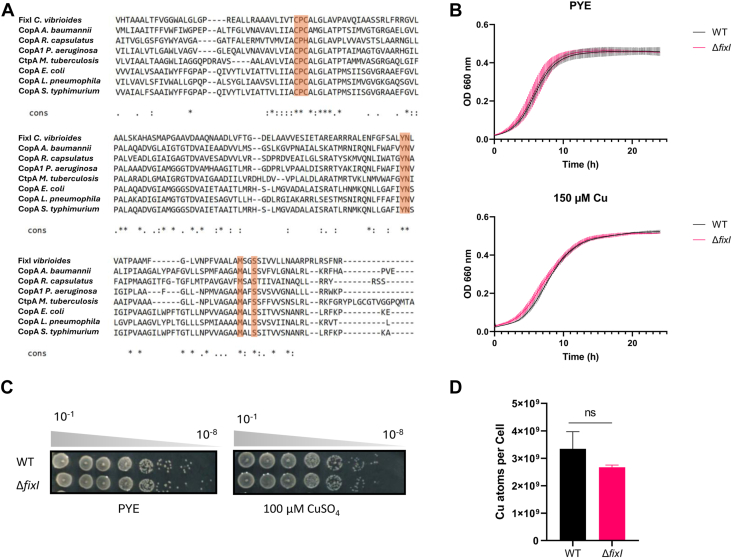 Figure 1
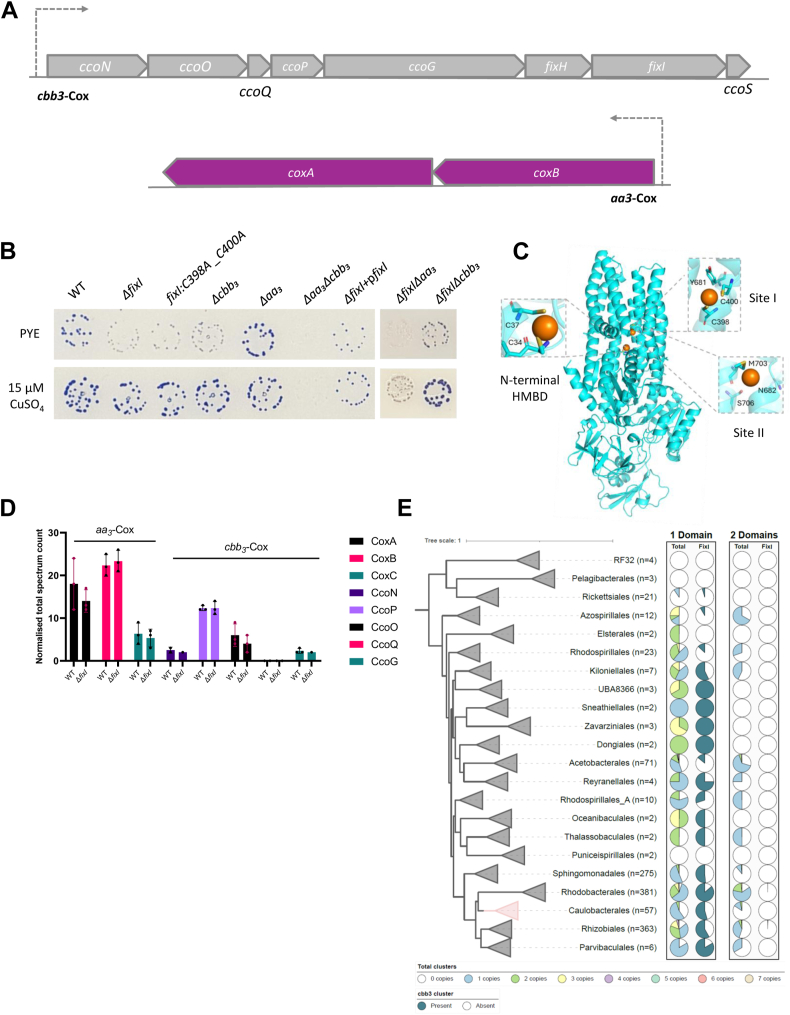 Figure 2
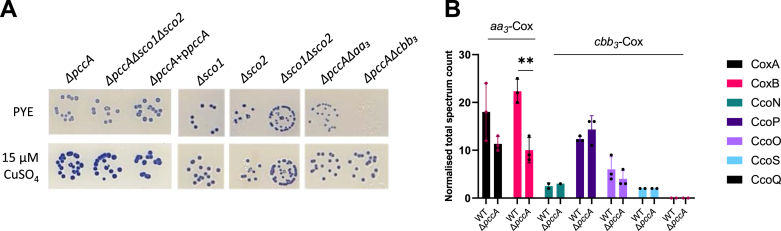 Figure 3
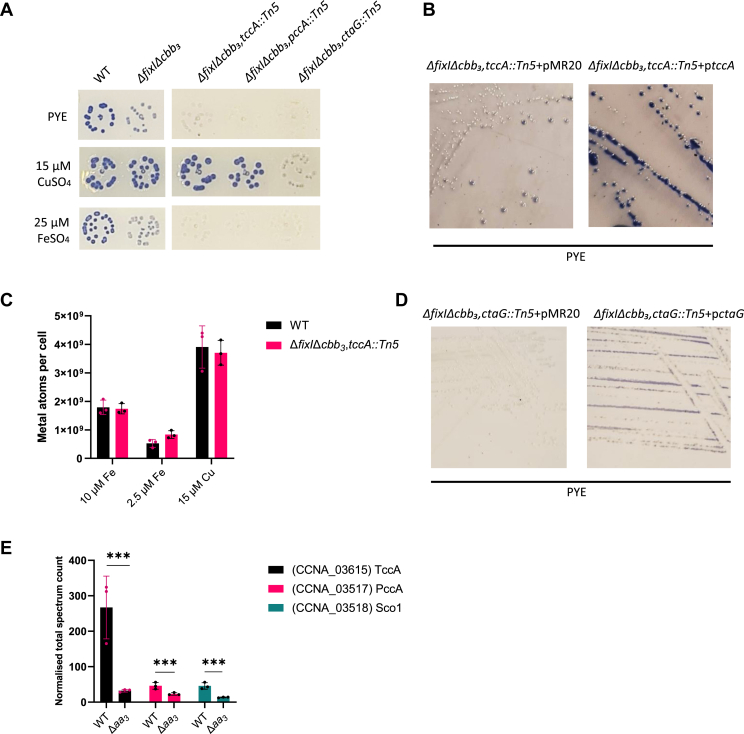 Figure 4
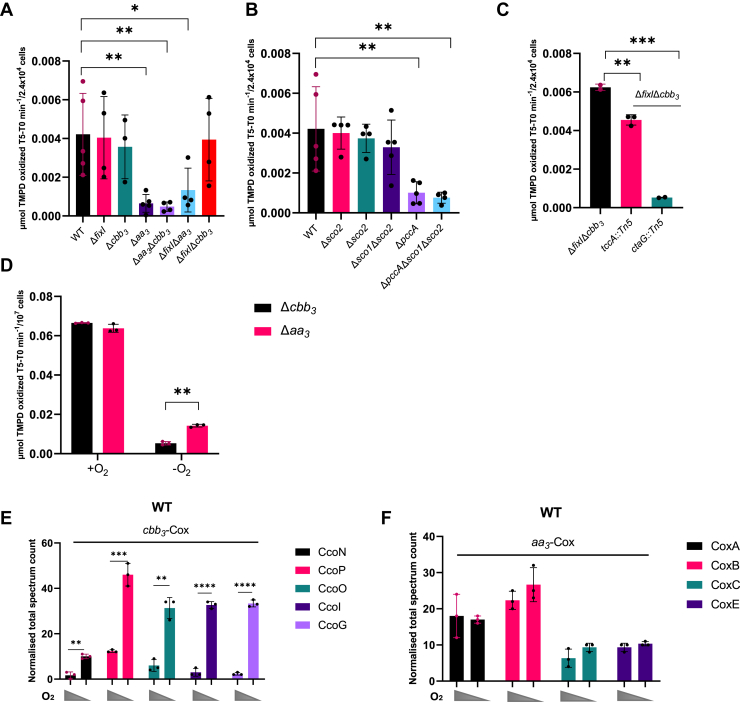 Figure 5
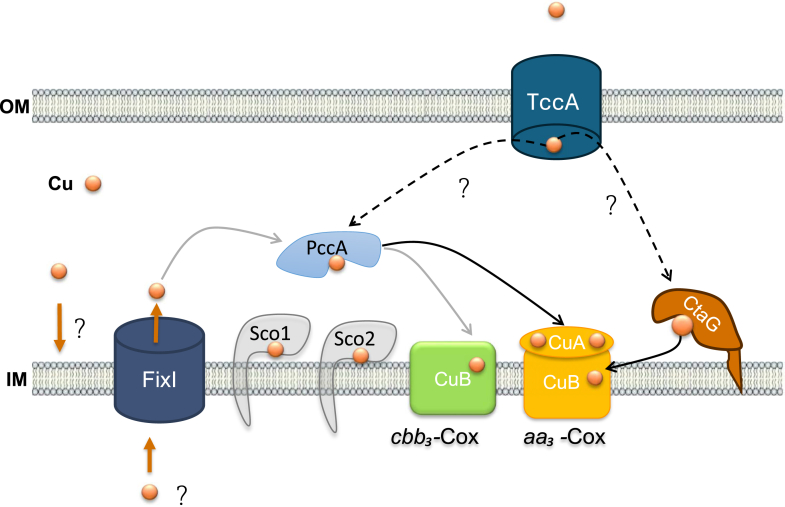 Figure 6
Peer Reviews
No public reviews on file for this paper yet. If you reviewed it on a platform where reviews are public (OpenReview, ICLR, NeurIPS, ICML), you can paste yours below so the community can read it here.
Videos
No videos yet. Explain this paper in a talk, walkthrough, or lecture? Add one.
Taxonomy
TopicsBacterial Genetics and Biotechnology · Microbial Fuel Cells and Bioremediation · Trace Elements in Health