Nerve Transfer for Restoration of Ulnar Fingers Flexion Through Pronator Teres Motor Branch: A Cadaveric Feasibility Study
Paolo Titolo, Alessandro Crosio, Andrea Fanecco, Erica Cavalli, Francesca Vincitorio, Julien Teodori, Giulia Colzani, Nathalie Bini, Mario Ronga, Michele Rosario Colonna, Bruno Battiston, Davide Ciclamini

TL;DR
This study explores a new nerve transfer technique to restore finger flexion in patients with ulnar nerve injuries using the pronator teres motor branch.
Contribution
A novel nerve transfer method using the pronator teres motor branch for ulnar nerve reinnervation is proposed and tested.
Findings
The superficial branch of the pronator teres was consistently the longest and suitable for transfer in all specimens.
A tension-free nerve suture was successfully performed near the target muscle in all cases.
The technique shows potential for clinical application in restoring finger flexion in affected patients.
Abstract
Injury to the ulnar nerve above the elbow or other conditions such as brachial plexus injury or cervical spinal cord injury can also affect the extrinsic finger flexors. Numerous techniques have been described to treat this problem, but no specific nerve transfer has been proposed. Here, we describe the transfer of the motor branch of the pronator teres (PT) to reinnervate flexor digitorum profundi of the ulnar nerve. Eleven fresh frozen upper limbs were used. The anatomical characteristics of the branches to the flexor digitorum profundus and PT were recorded. In all cases, the superficial branch of the PT resulted as the longest between the two and, therefore, was used as a donor. It was passed under the flexor pronator muscles to reach the ulnar nerve. The recipient motor branch was dissected proximally, and a direct nerve suture was made between the two stumps. In all specimens,…
Genes, proteins, chemicals, diseases, species, mutations and cell lines named across the full text — each resolved to its canonical identifier and authoritative record.
Click any figure to enlarge with its caption.
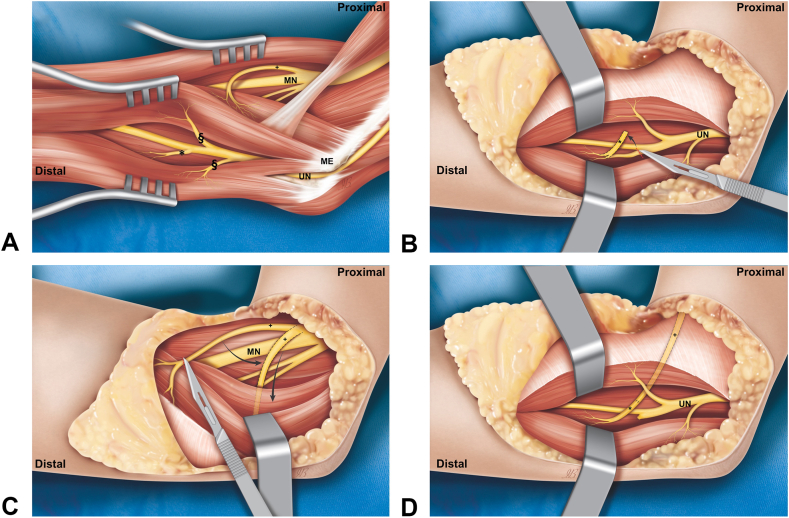 Figure 1
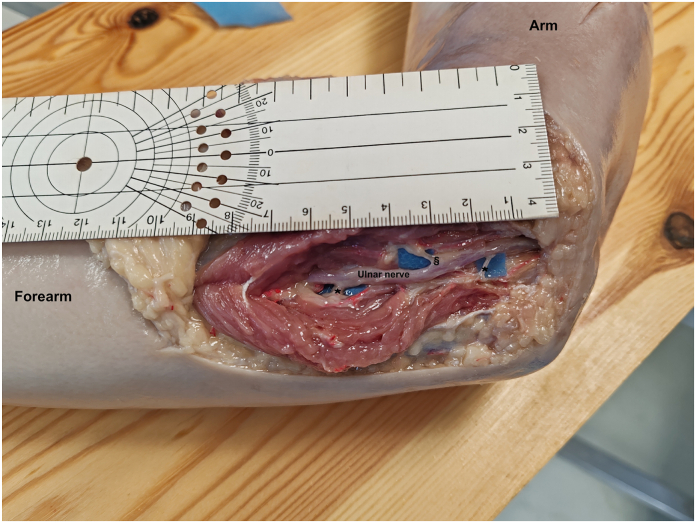 Figure 2
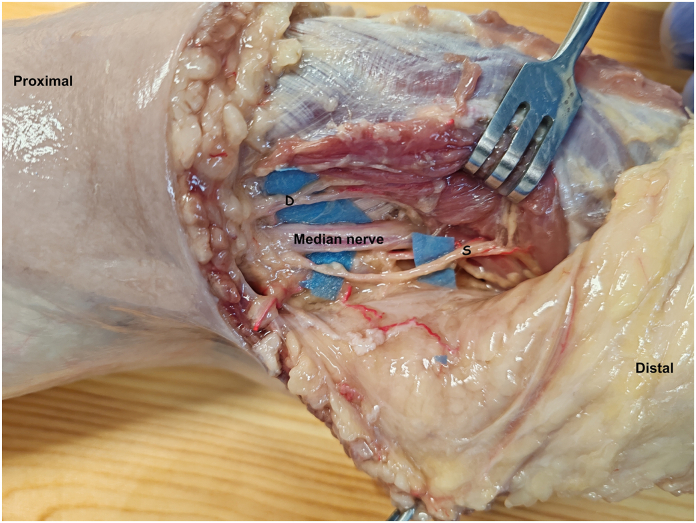 Figure 3
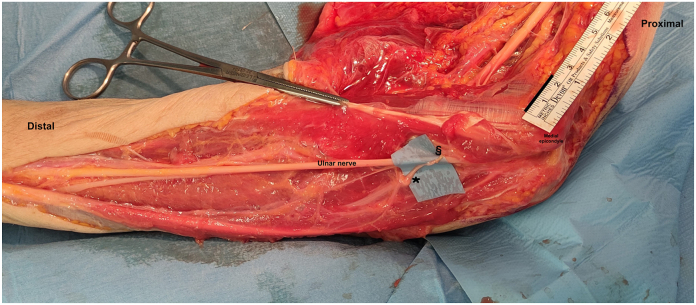 Figure 4
Peer Reviews
No public reviews on file for this paper yet. If you reviewed it on a platform where reviews are public (OpenReview, ICLR, NeurIPS, ICML), you can paste yours below so the community can read it here.
Videos
No videos yet. Explain this paper in a talk, walkthrough, or lecture? Add one.
Taxonomy
TopicsNerve Injury and Rehabilitation · Orthopedic Surgery and Rehabilitation · Peripheral Nerve Disorders