Living With Hypochondroplasia: A Qualitative Exploration of Children's and Caregivers' Experiences, Challenges, and Unmet Needs
Elisabeth M. Oehrlein, Reni Pekala, Stacie Cavallaro, Margaret Cho, Chandler Crews, Andrew Dauber, Ankita Saxena, Joe Vandigo, Emily S. Reese

TL;DR
This study explores the experiences of children with hypochondroplasia and their caregivers, highlighting challenges and unmet needs related to diagnosis, daily life, and support.
Contribution
The study provides new qualitative insights into the psychosocial and medical challenges faced by individuals with hypochondroplasia and their families.
Findings
Diagnostic pathways for hypochondroplasia vary, often beginning in utero or early childhood.
Families face emotional and daily challenges due to height differences and limb disproportions.
Complications beyond short stature include developmental delays, learning differences, and seizures.
Abstract
Hypochondroplasia (HCH) is a rare genetic skeletal dysplasia characterized by short stature, disproportionate limbs, and complications such as learning differences. Currently, no treatments are approved to address HCH‐related short stature, which can adversely affect quality of life. This study aimed to explore diagnostic processes, care pathways, daily life impacts, and unmet needs in HCH. Ninety‐minute interviews were conducted with nine children and young adults and 25 caregivers who had physician‐confirmed HCH. Participants discussed diagnostic journeys, treatment considerations, and day‐to‐day challenges. Following interviews, two 90‐min focus groups among caregivers (n = 10) were conducted to explore themes emerging during interviews. We found that diagnostic pathways vary significantly, with signs of HCH identified in utero or during infancy or early childhood. Families…
Genes, proteins, chemicals, diseases, species, mutations and cell lines named across the full text — each resolved to its canonical identifier and authoritative record.
Click any figure to enlarge with its caption.
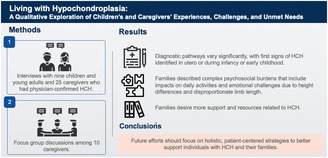 Figure 1
 Figure 2
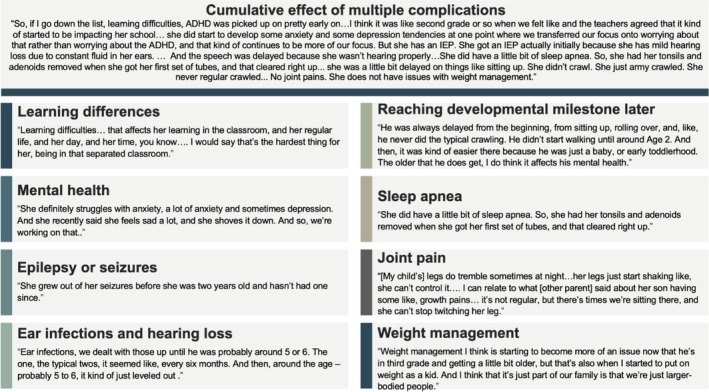 Figure 3
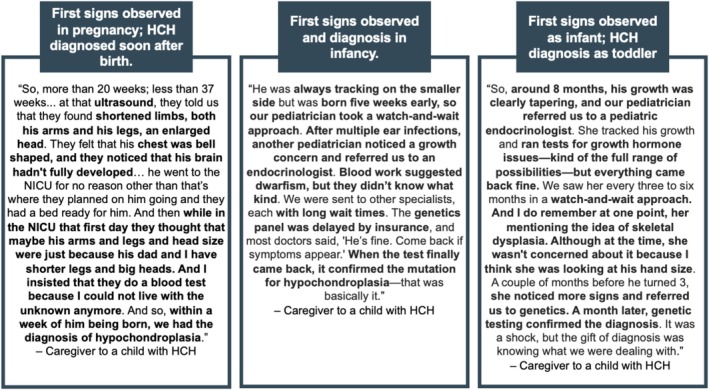 Figure 4
Peer Reviews
No public reviews on file for this paper yet. If you reviewed it on a platform where reviews are public (OpenReview, ICLR, NeurIPS, ICML), you can paste yours below so the community can read it here.
Videos
No videos yet. Explain this paper in a talk, walkthrough, or lecture? Add one.
Taxonomy
TopicsConnective tissue disorders research · Botulinum Toxin and Related Neurological Disorders · Genomics and Rare Diseases