Predictive Factors of Malignancy in Cervical Paragangliomas: A Retrospective Study
Garance Haw, Maxime Fieux, Anthime Flaus, Hélène Lasolle, Juliette Abeillon, Myriam Decaussin‐Petrucci, Dylan Pavie, Benjamin Verillaud, Philippe Herman, Patrick Feugier, Fatima Ameur, Pierre Philouze, Françoise Borson‐Chazot, Philippe Ceruse

TL;DR
This study identifies seven risk factors that help predict if cervical paragangliomas are likely to be malignant and spread.
Contribution
The study introduces seven new predictive factors for metastatic cervical paragangliomas using clinical and imaging data.
Findings
Seven risk factors were identified, including necrosis, extracapsular extension, and abnormal lymph node uptake.
These factors can help clinicians identify aggressive tumors and adjust treatment strategies.
The study used logistic regression to determine the predictive value of various clinical and imaging features.
Abstract
Early predictive factors of metastatic cervical paragangliomas (cPG) are lacking. This multicenter retrospective study included patients with at least one cPG. Metastatic cPG were defined by the histological presence of lymph node metastases or distant metastases. Clinical, radiological, intraoperative, histological, and mutational status characteristics were collected. Predictive factors of metastatic cPG were searched using logistic regression. Sixty‐seven patients were included, corresponding to 86 cPG; 12.8% of these were metastatic. The seven newly identified risk factors were: presence of necrosis (OR = 12.36, 95% CI: [3.03–55.66]), extracapsular extension (OR = 33.42, 95% CI: [2.48–4752.00]), and pathological lymph nodes (OR = 25.00, 95% CI: [3.96–276.07]) on morphological imaging (MRI and/or CT); heterogeneous tumor uptake (OR = 15.5, 95% CI: [2.31–143.68]) and abnormal lymph…
Genes, proteins, chemicals, diseases, species, mutations and cell lines named across the full text — each resolved to its canonical identifier and authoritative record.
Click any figure to enlarge with its caption.
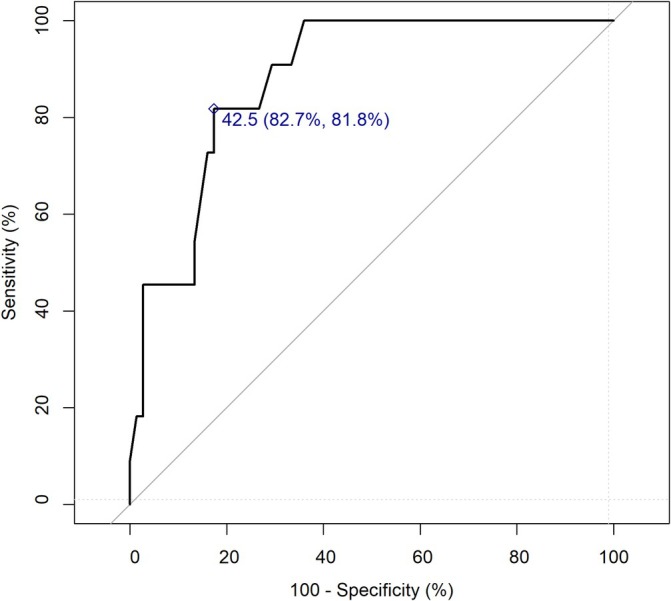 Figure 1
Peer Reviews
No public reviews on file for this paper yet. If you reviewed it on a platform where reviews are public (OpenReview, ICLR, NeurIPS, ICML), you can paste yours below so the community can read it here.
Videos
No videos yet. Explain this paper in a talk, walkthrough, or lecture? Add one.
Taxonomy
TopicsAdrenal and Paraganglionic Tumors · Pituitary Gland Disorders and Treatments · Glioma Diagnosis and Treatment