Fifteen millennia of human mitogenome evolution in Sicily
Anna Tommasi, Rajiv Boscolo Agostini, Giacomo Villani, Nicola Rambaldi Migliore, Maria T. Vizzari, Irene Cardinali, Rosalinda Di Gerlando, Valeria Nicolini, Gary Sorasio, Patrícia Santos, Anna Olivieri, Ugo A. Perego, Giulio Catalano, Nicoletta Volante, Lucia Sarti

TL;DR
This study traces 15,000 years of maternal genetic history in Sicily, revealing a major genetic shift and ongoing gene flow from Eurasia and Africa.
Contribution
The study presents a unique dataset of 116 ancient Sicilian mitogenomes and identifies specific mtDNA lineages marking a genetic discontinuity.
Findings
A genetic discontinuity was identified between the Paleolithic/Late Mesolithic and Early Neolithic periods in Sicily.
Two mtDNA lineages, U5b and U8b/K, specifically mark the transition in genetic history.
Modern Sicilian mitogenomes show extensive variation and lack of structure, indicating continuous gene flow from Western Eurasia and Africa.
Abstract
Sicily, situated at the heart of the Mediterranean Sea, has been a crossroads of people of different origins since the Paleolithic. To gain further insight into the genetic history of this island from a matrilineal viewpoint, we investigated 15 millennia of human mitogenome evolution. A unique Sicilian mitochondrial DNA (mtDNA) dataset, represented by 116 ancient mitogenomes (including two newly sequenced) collected from 16 archeological sites dating from 14,700 to 545 years ago, was compared with a collection of 236 modern mitogenomes covering all districts of the island. By integrating demographic modeling with phylogeographic analyses, we identified a statistically supported genetic discontinuity between the Paleolithic/Late Mesolithic and Early Neolithic periods and two mtDNA lineages (U5b and U8b/K) that specifically mark this transition. The extensive variation and lack of genetic…
Genes, proteins, chemicals, diseases, species, mutations and cell lines named across the full text — each resolved to its canonical identifier and authoritative record.
Click any figure to enlarge with its caption.
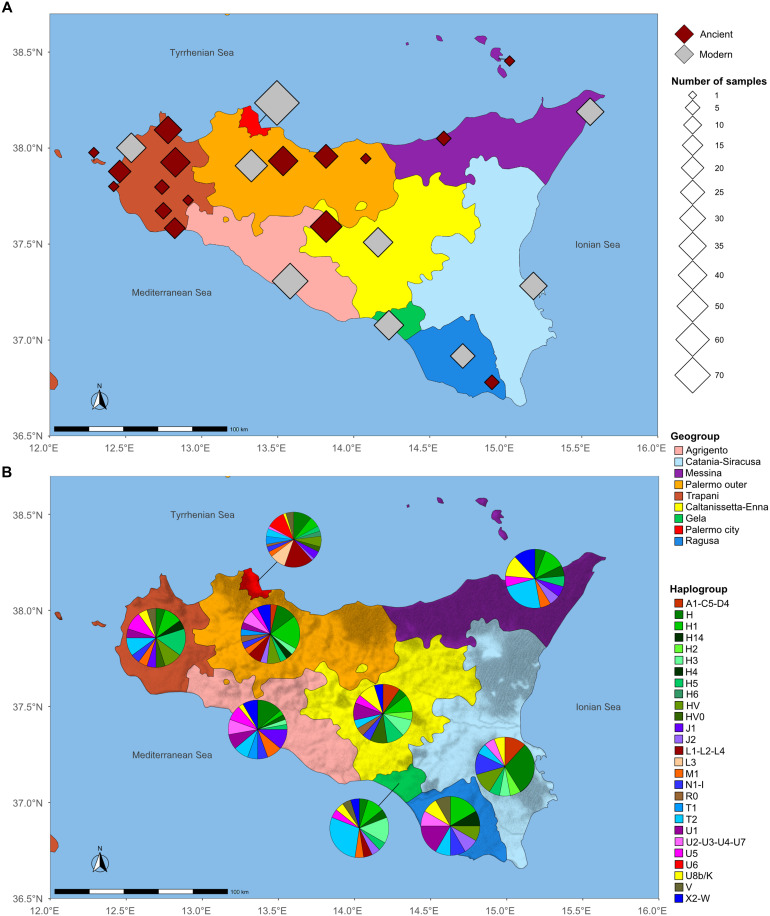 Figure 1
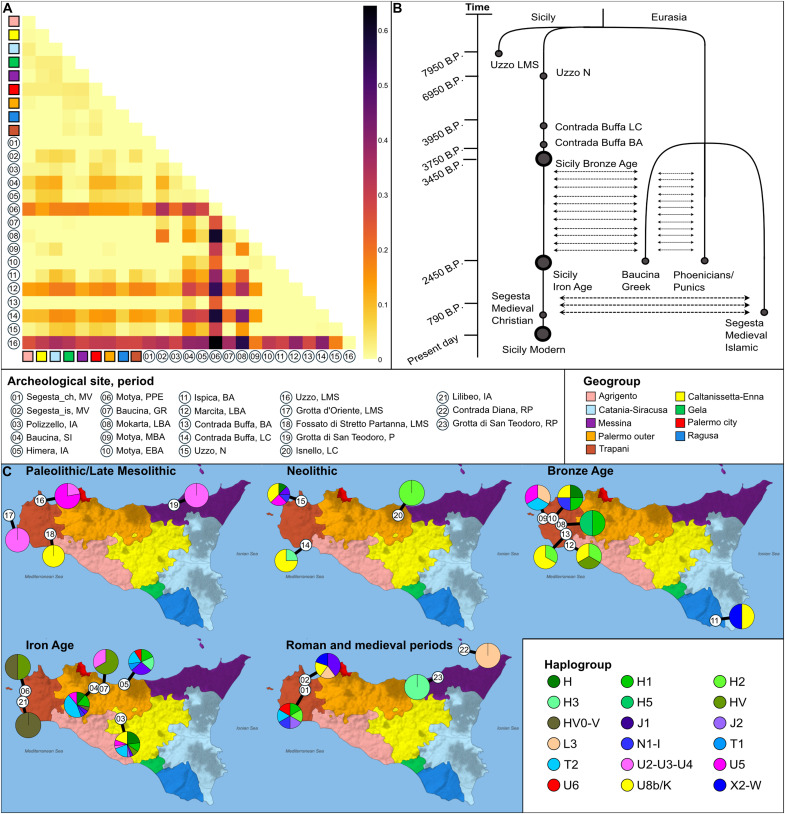 Figure 2
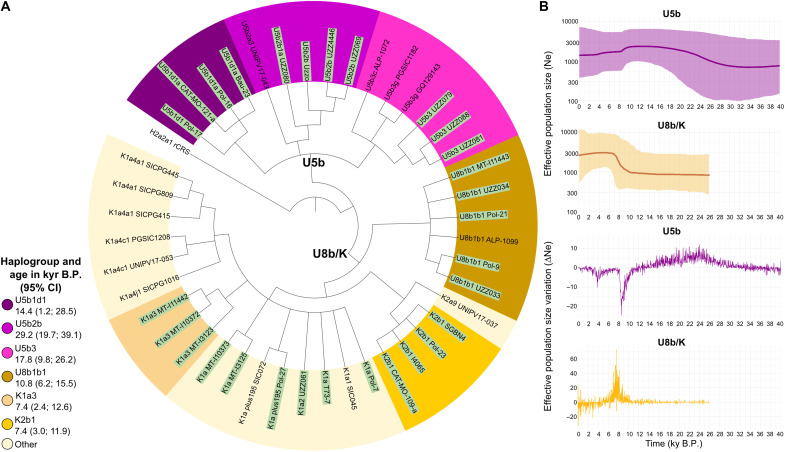 Figure 3
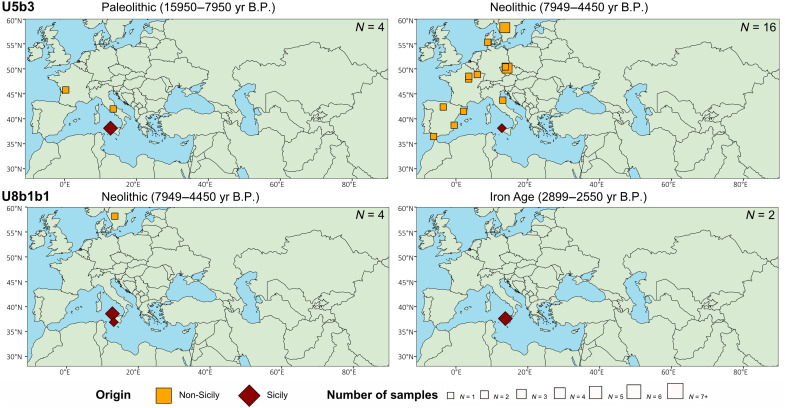 Figure 4
Peer Reviews
No public reviews on file for this paper yet. If you reviewed it on a platform where reviews are public (OpenReview, ICLR, NeurIPS, ICML), you can paste yours below so the community can read it here.
Videos
No videos yet. Explain this paper in a talk, walkthrough, or lecture? Add one.
Taxonomy
TopicsForensic and Genetic Research · Genomics and Phylogenetic Studies · Mitochondrial Function and Pathology