Early risk detection of metabolic syndrome using sex-specific machine learning models in military personnel
Wei-Yun Wang, Yi-Syuan Wu, Yen Huang, Wen-Chii Tzeng

TL;DR
This study uses machine learning to detect early signs of metabolic syndrome in military personnel, showing better accuracy with sex-specific models.
Contribution
The novelty lies in developing and validating sex-specific machine learning models for early metabolic syndrome detection in military populations.
Findings
Logistic regression achieved the highest accuracy (0.89) for predicting metabolic syndrome.
Sex-specific models identified distinct risk factors, such as total cholesterol in men and hemoglobin in women.
Key predictors like BMI, age, and alanine aminotransferase levels were consistent across both sexes.
Abstract
Metabolic syndrome is a critical predictor of future cardiometabolic disease and an emerging public health concern, particularly in high-demand populations such as military personnel. This study aimed to develop and evaluate sex-specific machine learning models for the early detection of metabolic syndrome using annual health check data. We analyzed records from 179,620 Taiwanese Air Force personnel between 2014 and 2022, incorporating demographic, anthropometric, clinical, lifestyle, mental health, and biochemical variables. Six machine learning algorithms—including logistic regression, random forest, K-nearest neighbor, support vector machine, neural network, and naïve Bayes—were trained separately for men and women. Among these models, logistic regression outperformed the others, achieving an accuracy and area under the curve (AUC) of 0.89. Body mass index, age, and alanine…
Genes, proteins, chemicals, diseases, species, mutations and cell lines named across the full text — each resolved to its canonical identifier and authoritative record.
Click any figure to enlarge with its caption.
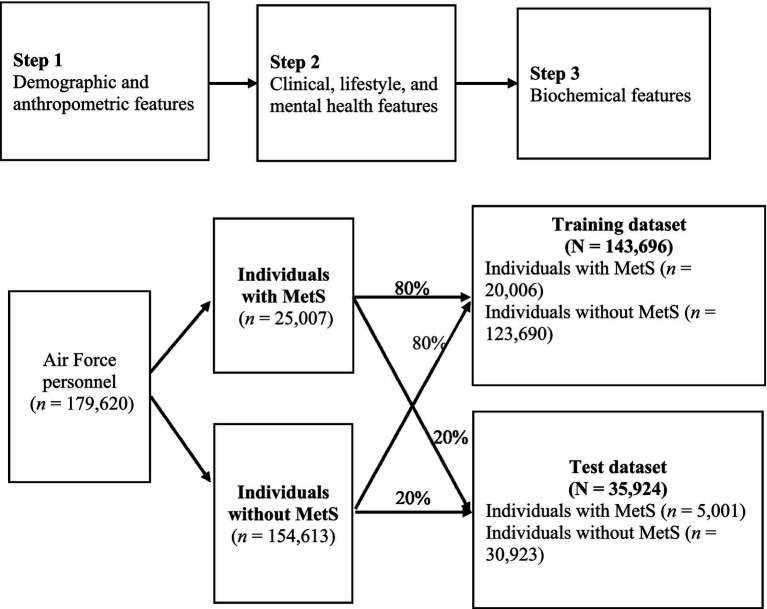 Figure 1
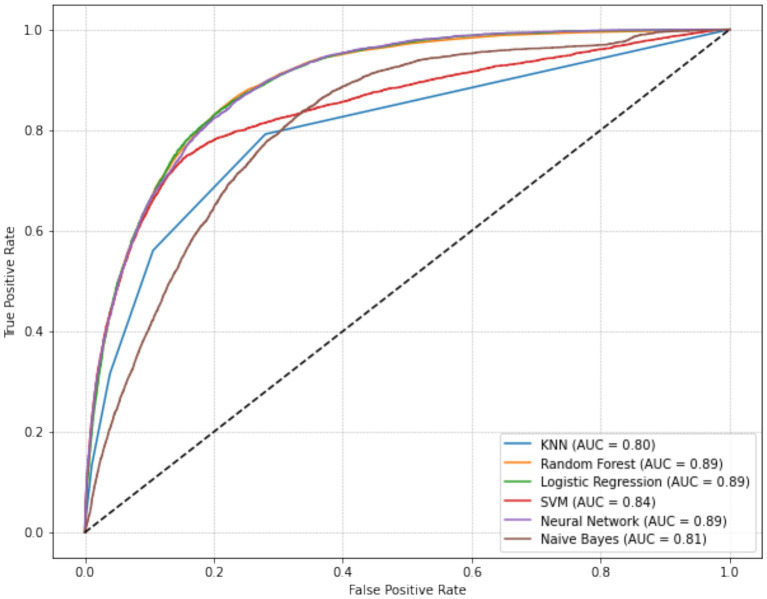 Figure 2
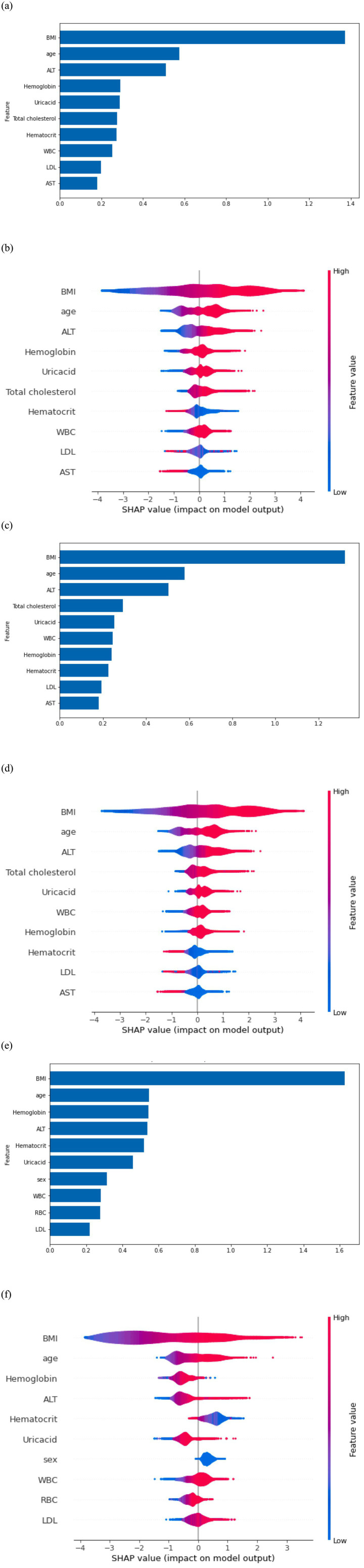 Figure 3
Peer Reviews
No public reviews on file for this paper yet. If you reviewed it on a platform where reviews are public (OpenReview, ICLR, NeurIPS, ICML), you can paste yours below so the community can read it here.
Videos
No videos yet. Explain this paper in a talk, walkthrough, or lecture? Add one.
Taxonomy
TopicsDiabetes, Cardiovascular Risks, and Lipoproteins · Health Promotion and Cardiovascular Prevention · Metabolomics and Mass Spectrometry Studies