Decoding the bare necessities of decapod crustacean nomenclature through the ages
Sammy De Grave, Elizabeth Cole, Sancia E. T. van der Meij

TL;DR
This paper explores how decapod crustaceans have been named over time, revealing trends in naming practices and addressing claims of historical bias.
Contribution
The study extends nomenclatural trend analysis to marine decapods, challenging prior claims of naming bias.
Findings
Historically, most decapod names were morphology-based, but this shifted in the Victorian era toward geographic and eponymous names.
Post-1958, naming practices show a balanced distribution among morphology, geography, and eponyms.
Female scientists are honoured in proportion to their presence in the field, with no evidence of naming bias detected.
Abstract
Though taxonomists have been classifying species since 1758, the methods and biases of their naming practices have recently come under scrutiny. Despite some compelling claims on e.g., historical imperialism in the published literature, the knowledge base for making such assertions is small, as nomenclatural trends have only been researched in a select few taxa. Here, we investigate naming practices in Decapoda, one of the most studied crustacean groups, thereby extending the knowledge base to the marine realm in contrast to a previously studied cohort of largely terrestrial taxa. To date almost 18,000 species of decapods are known, from which a total of 22,363 unique names are analysed, as neither nomenclatorial nor taxonomic status has any bearing on the naming process. Despite taxonomists being inspired by a multitude of cultural influences, historically the majority of names were…
Genes, proteins, chemicals, diseases, species, mutations and cell lines named across the full text — each resolved to its canonical identifier and authoritative record.
Click any figure to enlarge with its caption.
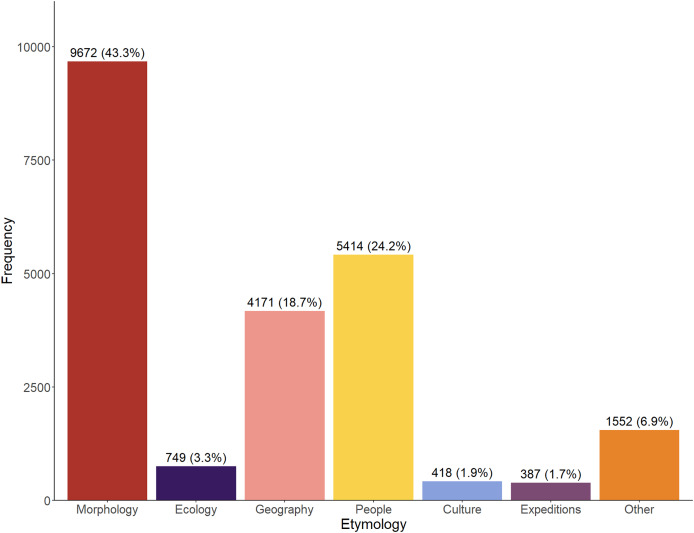 Figure 1
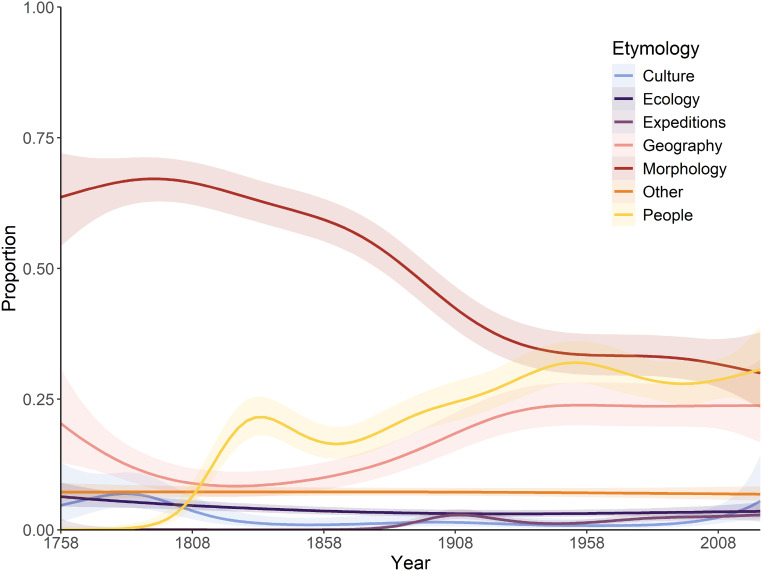 Figure 2
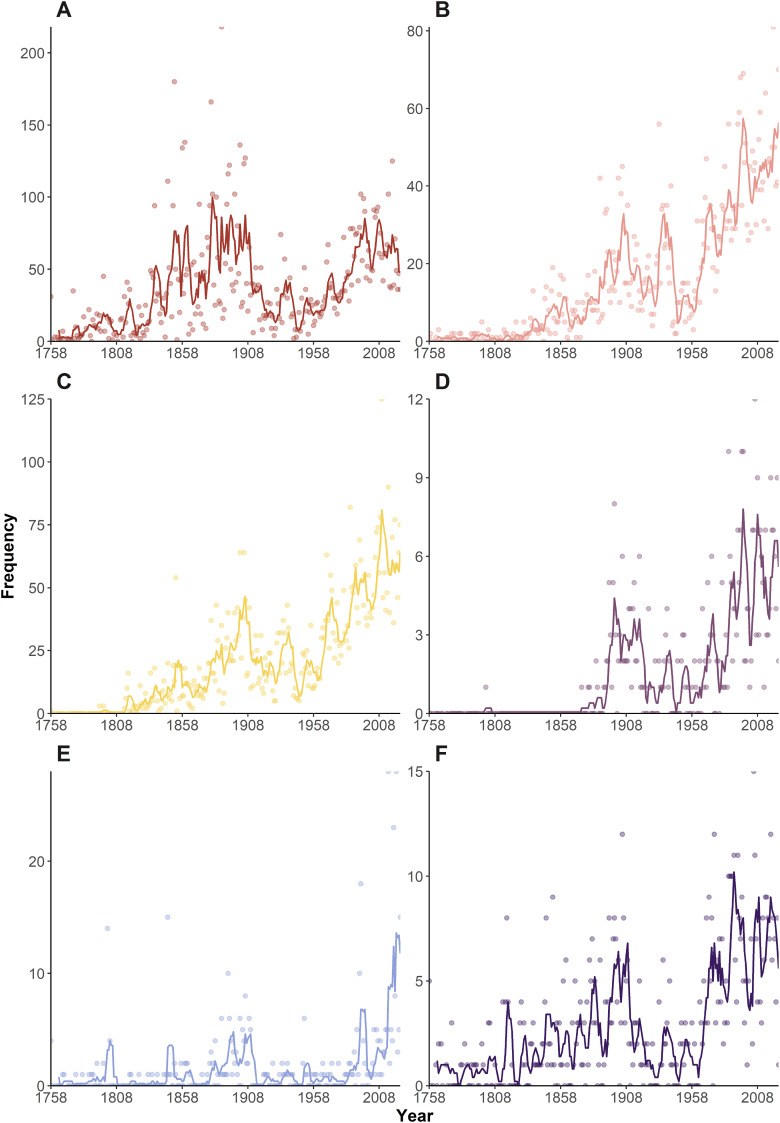 Figure 3
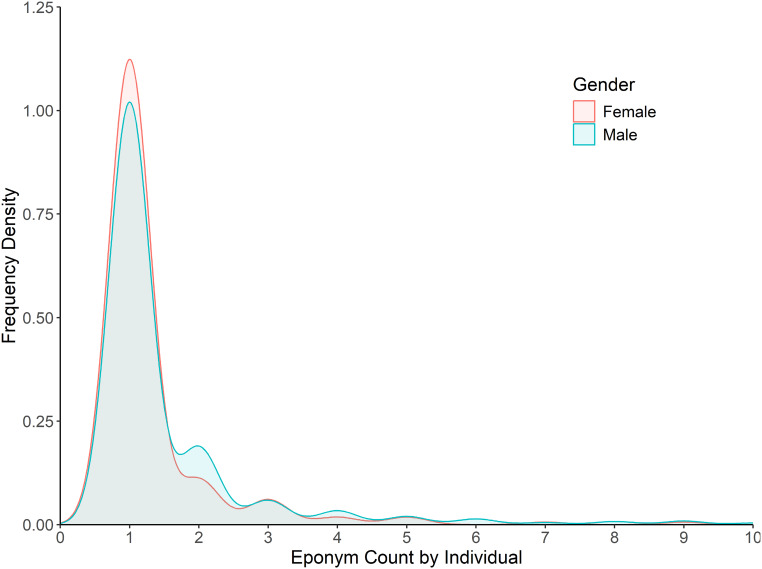 Figure 4
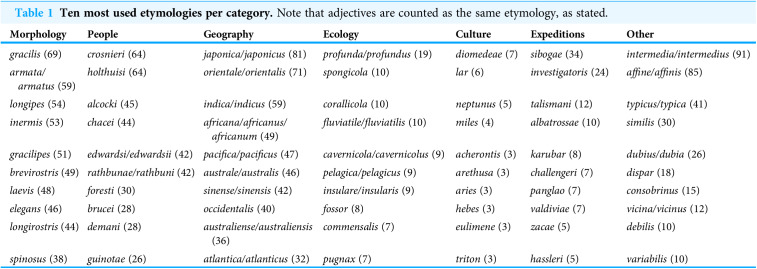 Figure 5
Peer Reviews
No public reviews on file for this paper yet. If you reviewed it on a platform where reviews are public (OpenReview, ICLR, NeurIPS, ICML), you can paste yours below so the community can read it here.
Videos
No videos yet. Explain this paper in a talk, walkthrough, or lecture? Add one.
Taxonomy
TopicsCrustacean biology and ecology · Species Distribution and Climate Change · Lepidoptera: Biology and Taxonomy