Ecological and Mutation‐Order Speciation in Senecio
Maddie E. James, Maria C. Melo, Federico Roda, Diana Bernal‐Franco, Melanie J. Wilkinson, Gregory M. Walter, Huanle Liu, Jan Engelstädter, Daniel Ortiz‐Barrientos

TL;DR
This study shows how environmental differences and genetic mutations together drive the formation of new species in the Senecio plant complex.
Contribution
The paper unifies ecological and mutation-order speciation mechanisms into a single framework, showing they can act simultaneously.
Findings
Dune and Headland ecotypes show strong reproductive isolation due to divergent natural selection.
Geographically distant Headland populations develop reproductive barriers despite similar traits.
Theoretical models reveal environmental similarity, genetic complexity, and mutation distribution affect speciation.
Abstract
Natural selection shapes how new species arise, yet the mechanisms that generate reproductive barriers remain actively debated. Although ecological divergence in contrasting environments and mutation‐order processes in similar environments are often viewed as distinct speciation mechanisms, we show they can occur simultaneously and act as part of a continuum of selective pressures. In the Senecio lautus species complex, Dune and Headland ecotypes have evolved repeatedly along the Australian coastline. Through crossing experiments and field studies, we find that divergent natural selection promotes strong reproductive isolation between the Dune and Headland ecotypes. While uniform selection maintains reproductive compatibility among ecologically similar Dune populations, geographically distant Headland populations have evolved reproductive barriers despite their convergent prostrate…
Genes, proteins, chemicals, diseases, species, mutations and cell lines named across the full text — each resolved to its canonical identifier and authoritative record.
Click any figure to enlarge with its caption.
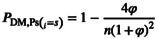 Figure 1
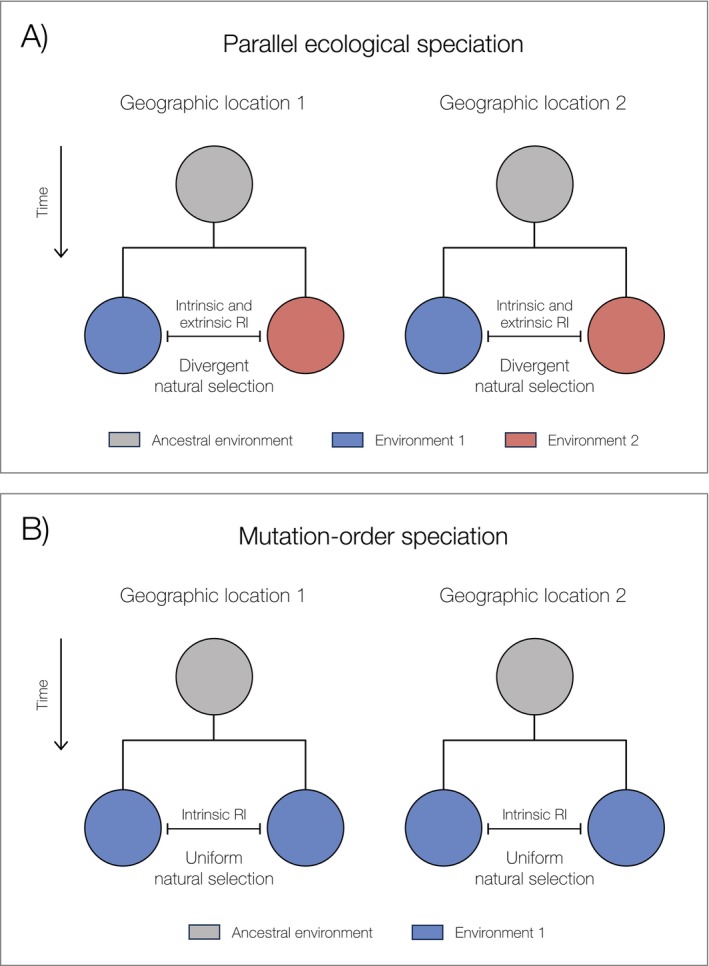 Figure 2
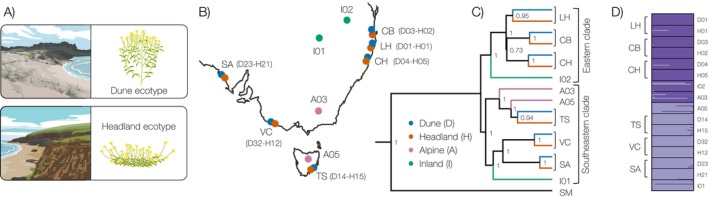 Figure 3
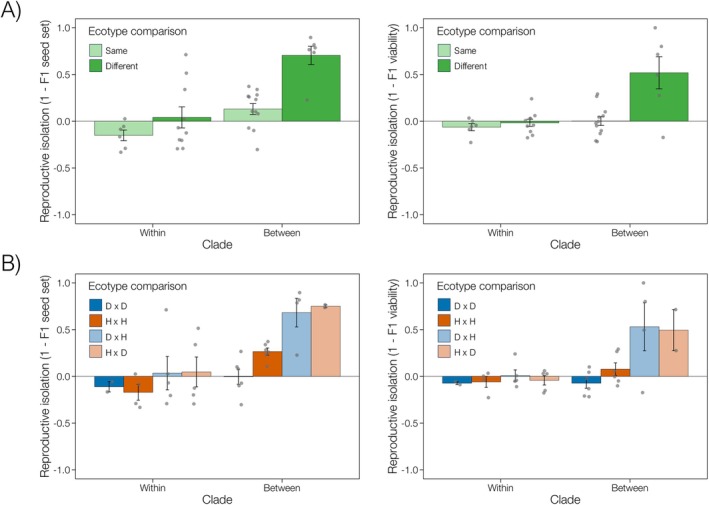 Figure 4
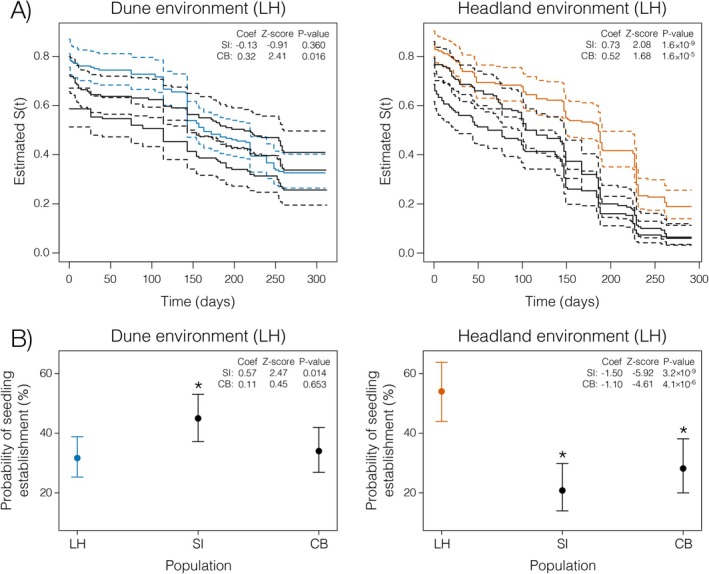 Figure 5
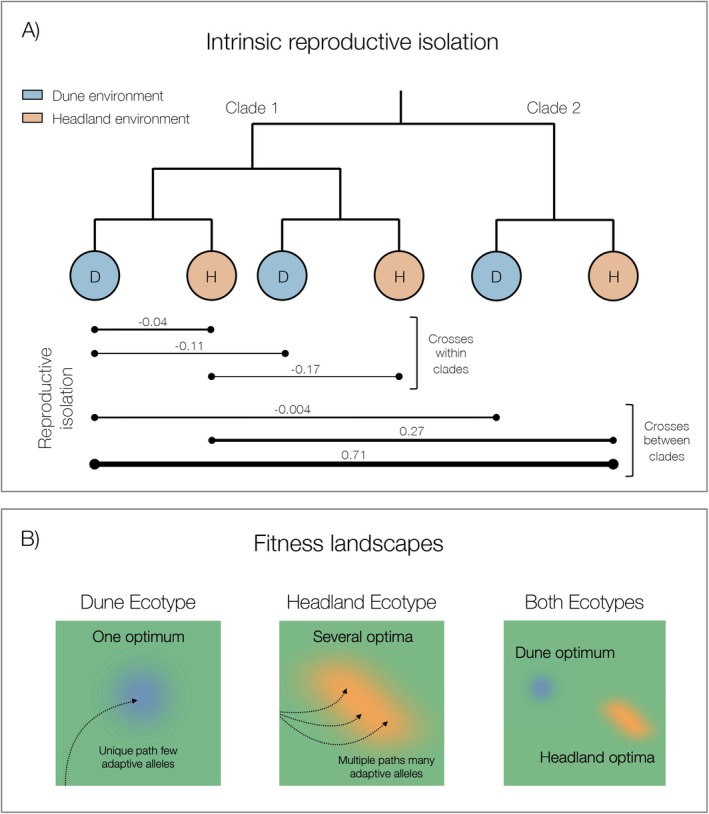 Figure 6
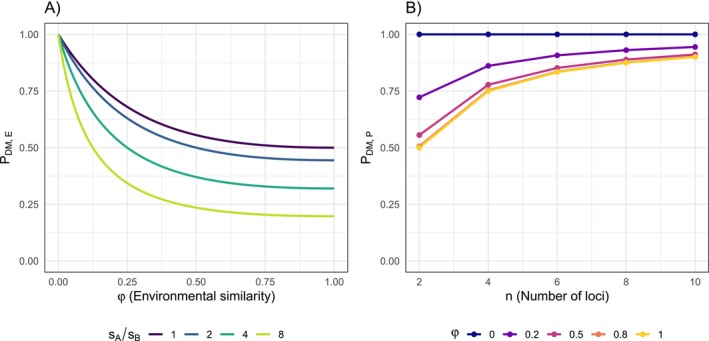 Figure 7
Peer Reviews
No public reviews on file for this paper yet. If you reviewed it on a platform where reviews are public (OpenReview, ICLR, NeurIPS, ICML), you can paste yours below so the community can read it here.
Videos
No videos yet. Explain this paper in a talk, walkthrough, or lecture? Add one.
Taxonomy
TopicsGenetic diversity and population structure · Ecology and Vegetation Dynamics Studies · Plant and animal studies