Anion Binding by Macrocyclic Receptors: Computational Landscape of 1:1 and 2:1 Stoichiometries
Minwei Che, Amar H. Flood, Krishnan Raghavachari

TL;DR
This paper explores how different macrocyclic receptors bind anions in various stoichiometries, showing how cavity size affects selectivity for anion sensing.
Contribution
The study reveals distinct binding preferences of macrocycles for small and large anions, enabling versatile anion recognition strategies.
Findings
Triazolophane preferentially binds small anions like chloride and bromide in 1:1 stoichiometry.
Cyanostar and tricarb macrocycles favor larger anions like iodide in solution.
Larger polyatomic anions form stable 2:1 sandwich complexes with macrocycles.
Abstract
Macrocyclic receptors play a crucial role in supramolecular chemistry, enabling the selective binding of guest molecules through non‐covalent interactions. This study investigates the anion binding properties of three shape‐persistent macrocycles, triazolophane, cyanostar, and tricarb, each featuring preorganized cavities with polarized CH hydrogen bond donors. In the 1:1 binding stoichiometries, the macrocycles preferentially bind anions that fit inside their two‐dimensional cavities, with this preference being more pronounced in solution. Specifically, the triazolophane favors smaller anions like chloride and bromide, while the larger cavities offered by cyanostar and tricarb macrocycles preferentially bind the larger iodide. For large, polyatomic anions (SCN−, BF4 −, ClO4 −, and PF6 −), the macrocycles self‐assemble to form stable 2:1 sandwich complexes, exhibiting stronger binding.…
Genes, proteins, chemicals, diseases, species, mutations and cell lines named across the full text — each resolved to its canonical identifier and authoritative record.
Click any figure to enlarge with its caption.
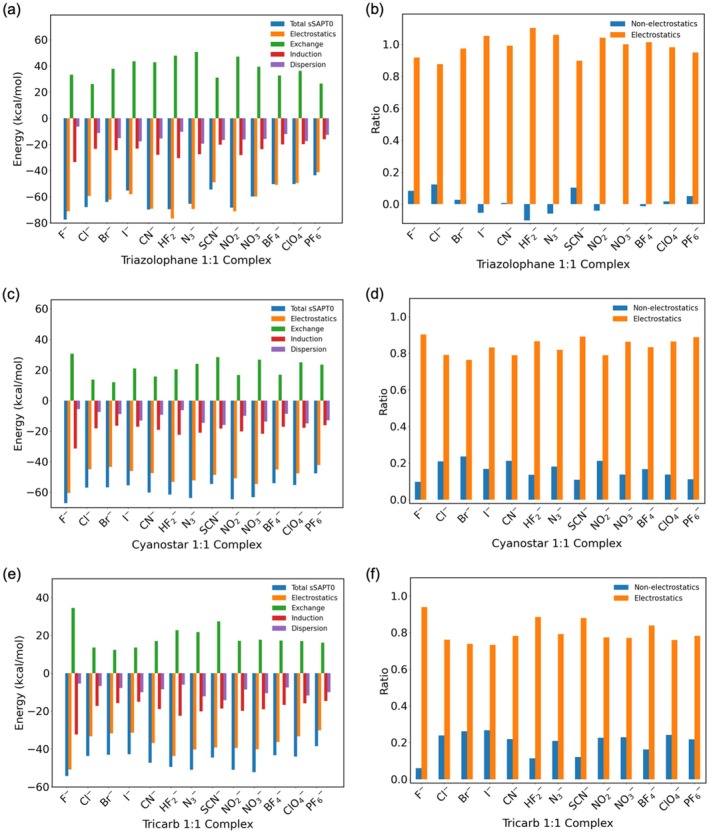 Figure 1
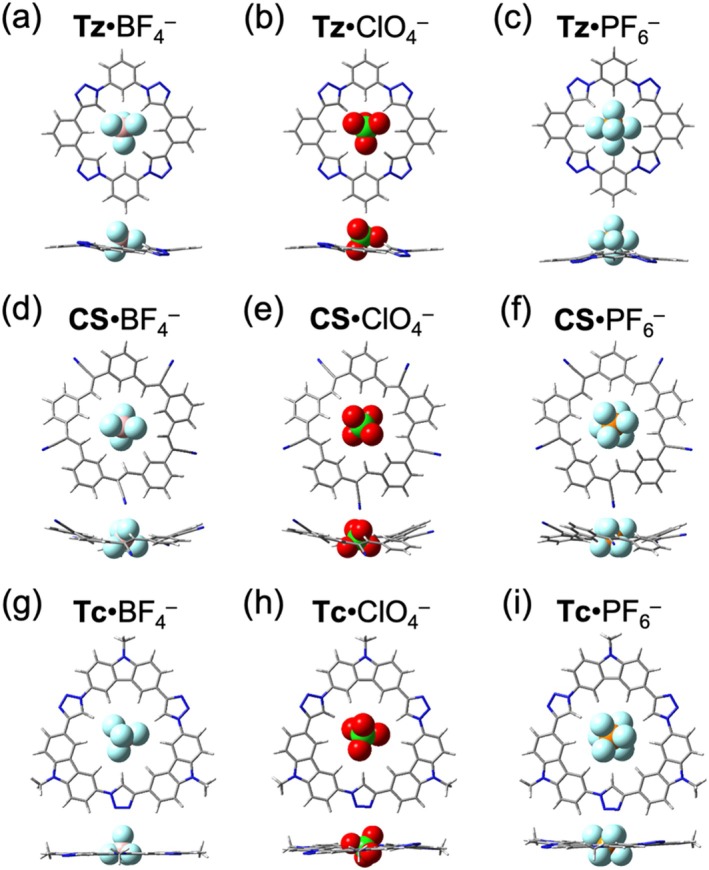 Figure 2
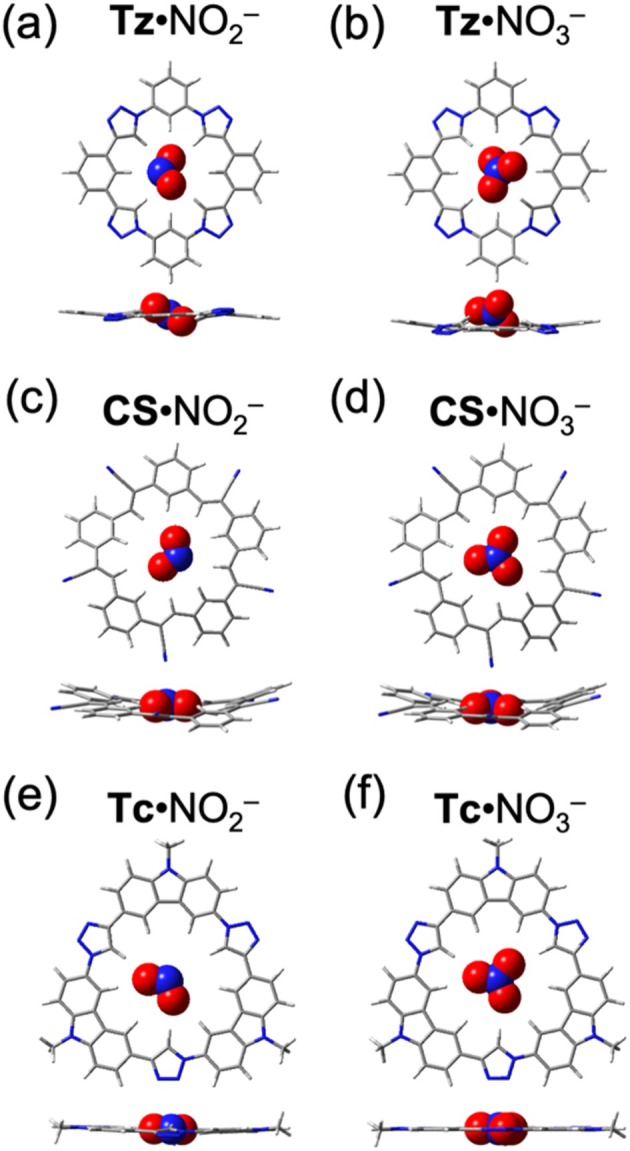 Figure 3
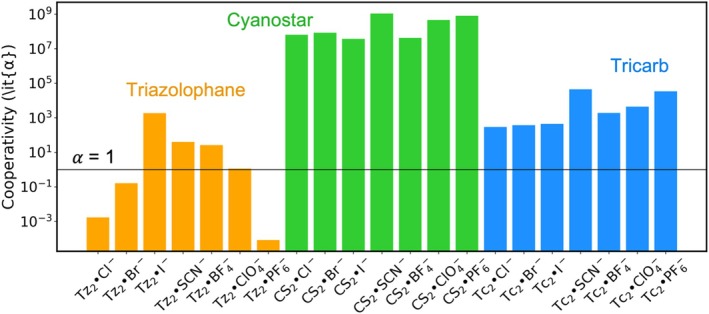 Figure 4
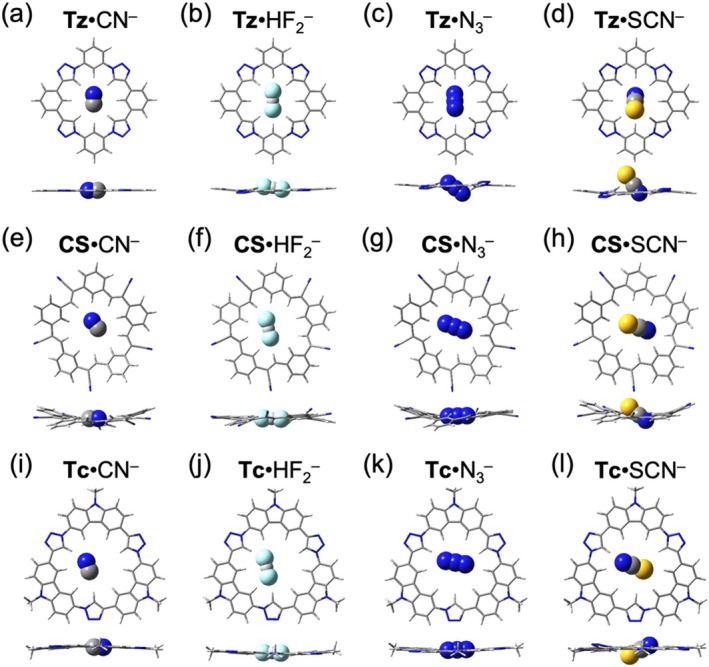 Figure 5
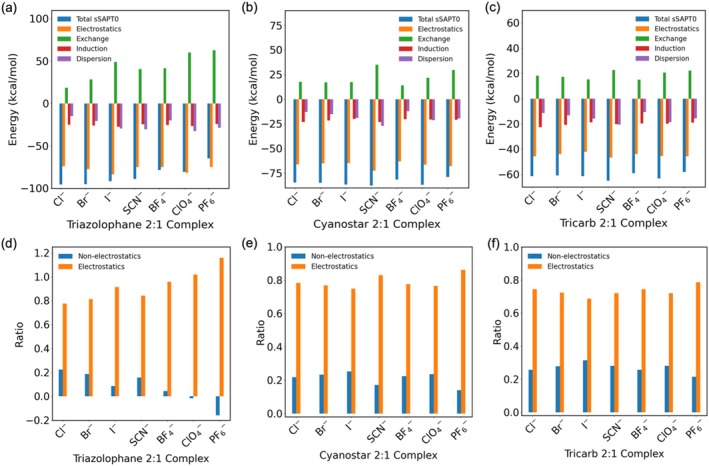 Figure 6
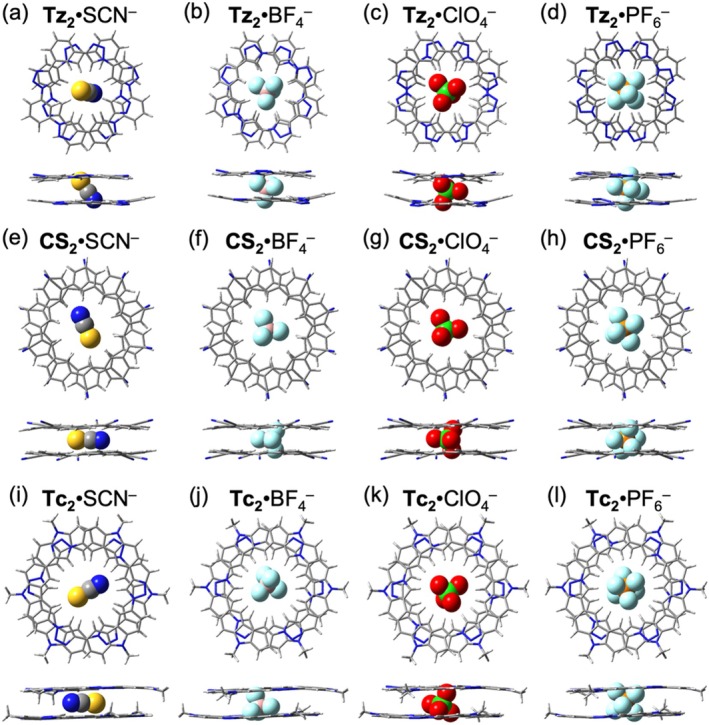 Figure 7
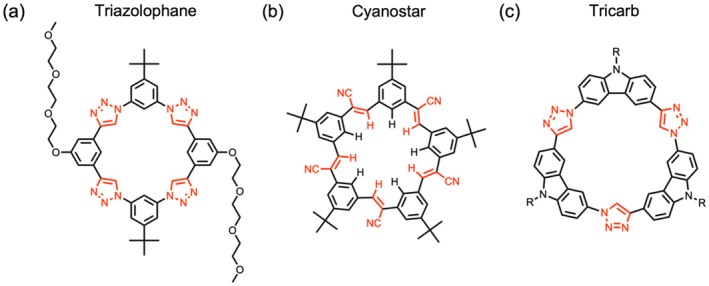 Figure 8
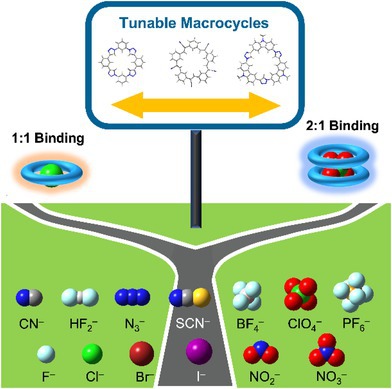 Figure 9
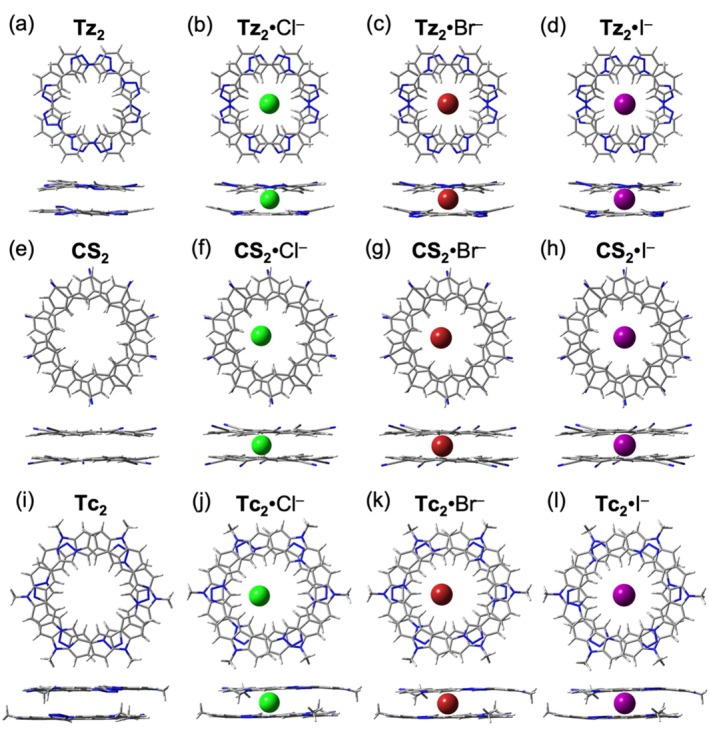 Figure 10
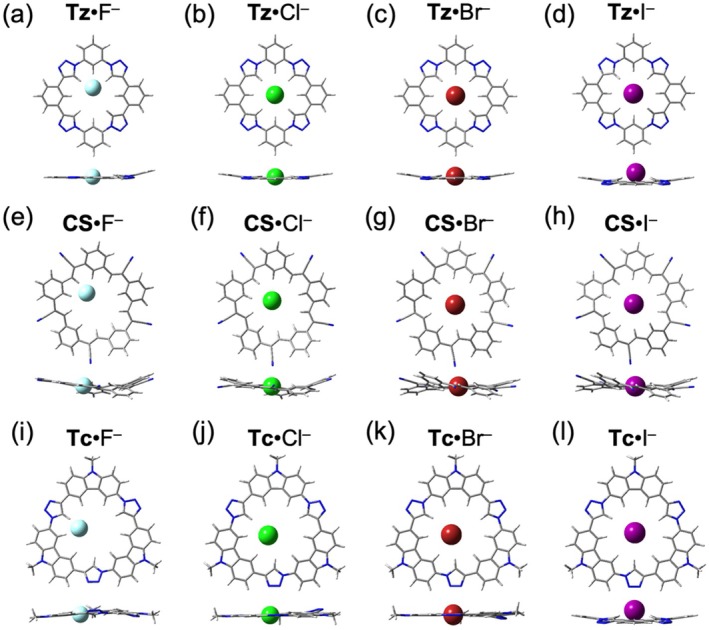 Figure 11
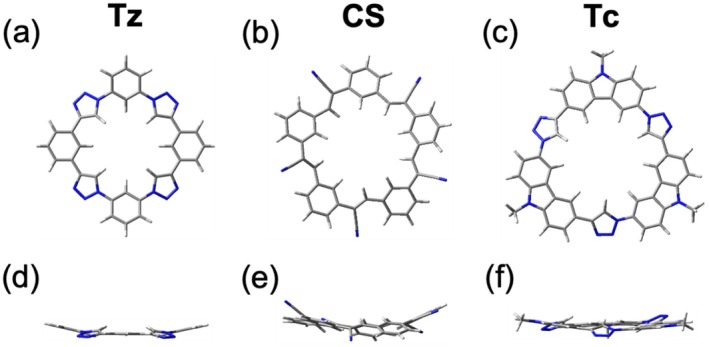 Figure 12
Peer Reviews
No public reviews on file for this paper yet. If you reviewed it on a platform where reviews are public (OpenReview, ICLR, NeurIPS, ICML), you can paste yours below so the community can read it here.
Videos
No videos yet. Explain this paper in a talk, walkthrough, or lecture? Add one.
Taxonomy
TopicsMolecular Sensors and Ion Detection · Supramolecular Chemistry and Complexes · Supramolecular Self-Assembly in Materials