Differential Effects of Neurotensin NTS1 and NTS2 Receptors on Locomotion
Misty D. Smith, Elizabeth Jill Dahle, Annette E. Fleckenstein, Glen R. Hanson

TL;DR
This study shows that NTS1 and NTS2 receptors have opposite effects on mouse movement and adaptation to new environments, especially when nicotine is involved.
Contribution
The study reveals distinct roles of NTS1 and NTS2 receptors in modulating locomotion and habituation, particularly in response to nicotine.
Findings
Mice lacking NTS1 receptors showed less habituation to a novel environment compared to wild-type mice.
Nicotine reduced locomotor activity in wild-type and NTS1-deficient mice but had little effect on NTS2-deficient mice.
NTS2-deficient mice habituated more rapidly to a novel open field than wild-type mice.
Abstract
Neurotensin (NT) is an endogenous neuropeptide with diverse central and peripheral effects, particularly as related to modulation of central nervous system dopaminergic activity. For example, interactions between dopamine and NT have been associated with the motivation to use, and the motor consequences of drugs abuse, including nicotine. However, the relative contribution of the two subtypes of cell surface G‐protein coupled NT receptors (NTS1 and NTS2) to dopamine‐related drug‐induced effects is unclear. We investigated the locomotor behavior and exploratory drive of C57BL/6J mice deficient in either NTS1 (NTS1 −/−) or NTS2 (NTS2 −/−) compared to wild‐type C57BL/6J (WT +/+) mice in an open‐field. In addition, the effect of nicotine on locomotion and intra‐session habituation to a novel open field was compared in each of these genetic strains. When compared to WT (+/+) mice, the…
Genes, proteins, chemicals, diseases, species, mutations and cell lines named across the full text — each resolved to its canonical identifier and authoritative record.
Click any figure to enlarge with its caption.
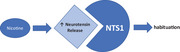 Figure 1
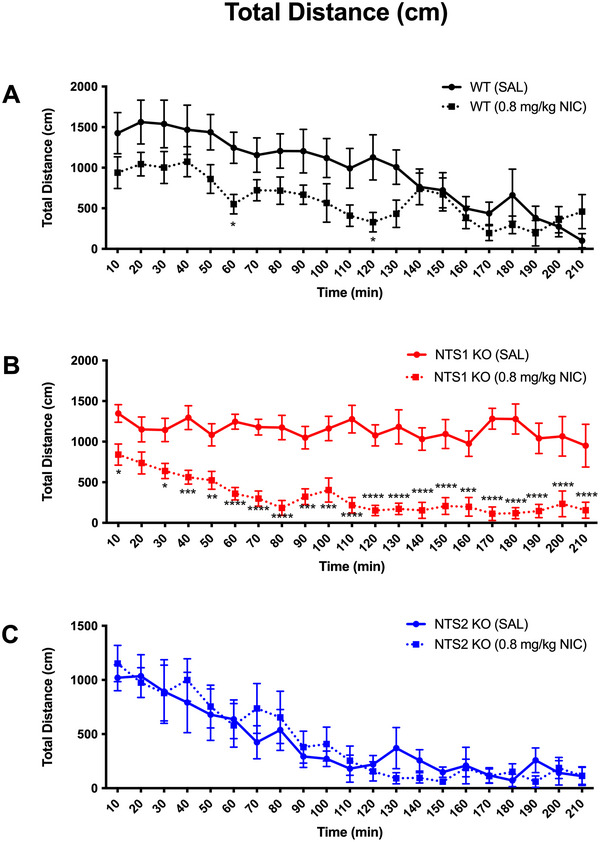 Figure 2
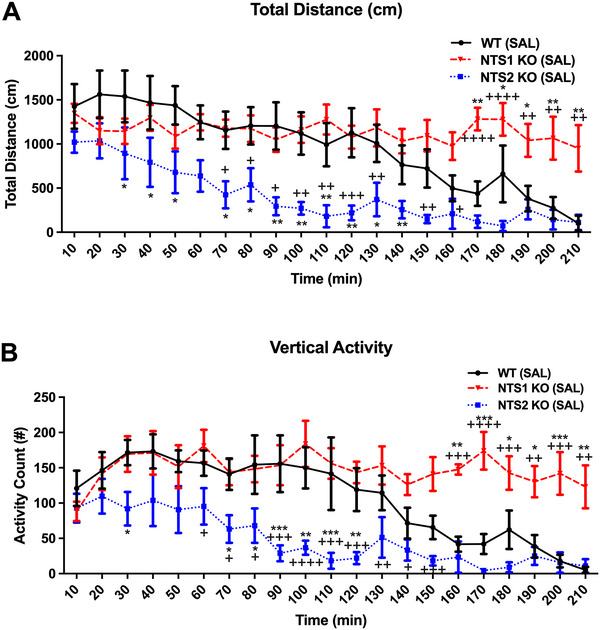 Figure 3
Peer Reviews
No public reviews on file for this paper yet. If you reviewed it on a platform where reviews are public (OpenReview, ICLR, NeurIPS, ICML), you can paste yours below so the community can read it here.
Videos
No videos yet. Explain this paper in a talk, walkthrough, or lecture? Add one.
Taxonomy
TopicsNeuropeptides and Animal Physiology · Antimicrobial Peptides and Activities · Neuroscience of respiration and sleep