Investigation of Antimicrobial Potential of Medicinal Plants Against Pseudomonas aeruginosa
Nosheen Bibi, Shazia Perveen, Sumaira Kanwal, Fariha Latif, Rehmana Rashid, Sara Janiad, Iram Qadeer, Fatima Naseem, Abdullah R. Alanzi, Rashed N. Herqash, Imran Haider, Mehraj A. Abbasov, Sadaf Kayani, Mohd Asif Shah

TL;DR
This study tested five plant extracts for their ability to fight Pseudomonas aeruginosa, a harmful bacteria, and found some were effective at low concentrations.
Contribution
The study identifies specific plant extracts with strong antibacterial and biofilm inhibition effects against Pseudomonas aeruginosa.
Findings
Cirsium arvensis showed the highest zone of inhibition (72 mm) against Pseudomonas aeruginosa.
Hordeum vulgare inhibited biofilm formation by 99.05% at 0.8 μg/mL.
Avena fatua and Chenopodium murale were effective at very low concentrations (1–2 μg/mL).
Abstract
Pseudomonas aeruginosa, a gram‐negative bacterium present in water and soil, causes significant illnesses and chronic conditions that degrade drinking water quality. This study aimed to evaluate the antibacterial and antioxidant activities of plant extracts (Convolvulus arvensis, Chenopodium murale, Avena fatua, Cirsium arvense, and Hordeum vulgare) against P. aeruginosa. FTIR spectroscopy was used to investigate in the plant extracts, and the phytochemical compounds found in the plant extracts were analyzed using GC–MS analysis. This study evaluated the antioxidant activity of plant extracts using DPPH scavenging assays and found that ascorbic acid significantly improved the DPPH scavenging activity of C. arvensis extract compared to that of other plants. Saliva samples were collected from the patients to differentiate P. aeruginosa from other oral cavity microorganisms. Gram staining…
Genes, proteins, chemicals, diseases, species, mutations and cell lines named across the full text — each resolved to its canonical identifier and authoritative record.
Click any figure to enlarge with its caption.
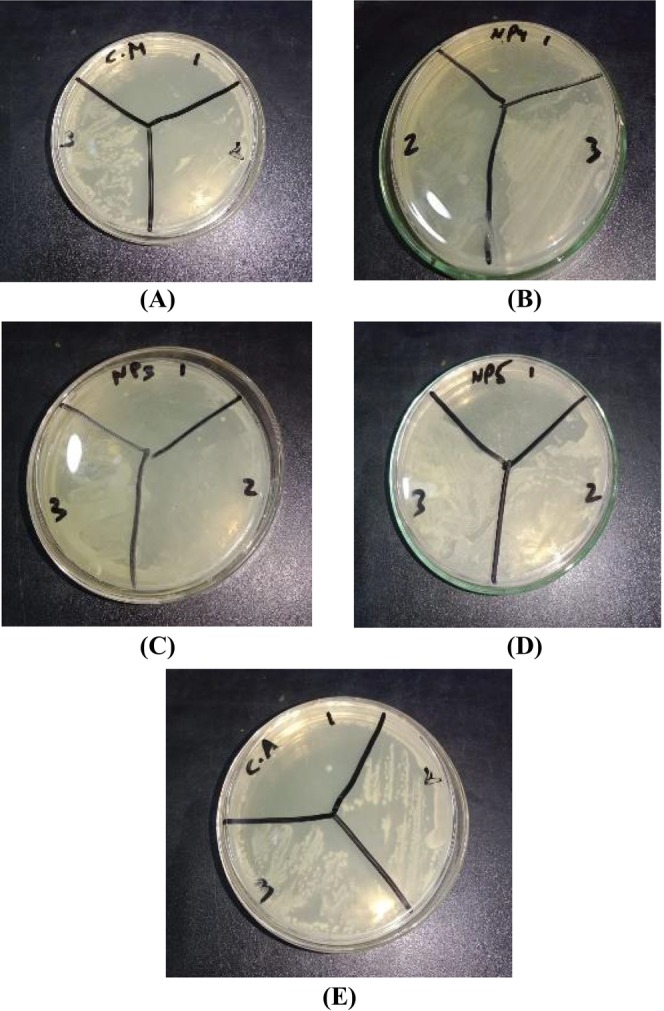 Figure 1
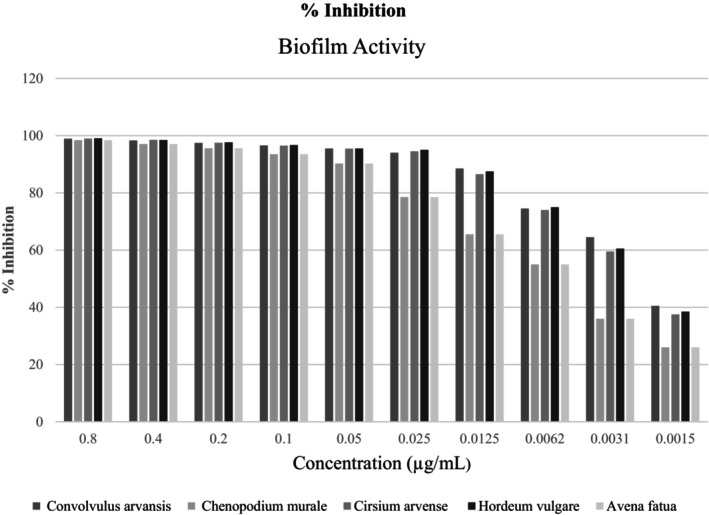 Figure 2
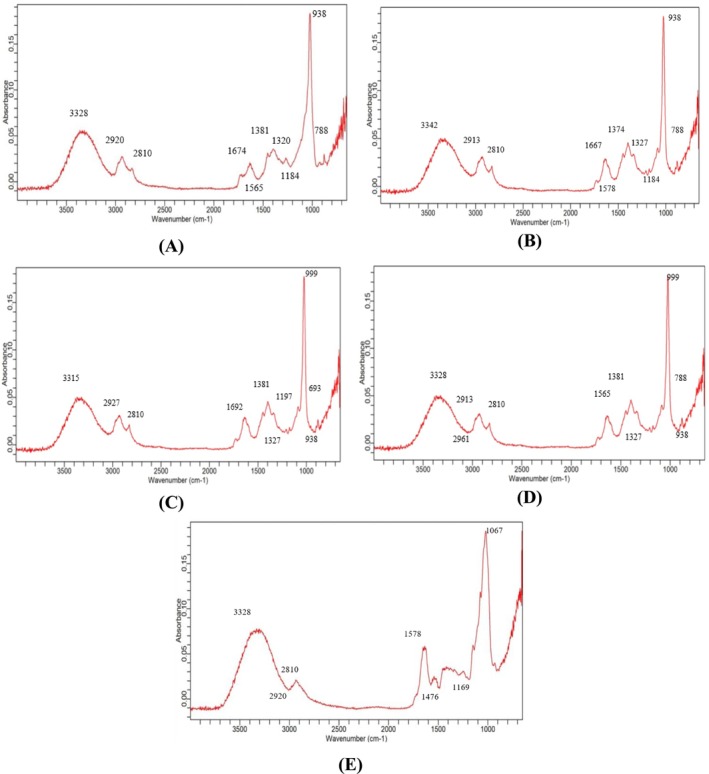 Figure 3
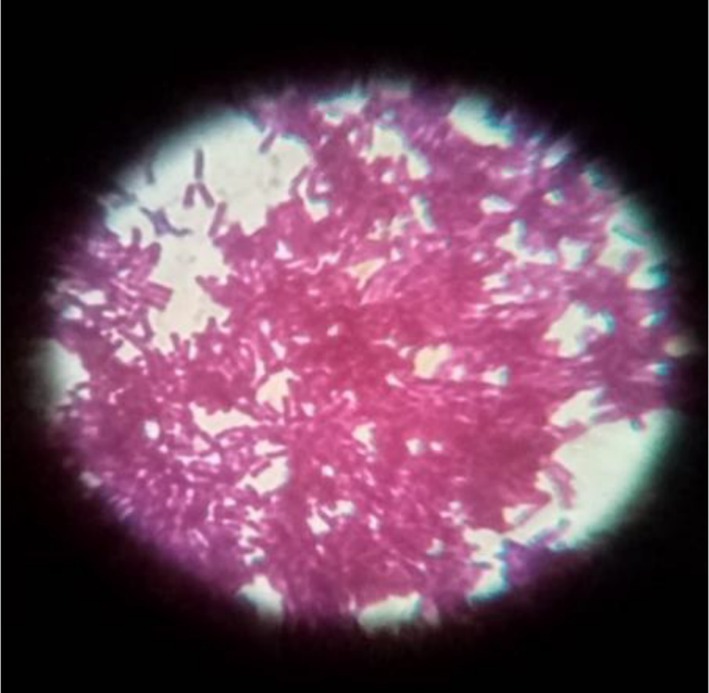 Figure 4
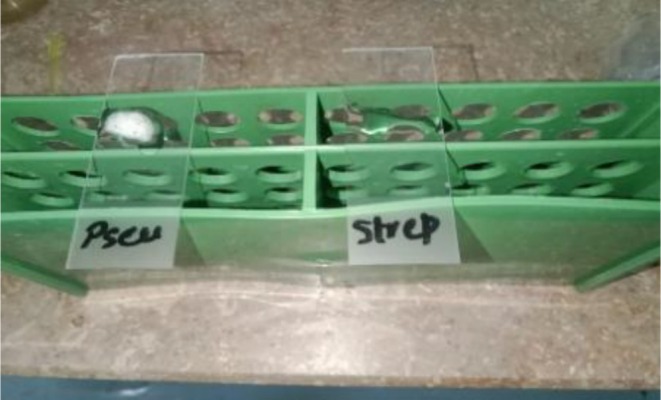 Figure 5
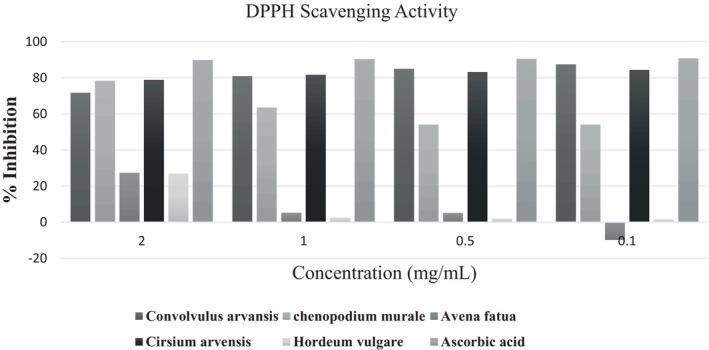 Figure 6
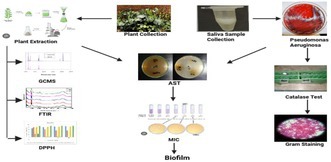 Figure 7
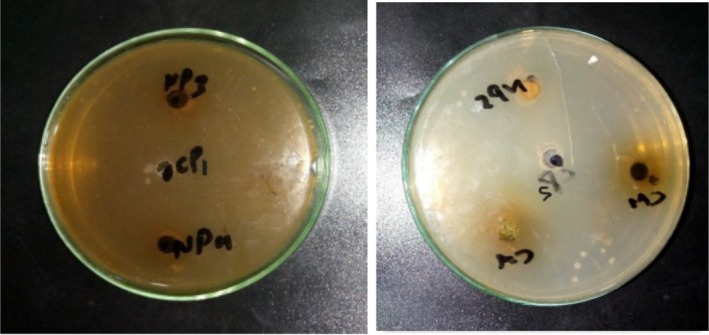 Figure 8
Peer Reviews
No public reviews on file for this paper yet. If you reviewed it on a platform where reviews are public (OpenReview, ICLR, NeurIPS, ICML), you can paste yours below so the community can read it here.
Videos
No videos yet. Explain this paper in a talk, walkthrough, or lecture? Add one.
Taxonomy
TopicsEssential Oils and Antimicrobial Activity · Silymarin and Mushroom Poisoning · Phytochemistry Medicinal Plant Applications