Spatial and Temporal Patterns of Prion Gene Variation Are Consistent With a Response to Chronic Wasting Disease‐Induced Selection in Wild White‐Tailed Deer
Christine M. Bubac, Ty Russell, Debbie McKenzie, Mark C. Ball, Margo J. Pybus, David W. Coltman, Catherine I. Cullingham

TL;DR
This study shows that a genetic variant in white-tailed deer may help them resist chronic wasting disease, with the variant becoming more common over time and near disease hotspots.
Contribution
The study provides evidence that the 96S allele in white-tailed deer is increasing due to selection pressure from chronic wasting disease.
Findings
The 96S allele in white-tailed deer is under-represented in CWD-positive individuals and over-represented in CWD-negative individuals.
The frequency of the 96S allele increases with proximity to where CWD was first detected and over time.
CWD-positive individuals are more than sevenfold more likely to be homozygous for the G96 allele than for the 96S allele.
Abstract
Chronic wasting disease (CWD) poses a threat to cervids and is increasingly prevalent throughout North America. Prion protein gene (PRNP) variation may confer some degree of genetic resilience, creating an impetus to examine changes in allelic variation and to assess signatures of selection. We investigated the association between CWD and PRNP variation in white‐tailed deer (WTD) ( Odocoileus virginianus ) and mule deer (MD) ( Odocoileus hemionus ) sampled in Alberta, Canada between 2014 and 2017. We sequenced the PRNP gene of 575 WTD (67 CWD‐positives) and 660 MD (202 CWD‐positives) and detected 14 single nucleotide polymorphic loci in WTD and 8 in MD. No association was identified between the MD genetic variation and disease status. Notably, a variant at 286 was detected in WTD, resulting in an amino acid change at codon 96 (G96S). Genotype counts at this locus were significantly…
Genes, proteins, chemicals, diseases, species, mutations and cell lines named across the full text — each resolved to its canonical identifier and authoritative record.
Click any figure to enlarge with its caption.
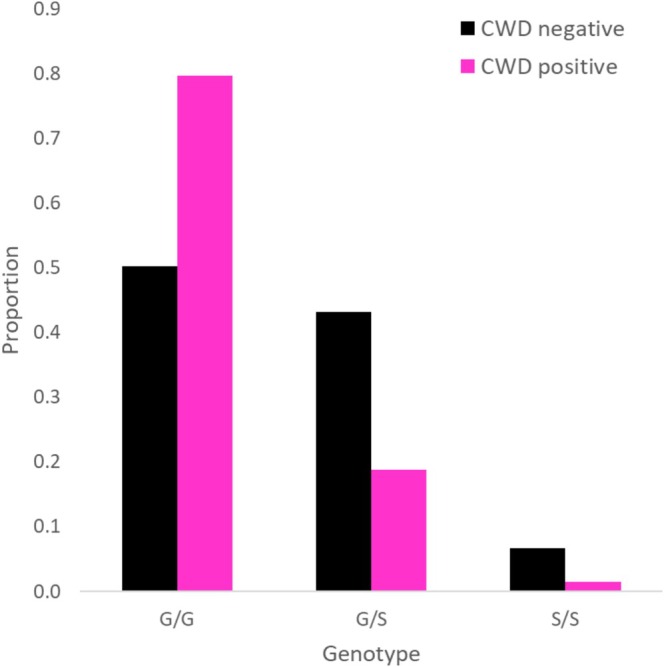 Figure 1
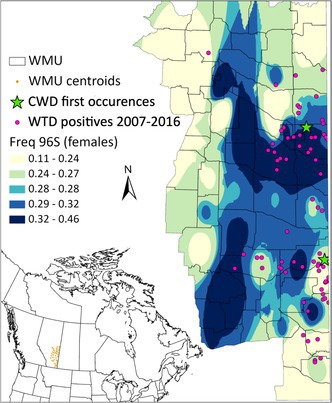 Figure 2
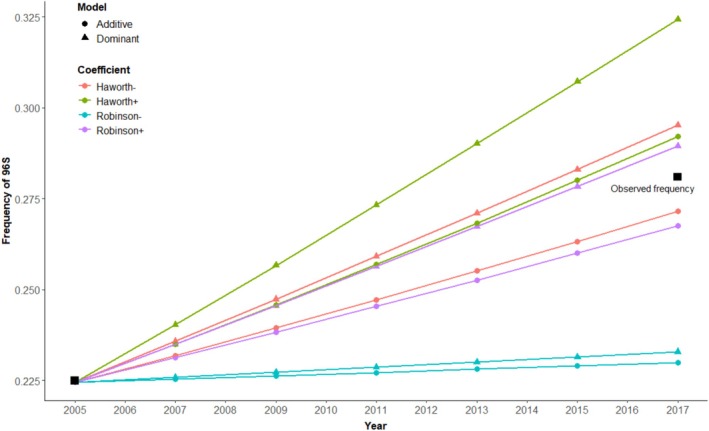 Figure 3
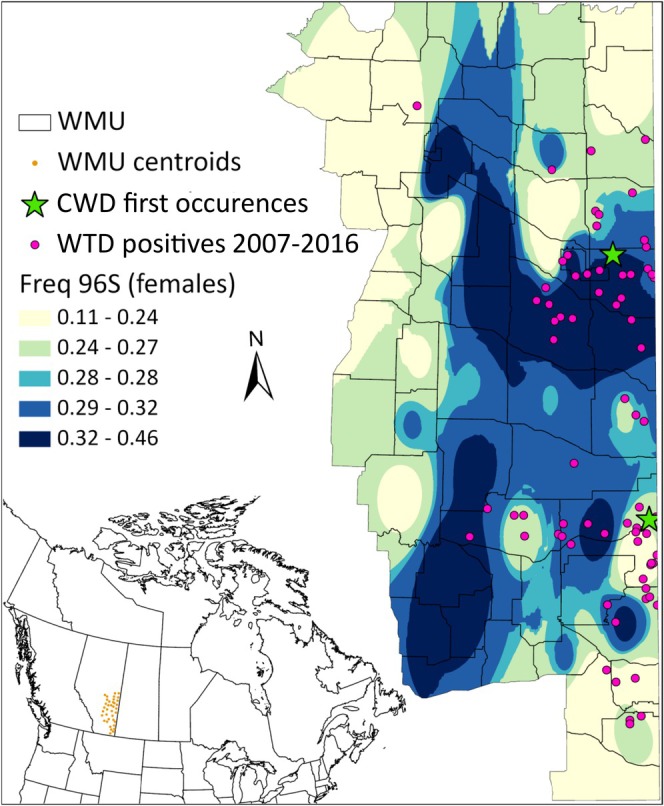 Figure 4
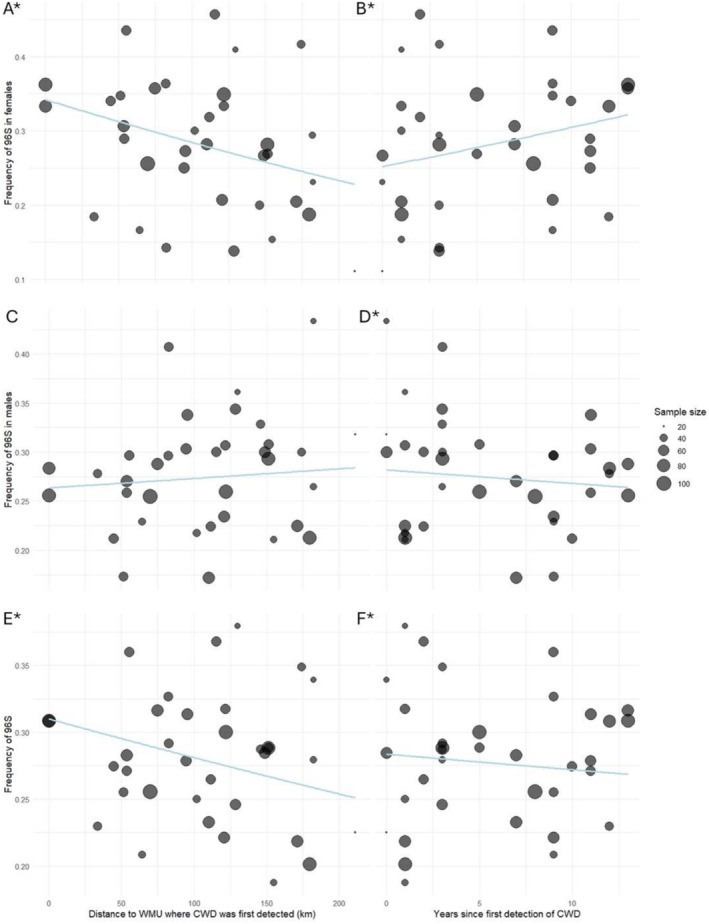 Figure 5
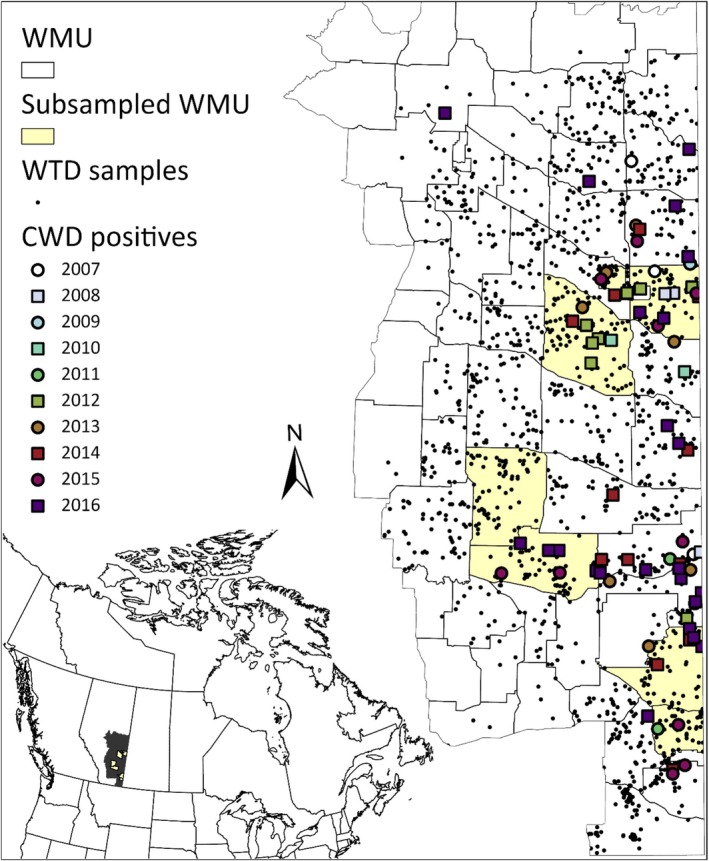 Figure 6
Peer Reviews
No public reviews on file for this paper yet. If you reviewed it on a platform where reviews are public (OpenReview, ICLR, NeurIPS, ICML), you can paste yours below so the community can read it here.
Videos
No videos yet. Explain this paper in a talk, walkthrough, or lecture? Add one.
Taxonomy
TopicsPrion Diseases and Protein Misfolding · Animal Genetics and Reproduction · Neurological diseases and metabolism