Differential gene expression and phenotypic variation across tissues between Saccharum officinarum and Saccharum spontaneum
Qin-Nan Wang, Sheng-Ren Sun, Jun-Lv Chen, Jing-Ru Zhou, Yuan-Xia Qin, Wei Zhang, Li-Yu Chen, San-Ji Gao

TL;DR
This study compares gene expression in different tissues of two sugarcane species to explain differences in traits like sugar content and stress tolerance.
Contribution
The study identifies differentially expressed genes across root, stem, leaf, and flower tissues in two sugarcane species, revealing novel insights into transcriptional regulation and agronomic divergence.
Findings
Differential expression of 24,469 to 34,198 genes was observed across tissues in two sugarcane clones.
Thirty-one DEGs in root tissues were linked to abscisic acid biosynthesis, suggesting differences in stress responses.
Key genes in circadian rhythms and photosynthesis pathways were identified in flower and leaf tissues, explaining variations in flowering time and biomass.
Abstract
Modern sugarcane cultivars (Saccharum spp.), predominantly derived from Saccharum officinarum and Saccharum spontaneum, exhibit divergent traits in sugar content, yield, and stress tolerance. However, little is known about the spatial transcriptional regulation pattern of the differentially expressed genes (DEGs) among tissues in the two Saccharum species. This study aimed to investigate these genes according to pathways in root, stem, leaf, and flower tissues using comparative transcriptome analysis. A broad range of DEGs, ranging from 24,469 to 34,198, were identified in four tissues from Badila (S. officinarum) and Ledong2 (S. spontaneum) clones. Thirty-one DEGs involved in abscisic acid (ABA) biosynthesis were identified in the root, suggesting differences in ABA content within root tissues between the two clones. In stem tissues, a significant number of upregulated DEGs were…
Genes, proteins, chemicals, diseases, species, mutations and cell lines named across the full text — each resolved to its canonical identifier and authoritative record.
Click any figure to enlarge with its caption.
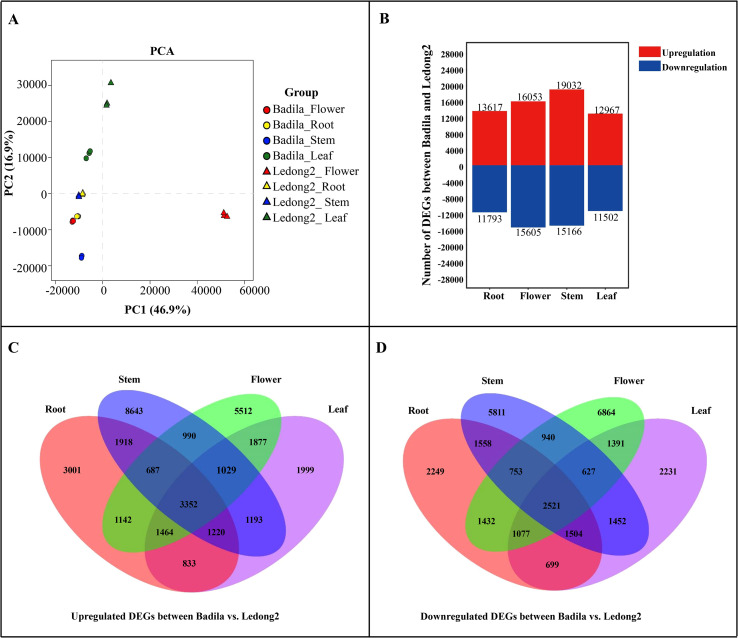 Figure 1
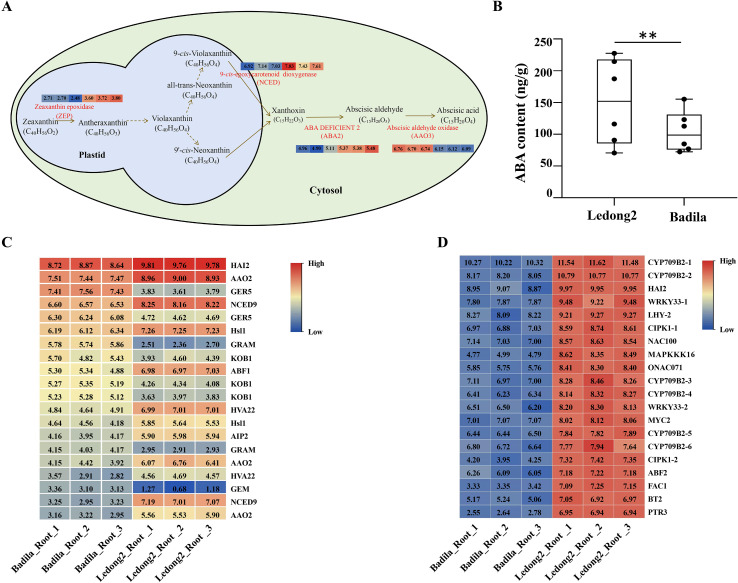 Figure 2
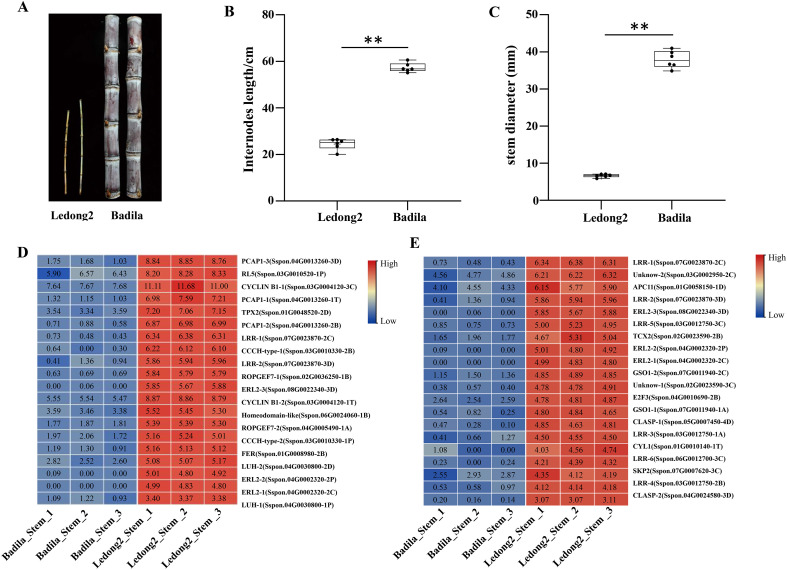 Figure 3
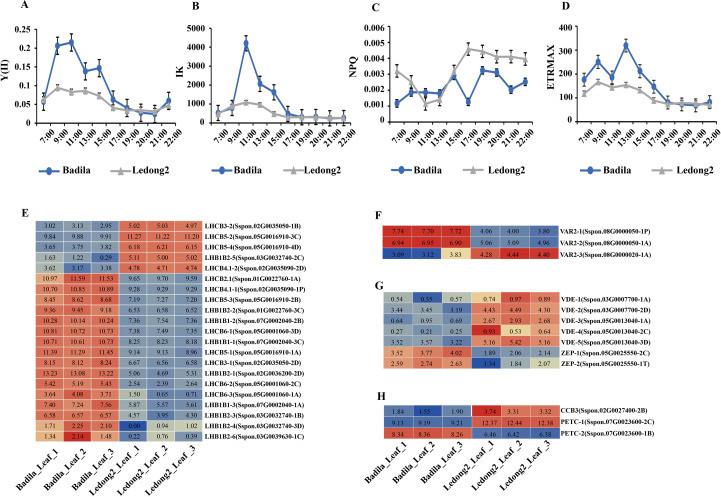 Figure 4
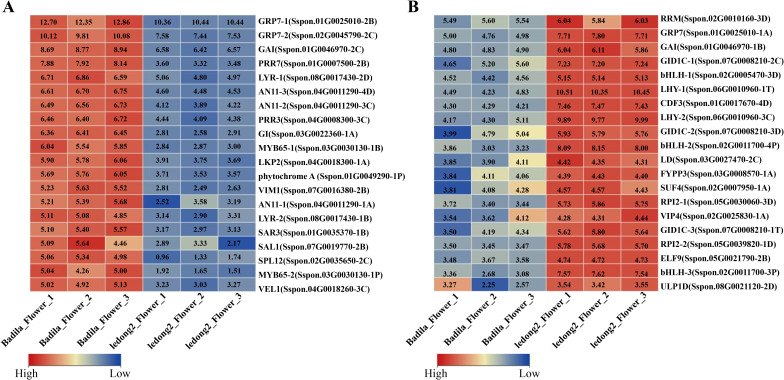 Figure 5
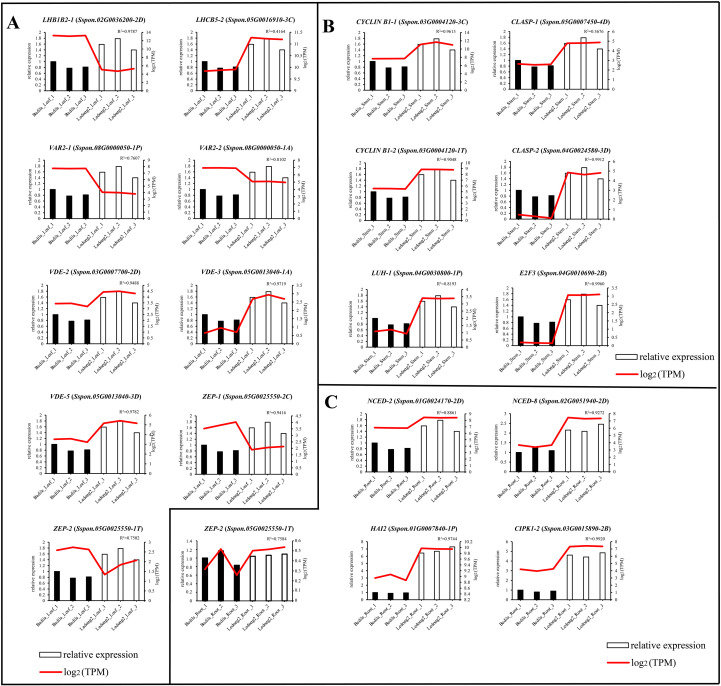 Figure 6
Peer Reviews
No public reviews on file for this paper yet. If you reviewed it on a platform where reviews are public (OpenReview, ICLR, NeurIPS, ICML), you can paste yours below so the community can read it here.
Videos
No videos yet. Explain this paper in a talk, walkthrough, or lecture? Add one.
Taxonomy
TopicsSugarcane Cultivation and Processing · Plant Gene Expression Analysis · Polysaccharides and Plant Cell Walls