Habitat Specialisation Impacts Clownfish Demographic Resilience to Pleistocene Sea‐Level Fluctuations
Alberto García‐Jiménez, Marion Talbi, Lucy M. Fitzgerald, A. Heim, Anna Marcionetti, Sarah Schmid, Joris Bertrand, Abigail Shaughnessy, Carl Santiago, Ploypallin Rangseethampanya, Phurinat Ruttanachuchote, Wiphawan Aunkhongthong, Sittiporn Pengsakun, Makamas Sutthacheep

TL;DR
Clownfish that rely on specific sea anemones are more vulnerable to population declines during environmental changes compared to those with broader host preferences.
Contribution
This study reveals how host specialization affects clownfish resilience to Pleistocene sea-level changes using genomic data.
Findings
Generalist clownfish species maintained stable populations and connectivity during habitat fragmentation.
Specialist clownfish experienced severe population declines and genetic structuring due to host dependence.
The Indonesian Throughflow and Coral Triangle were identified as key regions for clownfish dispersal and genetic diversity.
Abstract
Habitat fragmentation and loss are key threats to biodiversity, yet their impacts on marine species remain poorly understood. Clownfishes, which rely on sea anemones for shelter and reproduction, provide an interesting model to explore how ecological specialisation mediates species responses to habitat perturbations. We used whole‐genome data from 382 individuals across 10 species with varying host specialisations to reconstruct demographic histories and infer spatial genetic structure to assess the impact of Pleistocene sea‐level fluctuations. Generalist species, associated with multiple hosts, maintained stable effective population sizes (Ne) and population connectivity during habitat fragmentation, reflecting resilience to environmental instability. In contrast, specialists experienced severe Ne declines and genetic structuring, driven by their dependence on specific hosts, without…
Genes, proteins, chemicals, diseases, species, mutations and cell lines named across the full text — each resolved to its canonical identifier and authoritative record.
Click any figure to enlarge with its caption.
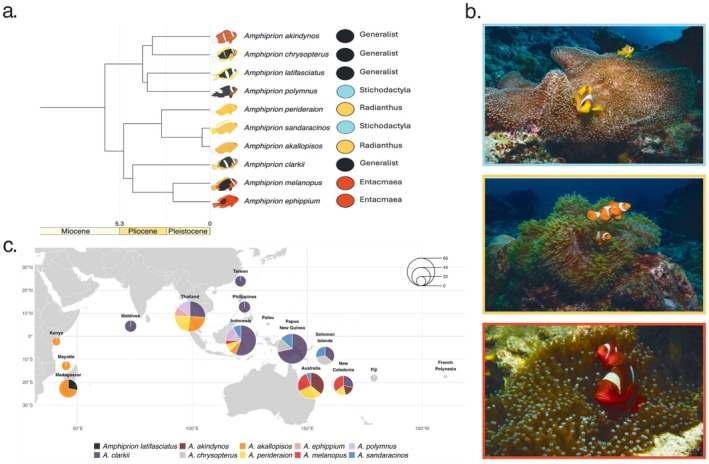 Figure 1
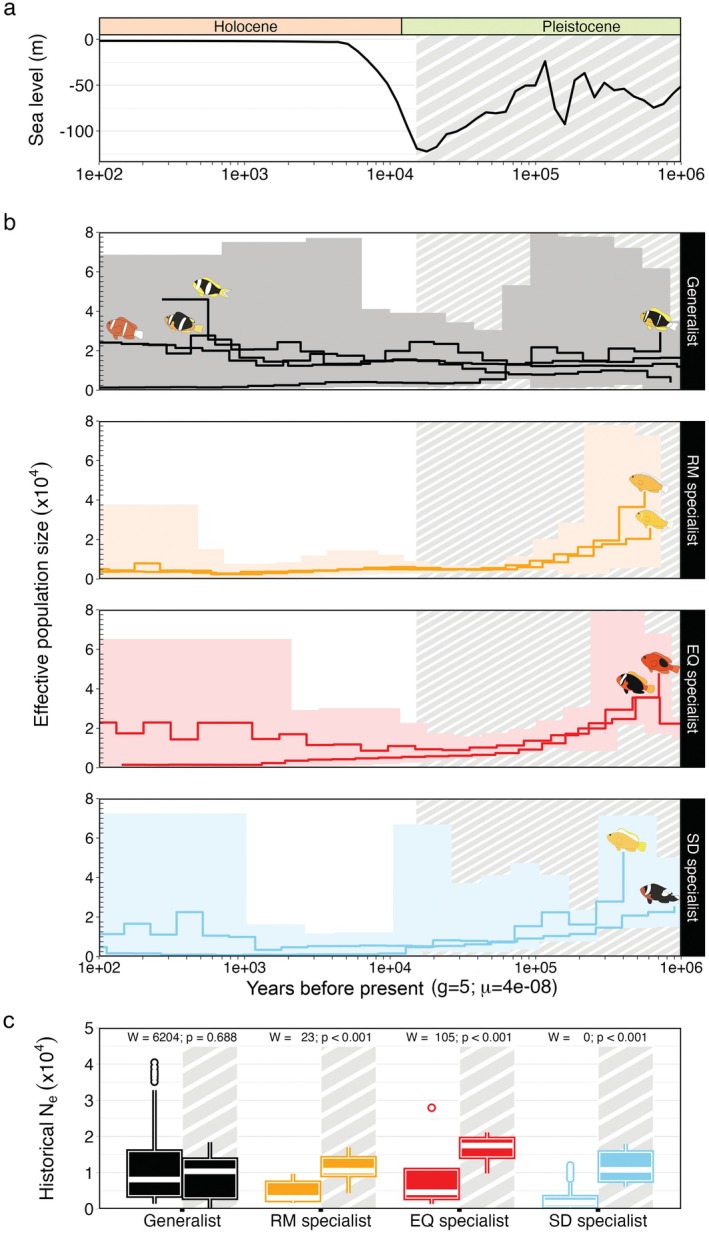 Figure 2
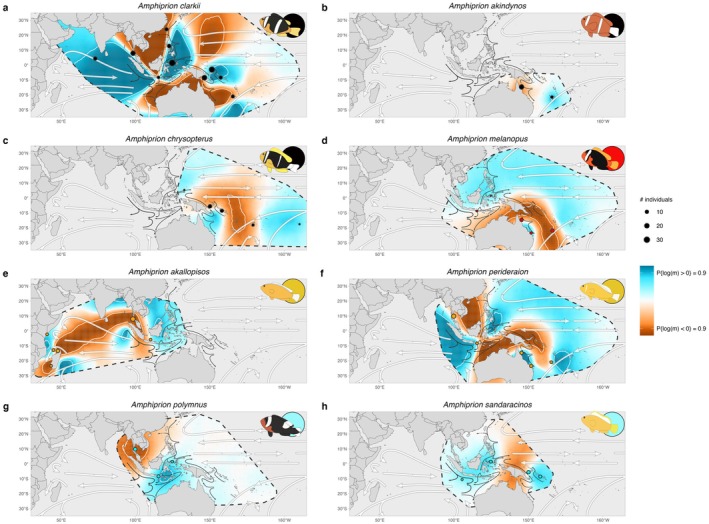 Figure 3
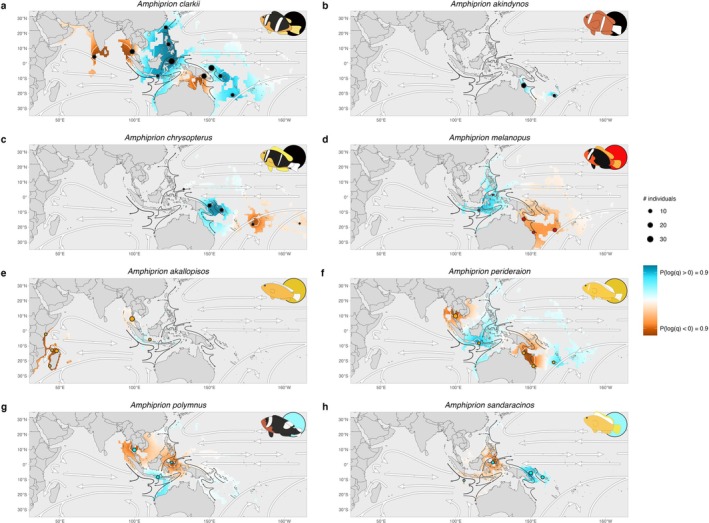 Figure 4
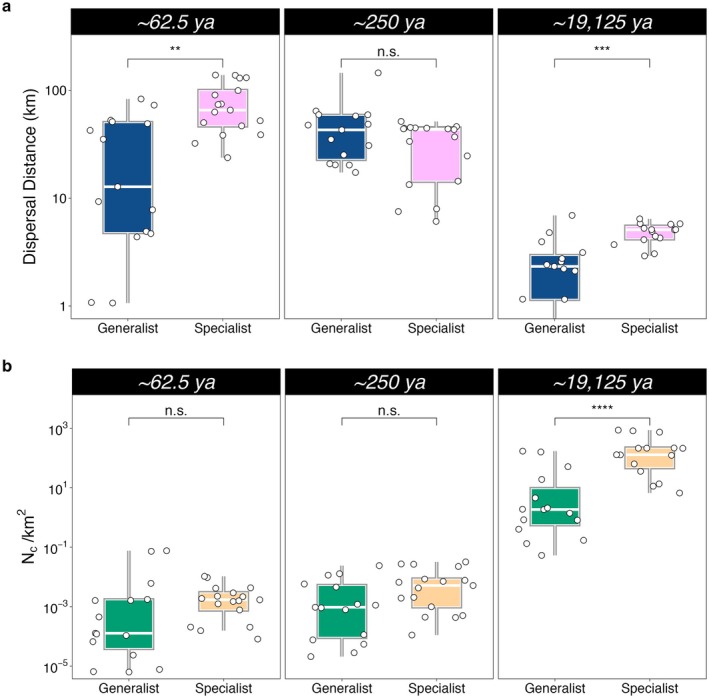 Figure 5
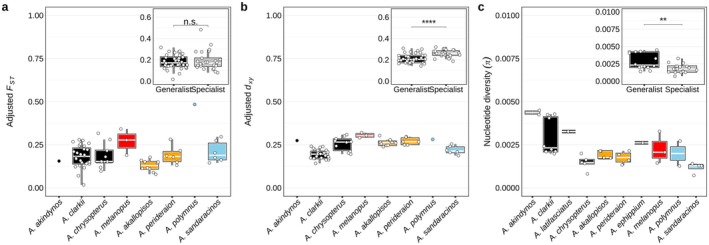 Figure 6
Peer Reviews
No public reviews on file for this paper yet. If you reviewed it on a platform where reviews are public (OpenReview, ICLR, NeurIPS, ICML), you can paste yours below so the community can read it here.
Videos
No videos yet. Explain this paper in a talk, walkthrough, or lecture? Add one.
Taxonomy
TopicsCoral and Marine Ecosystems Studies · Marine and fisheries research · Marine and coastal plant biology