Admixture Mapping Reveals Evidence for Multiple Mitonuclear Incompatibilities in Swordtail Fish Hybrids
Nemo V. Robles, Benjamin M. Moran, María José Rodríguez Barrera, Gaston I. Jofre, Theresa Gunn, Erik N. K. Iverson, Sofia Beskid, John J. Baczenas, Alisa Sedghifar, Peter Andolfatto, Daniel L. Powell, Yaniv Brandvain, Justin C. Havird, Gil G. Rosenthal, Molly Schumer

TL;DR
This study uses admixture mapping in swordtail fish to find evidence of multiple mitonuclear incompatibilities that reduce hybrid viability and contribute to reproductive barriers.
Contribution
The study identifies nine genomic regions involved in mitonuclear incompatibilities in natural swordtail fish hybrids.
Findings
At least nine genomic regions are involved in mitonuclear incompatibilities in swordtail fish hybrids.
Incompatibilities involve interactions with either X. malinche or X. birchmanni mitochondria.
The incompatibilities vary in strength of selection and impact on gene flow.
Abstract
How barriers to gene flow arise between closely related species is one of the oldest questions in evolutionary biology. Classic models in evolutionary biology predict that negative epistatic interactions between variants in the genomes of diverged lineages, known as hybrid incompatibilities, will reduce viability or fertility in hybrids. The genetic architecture of these interactions and the evolutionary paths through which they arise have profound implications for the efficacy of hybrid incompatibilities as barriers to gene flow between species. While these questions have been studied using theoretical approaches for several decades, only recently has it become possible to genetically map larger numbers of hybrid incompatibilities. Here, we use admixture mapping in natural hybrid populations of swordtail fish (Xiphophorus) to identify hybrid incompatibilities involving genetic…
Genes, proteins, chemicals, diseases, species, mutations and cell lines named across the full text — each resolved to its canonical identifier and authoritative record.
Click any figure to enlarge with its caption.
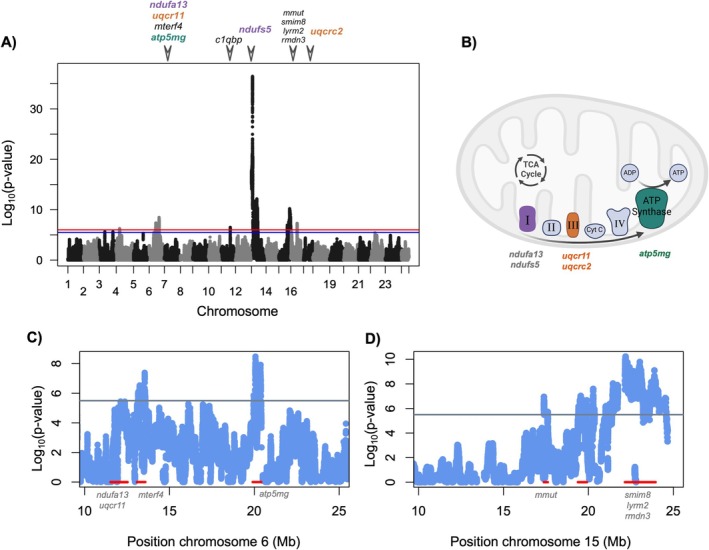 Figure 1
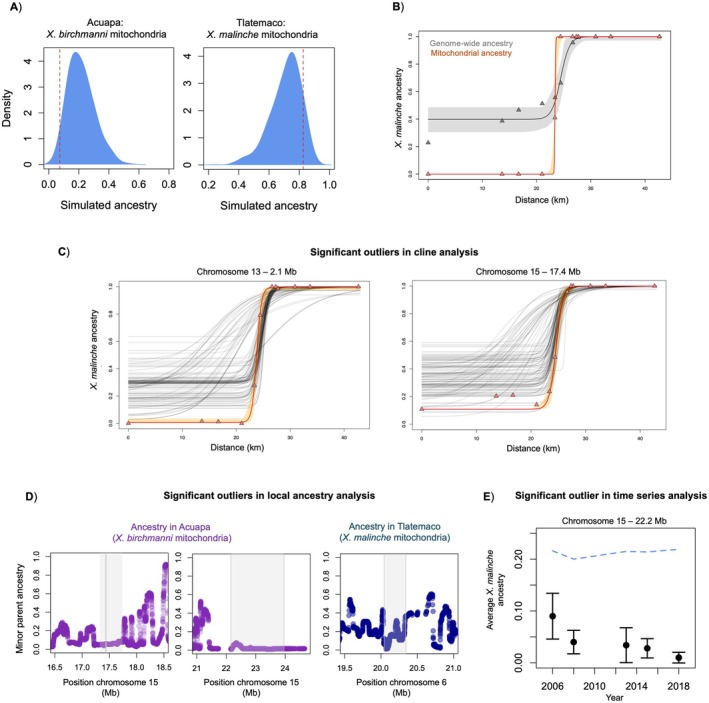 Figure 2
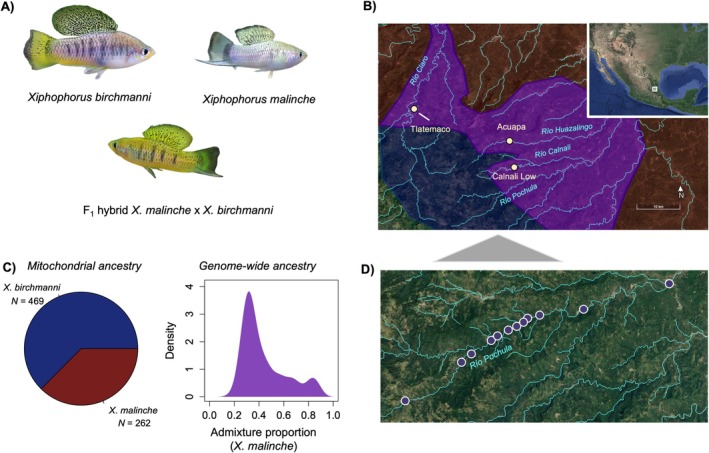 Figure 3
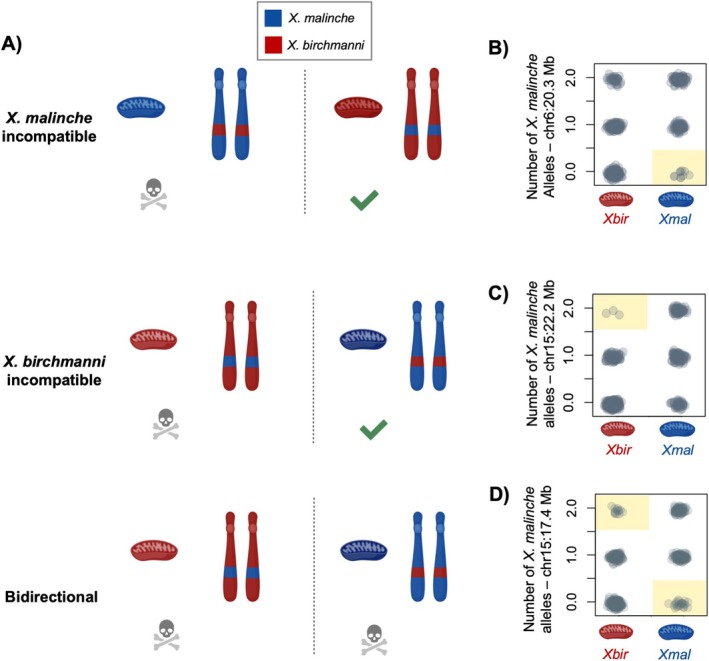 Figure 4
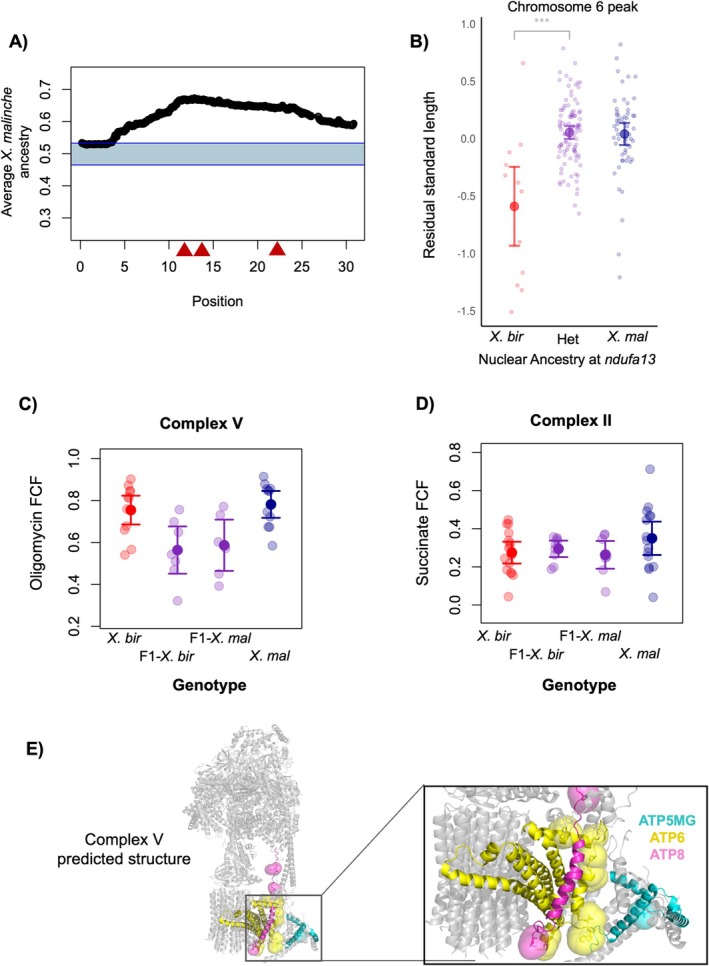 Figure 5
Peer Reviews
No public reviews on file for this paper yet. If you reviewed it on a platform where reviews are public (OpenReview, ICLR, NeurIPS, ICML), you can paste yours below so the community can read it here.
Videos
No videos yet. Explain this paper in a talk, walkthrough, or lecture? Add one.
Taxonomy
TopicsGenetic diversity and population structure · Evolution and Genetic Dynamics · Chromosomal and Genetic Variations