Histological and Gene Expression Analyses of the Arm and Finger Macroglands of Two Hyloxalus Frogs (Dendrobatidae)
Diana Abondano Almeida, Marvin Anganoy‐Criollo, Taran Grant, Sofiia Klimovych, Lisa M. Schulte

TL;DR
This study explores specialized glands in two poison frog species and their role in pheromone production during courtship.
Contribution
The study identifies a novel pheromone-producing gland in frogs and reveals SPF expression in previously unlinked serous glands.
Findings
Both Hyloxalus species express SPF in finger glands, suggesting a role in pheromone production.
The BAG in H. nexipus is composed of serous glands that also produce SPF, a new finding.
H. azureiventris lacks visible arm swelling but still expresses SPF in fingers.
Abstract
Chemical communication during courtship is well documented in salamanders and newts, but its role in frogs is less understood. In some Neotropical poison frogs, males exhibit specialised mucous glands (SMGs) in the hand integument that express high levels of sodefrin precursor‐like factors (SPFs), an amphibian pheromone. Some species also show integumentary swellings at the distal upper arm—known as the black arm gland (BAG)—of unclear function. We used histology and RNA sequencing to analyse the arm and finger integument of Hyloxalus nexipus and H. azureiventris to examine glandular composition, gene expression and potential pheromone production. We confirmed the co‐occurrence of two sexually dimorphic macroglands—swollen fingers and BAG—in H. nexipus , a rare trait in dendrobatids. Both structures differentially expressed SPF, suggesting complementary roles in courtship. We also…
Genes, proteins, chemicals, diseases, species, mutations and cell lines named across the full text — each resolved to its canonical identifier and authoritative record.
Click any figure to enlarge with its caption.
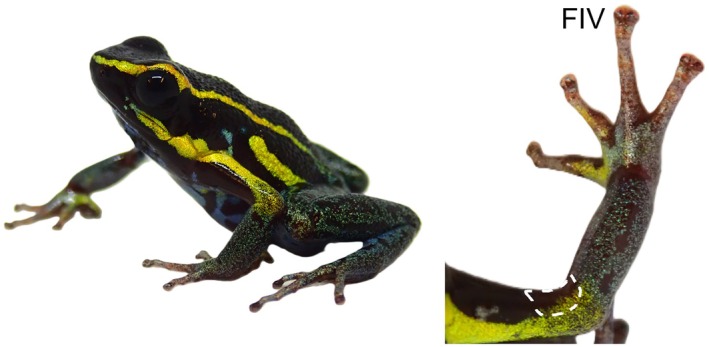 Figure 1
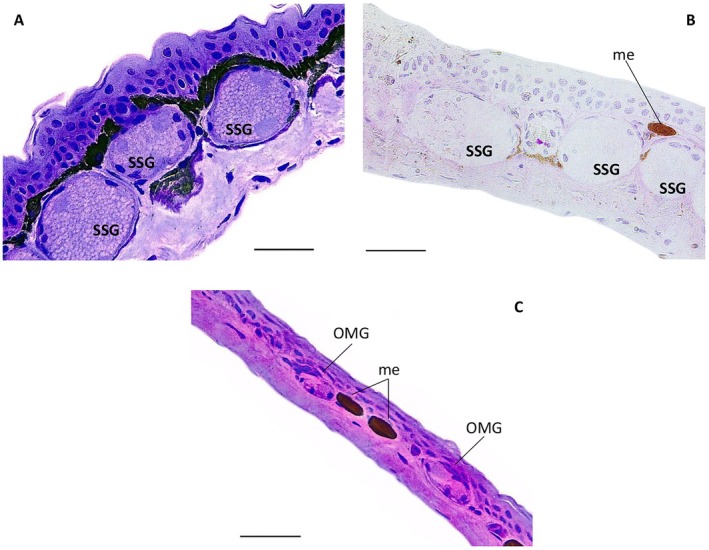 Figure 2
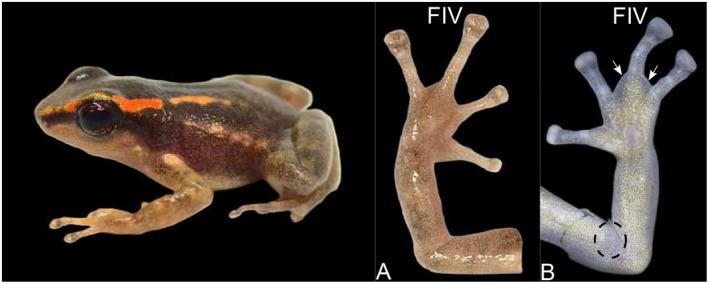 Figure 3
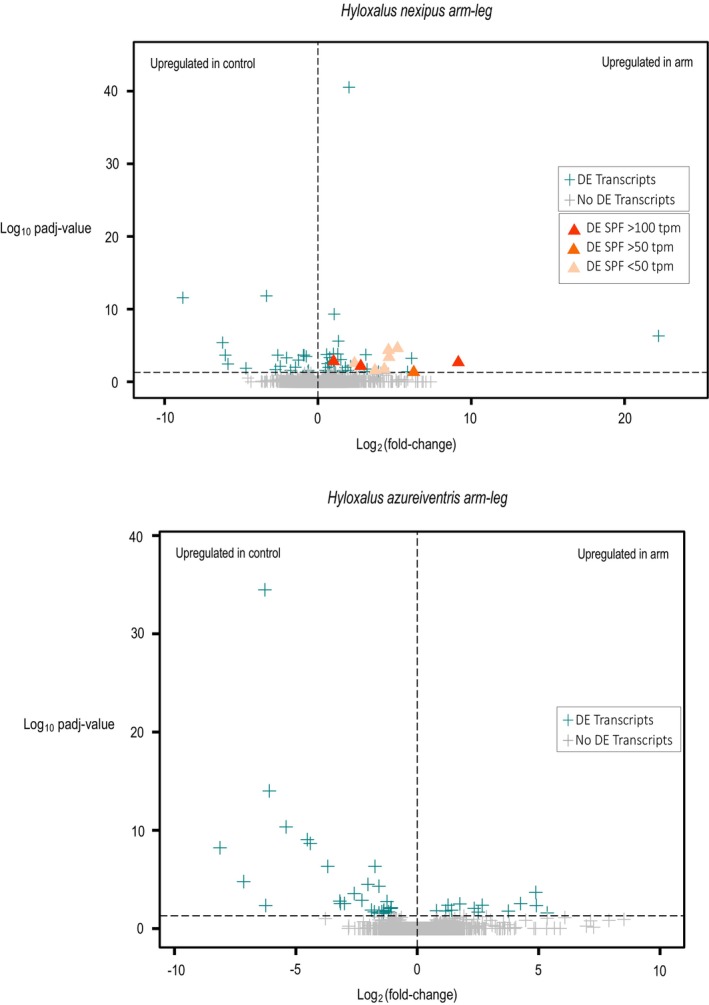 Figure 4
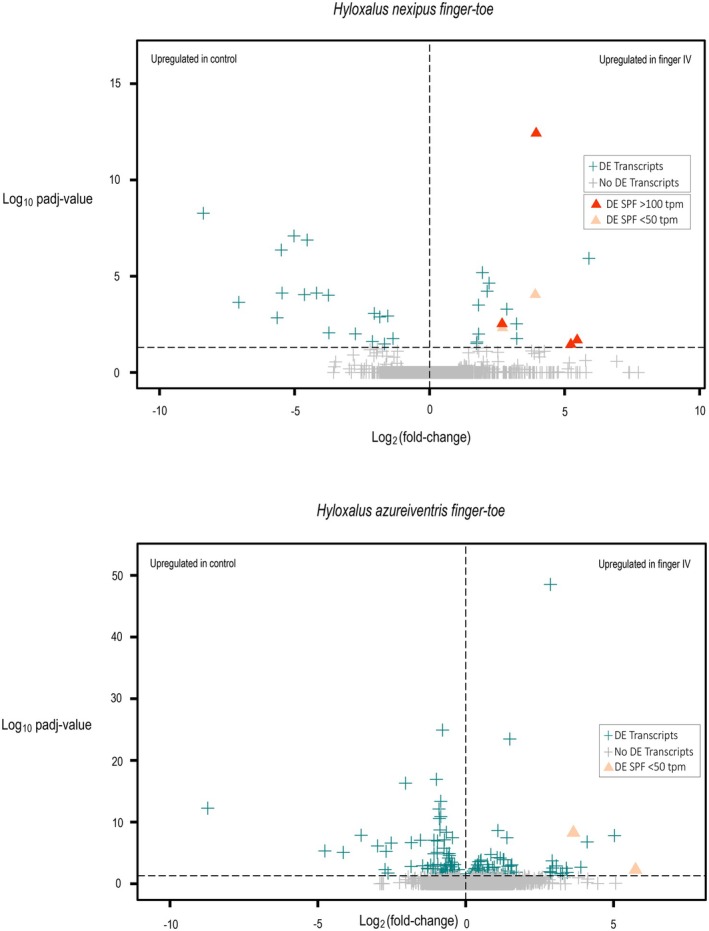 Figure 5
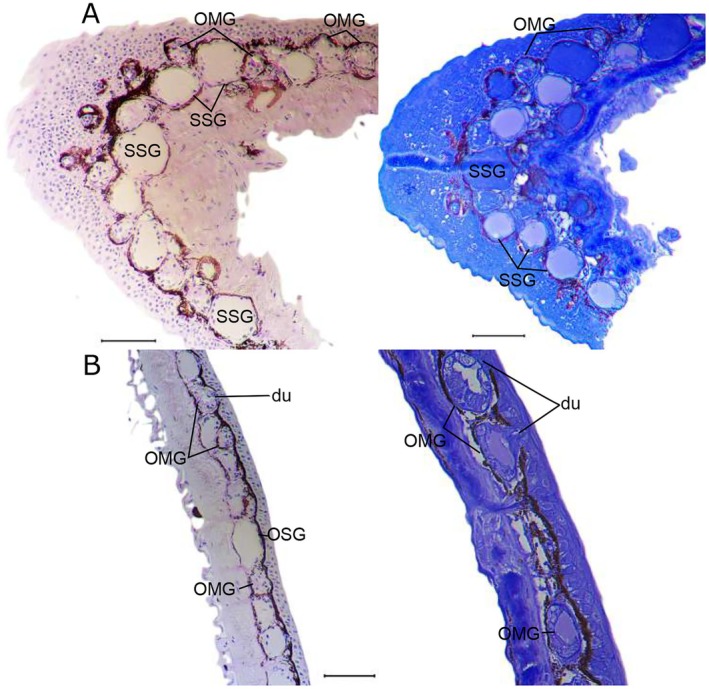 Figure 6
Peer Reviews
No public reviews on file for this paper yet. If you reviewed it on a platform where reviews are public (OpenReview, ICLR, NeurIPS, ICML), you can paste yours below so the community can read it here.
Videos
No videos yet. Explain this paper in a talk, walkthrough, or lecture? Add one.
Taxonomy
TopicsAmphibian and Reptile Biology · Venomous Animal Envenomation and Studies · Skin and Cellular Biology Research