Reproductive Isolation due to Divergent Ecological Selection Is Accompanied by Vast Genomic Instability in Experimentally Evolved Yeast Populations
Devin P. Bendixsen, Ciaran Gilchrist, Chloé Haberkorn, Karl Persson, Cecilia Geijer, Jonas Warringer, Rike Stelkens

TL;DR
Yeast populations evolved in different environments show reduced fertility when crossed, with hybrid offspring having unstable genomes, supporting the idea of ecological speciation.
Contribution
Demonstrates that divergent ecological selection leads to reproductive isolation and genomic instability in experimentally evolved yeast.
Findings
Divergent-selected yeast populations produced hybrids with reduced gamete viability, indicating reproductive isolation.
F2 hybrids showed vast genomic instability, including new structural variants not present in parents or F1 hybrids.
Parallel-selected populations remained more reproductively compatible compared to divergent-selected ones.
Abstract
Populations evolving independently in divergent environments accumulate genetic differences and potentially evolve reproductive isolation as a by‐product of divergence. The speed and mechanisms underlying this process are difficult to investigate because we rarely get the opportunity to witness them in natural settings, and histories of selection and gene flow between populations are often unknown. Here, we experimentally evolved yeast for 1000 generations of evolution in both divergent and parallel environments. At regular time points during experimental evolution, we made crosses between parallel‐ and divergent‐evolving populations to measure postzygotic reproductive isolation (gamete viability). We used whole genome population sequencing to determine the mutational load, the number and types of structural variation, and other genomic features of the parent, F1 and F2 intraspecific…
Genes, proteins, chemicals, diseases, species, mutations and cell lines named across the full text — each resolved to its canonical identifier and authoritative record.
Click any figure to enlarge with its caption.
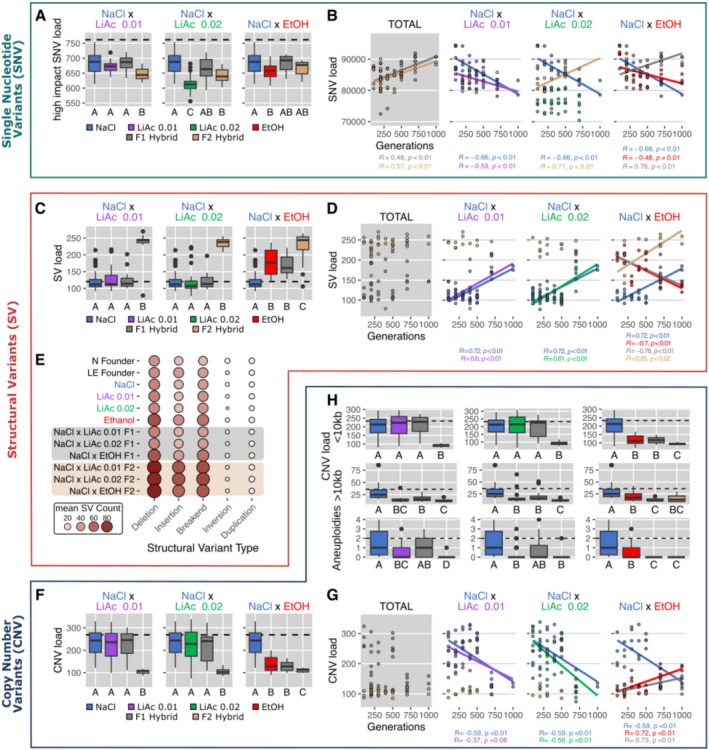 Figure 1
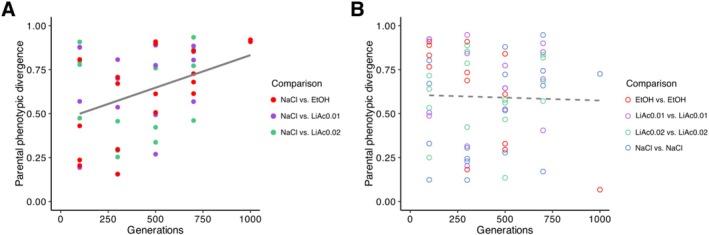 Figure 2
 Figure 3
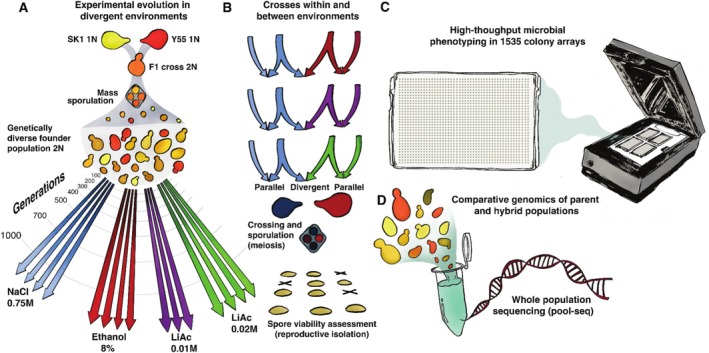 Figure 4
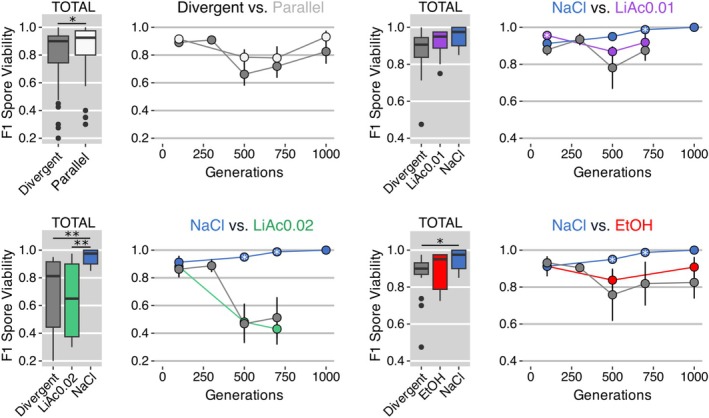 Figure 5
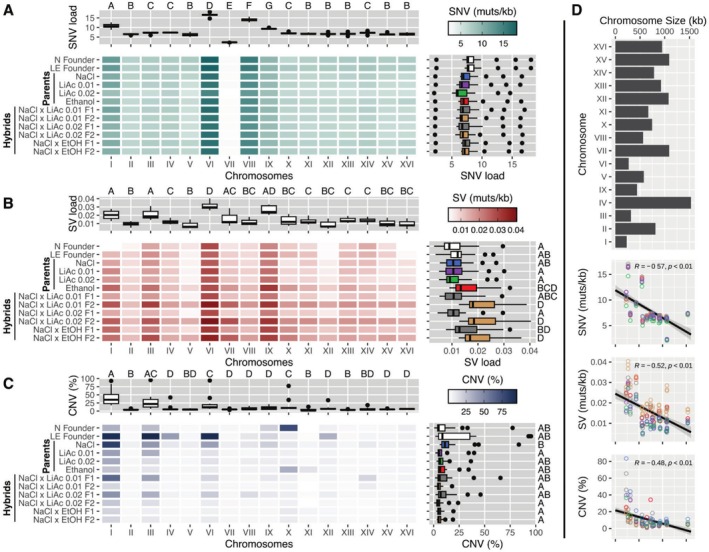 Figure 6
Peer Reviews
No public reviews on file for this paper yet. If you reviewed it on a platform where reviews are public (OpenReview, ICLR, NeurIPS, ICML), you can paste yours below so the community can read it here.
Videos
No videos yet. Explain this paper in a talk, walkthrough, or lecture? Add one.
Taxonomy
TopicsEvolution and Genetic Dynamics · Genetic diversity and population structure · Genetic Mapping and Diversity in Plants and Animals