From Mud to Meat: Comparative Metabarcoding Reveals Two Different Evolutionary Paths to Carnivory in a Group of Meiofaunal Annelids
Joseph M. Mack, Alexandra E. Bely

TL;DR
This study shows how carnivory evolved twice in a group of small freshwater worms through different paths, like eating ciliates or living with mollusks.
Contribution
The study reveals two distinct evolutionary pathways to carnivory in the annelid genus Chaetogaster, using metabarcoding and gut content analysis.
Findings
Carnivorous Chaetogaster species have significant animal DNA in their guts, indicating a predatory diet.
One carnivorous lineage likely evolved from generalist predators feeding on ciliates.
Another carnivorous lineage evolved from detritivorous mollusc symbionts.
Abstract
Evolutionary transitions to carnivory represent profound shifts in feeding mode that are often accompanied by widespread changes in organismal function, behaviour and ecology. Such transitions have evolved numerous times among animals, and predator–prey interactions have been major drivers of animal evolution. Despite the ecological and evolutionary importance of carnivory, the evolutionary steps leading to this feeding mode are poorly understood. Although relatively rare, lineages that have recently adopted predatory lifestyles are particularly valuable for understanding the evolution of carnivory. The annelid genus Chaetogaster, composed of small freshwater oligochaetes, is unusual in having recently evolved carnivory not just once but twice, making it an excellent model to infer evolutionary steps from detritivory to carnivory. We performed a gut‐content analysis of eight…
Genes, proteins, chemicals, diseases, species, mutations and cell lines named across the full text — each resolved to its canonical identifier and authoritative record.
Click any figure to enlarge with its caption.
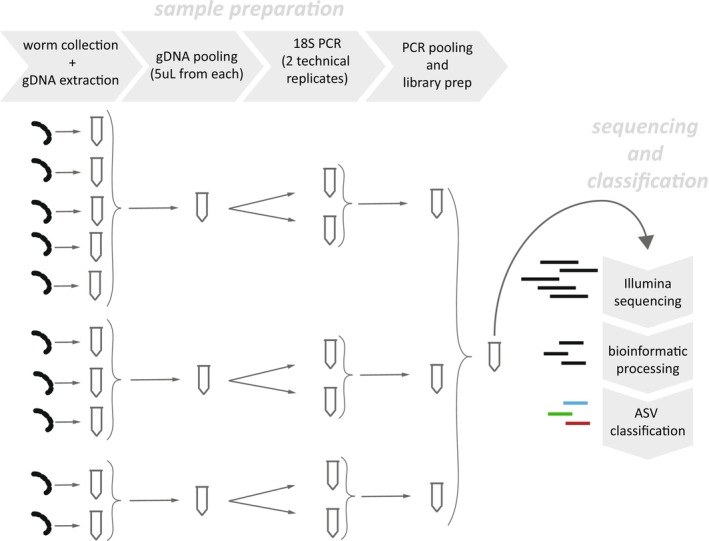 Figure 1
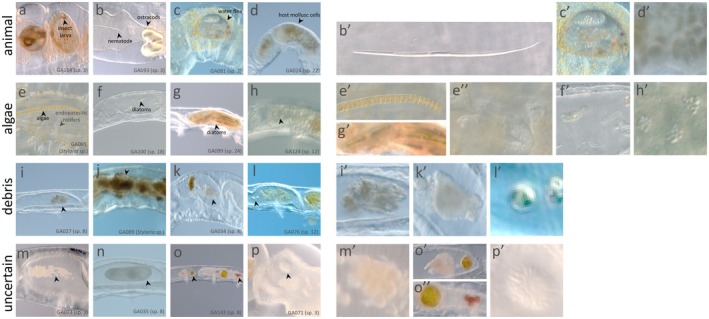 Figure 2
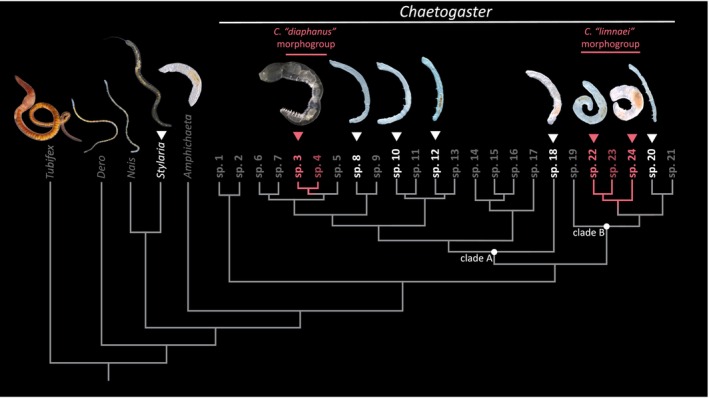 Figure 3
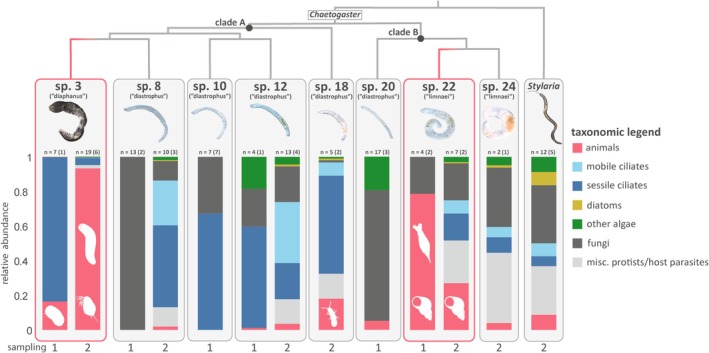 Figure 4
Peer Reviews
No public reviews on file for this paper yet. If you reviewed it on a platform where reviews are public (OpenReview, ICLR, NeurIPS, ICML), you can paste yours below so the community can read it here.
Videos
No videos yet. Explain this paper in a talk, walkthrough, or lecture? Add one.
Taxonomy
TopicsPlant and Biological Electrophysiology Studies · Environmental DNA in Biodiversity Studies · Protist diversity and phylogeny