Two novel red-FRET ERK Biosensors in the 670-720 nm range
Nicholaus L. DeCuzzi, Jason Y. Hu, Florene Xu, Brayant Rodriguez, Michael Pargett, John G. Albeck

TL;DR
Researchers developed two new red-FRET ERK biosensors that allow better multiplexed imaging of cell signaling.
Contribution
Two novel red-FRET ERK biosensors (REKAR67 and REKAR76) were developed for improved single-cell signaling studies.
Findings
REKAR67 and REKAR76 biosensors operate in the 670–720 nm range with minimal spectral overlap.
REKAR67 has a higher dynamic range but greater signal variance compared to REKAR76.
Both biosensors are spectrally compatible with existing CFP/YFP biosensors for multiplexed imaging.
Abstract
Cell fate decisions are regulated by intricate signaling networks, with Extracellular signal-Regulated Kinase (ERK) being a central node in the control of cell proliferation and differentiation. ERK typically cooperates with a network of other regulators, making it necessary to study multiple signaling pathways simultaneously at the single-cell level. Many existing fluorescent biosensors for ERK and other pathways have significant spectral overlap, limiting their utility for multiplexing. To address this limitation, we developed two novel red-FRET ERK biosensors, REKAR67 and REKAR76, which operate in the 670–720 nm range using the fluorescent proteins miRFP670nano3 and miRFP720. REKAR67 and REKAR76 differ in fluorophore position, which impacts biosensor characteristics; REKAR67 displayed a higher dynamic range but greater signal variance than REKAR76. In both polyclonal and clonal…
Genes, proteins, chemicals, diseases, species, mutations and cell lines named across the full text — each resolved to its canonical identifier and authoritative record.
Click any figure to enlarge with its caption.
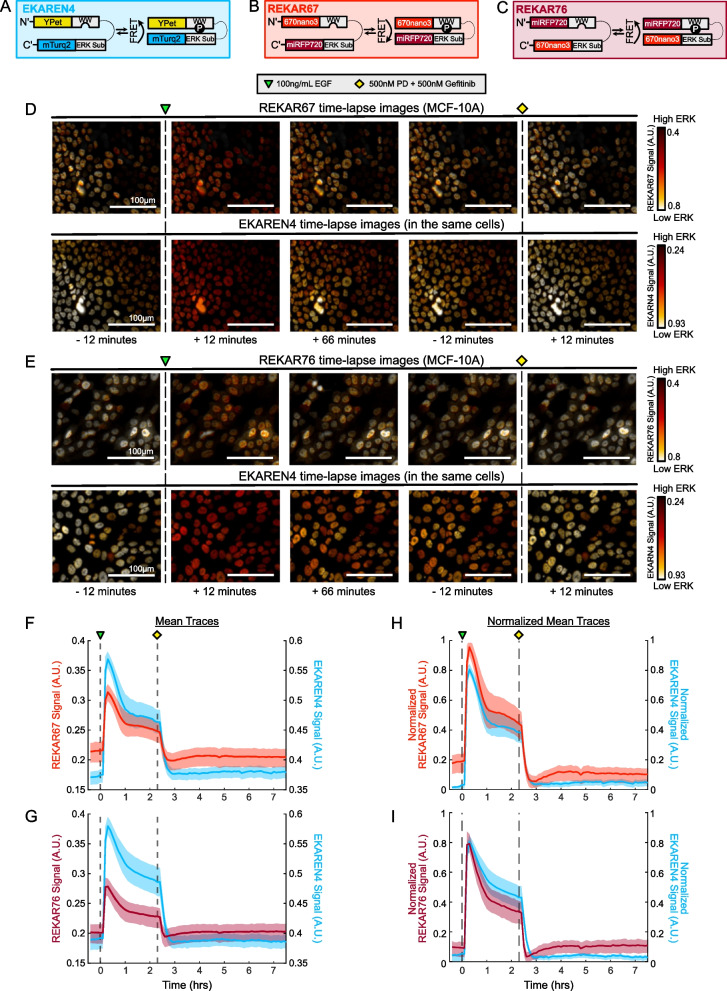 Figure 1
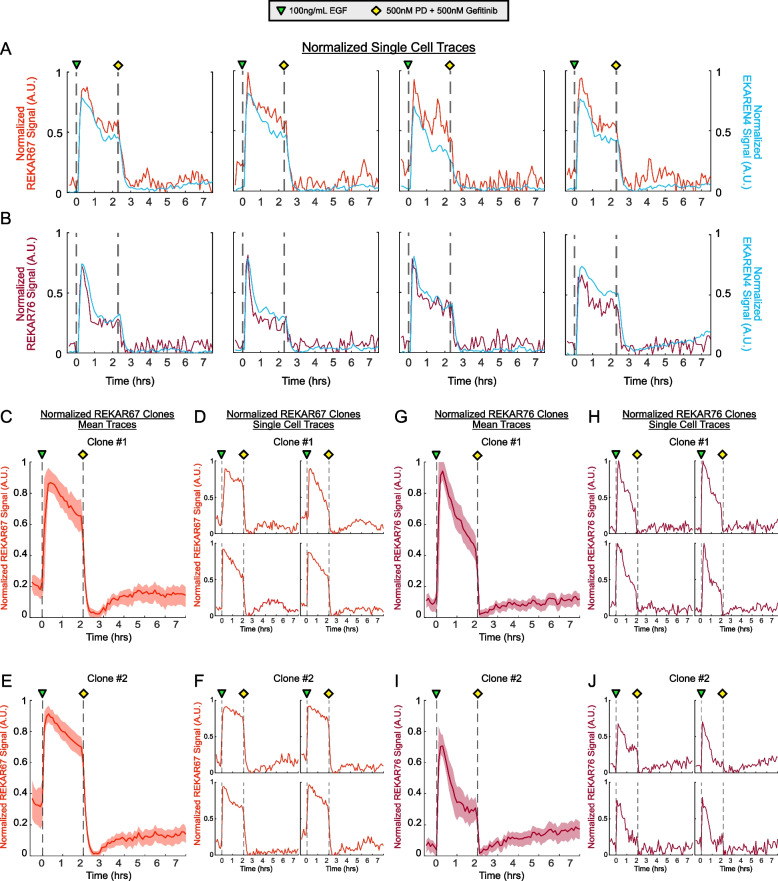 Figure 2
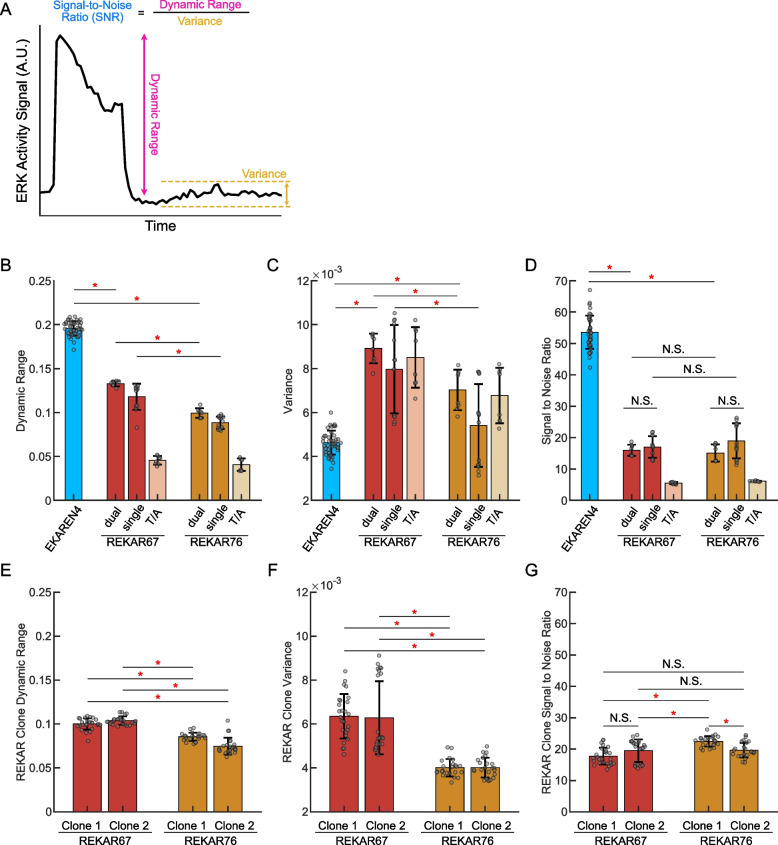 Figure 3
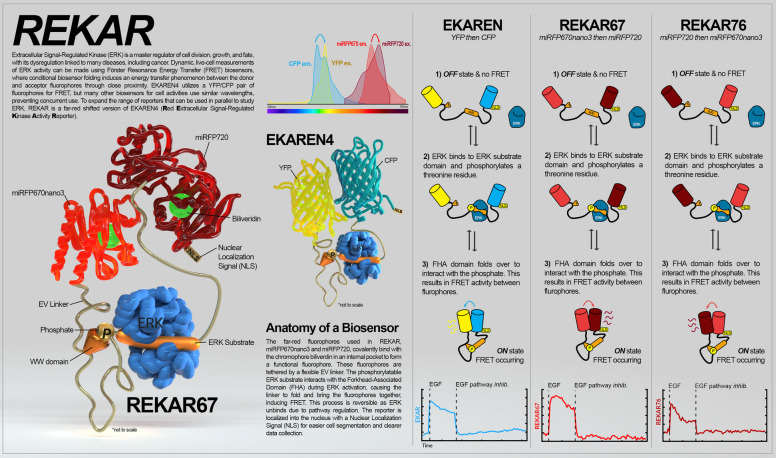 Figure 4
Peer Reviews
No public reviews on file for this paper yet. If you reviewed it on a platform where reviews are public (OpenReview, ICLR, NeurIPS, ICML), you can paste yours below so the community can read it here.
Videos
No videos yet. Explain this paper in a talk, walkthrough, or lecture? Add one.
Taxonomy
TopicsMelanoma and MAPK Pathways · Cellular Mechanics and Interactions · Advanced Fluorescence Microscopy Techniques