Cholesterol uptake capacity of HDL in culture medium of fresh primary human hepatocytes: an in vitro system for screening anti-atherosclerosis drugs focused on HDL functions
Keishi Hata, Taro Okada, Masaki Takahashi, Yuji Arimatsu, Junko Kawahira, Katsuhiro Murakami, Amane Harada, Nami Yoshikawa, Mutsumi Inamatsu, Masakazu Kakuni

TL;DR
This study introduces a new in vitro system to assess HDL functionality using hepatocytes and shows that eicosapentaenoic acid (EPA) improves cholesterol uptake capacity.
Contribution
A novel cell-based in vitro assay for measuring HDL cholesterol uptake capacity (CUC) is developed and validated for drug screening.
Findings
EPA significantly increases HDL cholesterol uptake capacity in a dose-dependent manner.
The CUC assay using PXB-cells LA is a viable method for drug screening to improve HDL functionality.
EPA does not cause hepatocyte damage as indicated by stable albumin and hepatic triglyceride lipase levels.
Abstract
Removing excess cholesterol from atherosclerotic plaques is a crucial function of high-density lipoprotein (HDL). Compared to HDL cholesterol, cholesterol efflux capacity (CEC) is a better indicator of cardiovascular disease risk. However, this approach has several practical disadvantages, such as CEC assay requires cultured cells and takes several days to perform. Recently, we developed a simpler cell-free assay to assess the cholesterol uptake capacity (CUC), a new HDL functionality metric. In this study, we combined the HDL-CUC assay with PXB-cells LA, primary human hepatocytes derived from the humanized mouse liver, to investigate whether the CUC of HDL in the culture medium reflects the eicosapentaenoic acid (EPA) effects on HDL functionality. The CUC of HDL in the culture medium of PXB-cells LA was measured using the automated immunoassay system HI-1000. Adding EPA to the culture…
Genes, proteins, chemicals, diseases, species, mutations and cell lines named across the full text — each resolved to its canonical identifier and authoritative record.
Click any figure to enlarge with its caption.
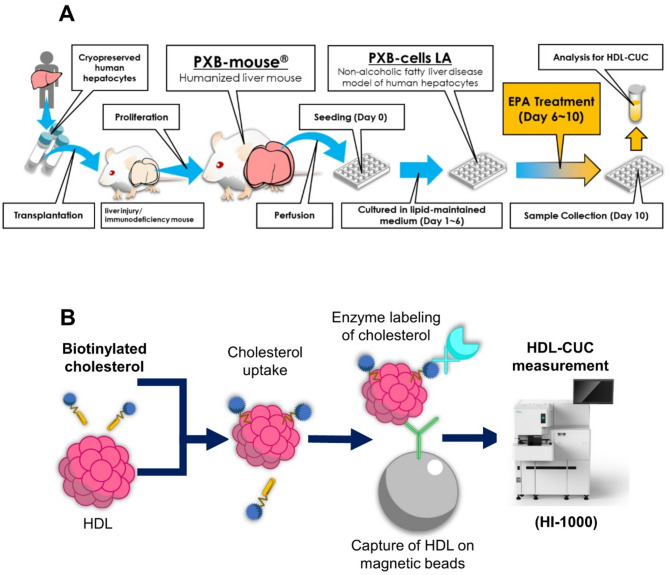 Figure 1
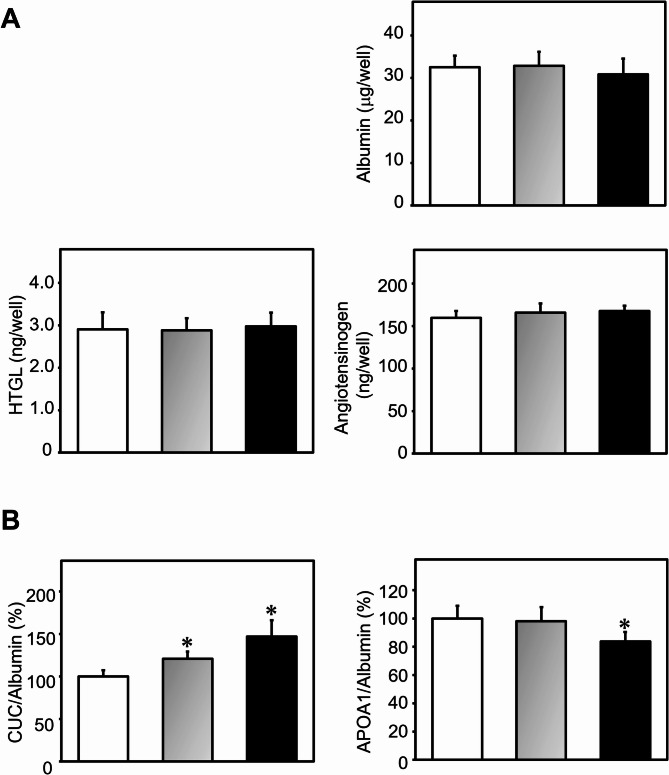 Figure 2
Peer Reviews
No public reviews on file for this paper yet. If you reviewed it on a platform where reviews are public (OpenReview, ICLR, NeurIPS, ICML), you can paste yours below so the community can read it here.
Videos
No videos yet. Explain this paper in a talk, walkthrough, or lecture? Add one.
Taxonomy
TopicsDiabetes, Cardiovascular Risks, and Lipoproteins · Cholesterol and Lipid Metabolism · Atherosclerosis and Cardiovascular Diseases