Meningeal vascular Aβ deposition associates with cerebral hypoperfusion and compensatory collateral remodeling
Alexandra M. Kaloss, Jack L. Browning, Jiangtao Li, Yuhang Pan, Sachi Watsen, Harald Sontheimer, Michelle H. Theus, Michelle L. Olsen

TL;DR
This study shows that amyloid-beta builds up in brain blood vessels in a mouse model of Alzheimer's, leading to reduced blood flow and compensatory vessel changes.
Contribution
First comprehensive characterization of meningeal arterial Aβ accumulation in a preclinical model of vascular AD.
Findings
J20 mice show significant Aβ deposition in leptomeningeal arteries and pial collaterals, with sex differences in burden.
Vascular Aβ was linked to reduced cerebral blood flow and compensatory collateral vessel remodeling.
Findings mirror early-stage human AD and highlight the meningeal vasculature as a novel therapeutic target.
Abstract
Global reductions in cerebral blood flow (CBF) are among the earliest and most consistent abnormalities observed in Alzheimer’s disease (AD), preceding both cortical plaque formation and cognitive decline. While the pial arterial network—a critical supplier of intracortical perfusion—has been overlooked in this context, it may play a pivotal role in early vascular pathology. Here, we report extensive cerebral amyloid angiopathy (CAA) within the pial artery and arteriole network in the J20 (PDGF-APPSw, Ind) mouse model of AD. Using premortem delivery of Methoxy-XO4 to label Aβ, and arterial vascular labeling, we assessed Aβ burden on the pial artery/arteriole network and cerebral blood flow in aged male and female WT and J20 AD mice. We show that 12-month-old J20 mice exhibit significant Aβ deposition across major leptomeningeal arteries (ACA, MCA) and pial collaterals, with ~ 40%…
Genes, proteins, chemicals, diseases, species, mutations and cell lines named across the full text — each resolved to its canonical identifier and authoritative record.
Click any figure to enlarge with its caption.
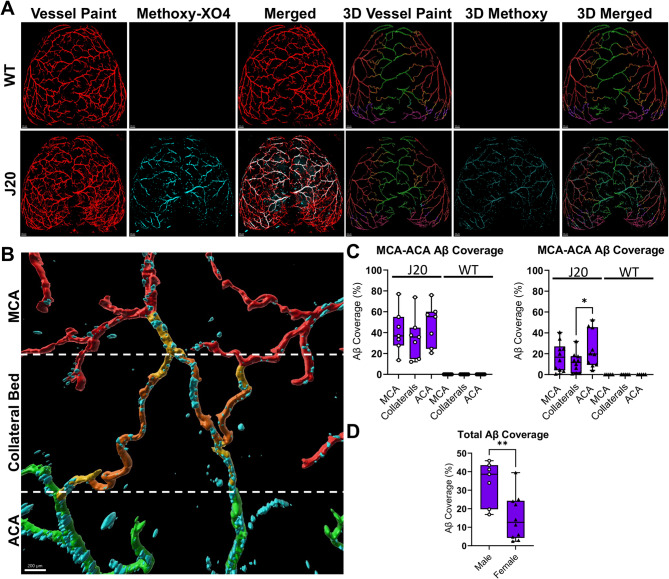 Figure 1
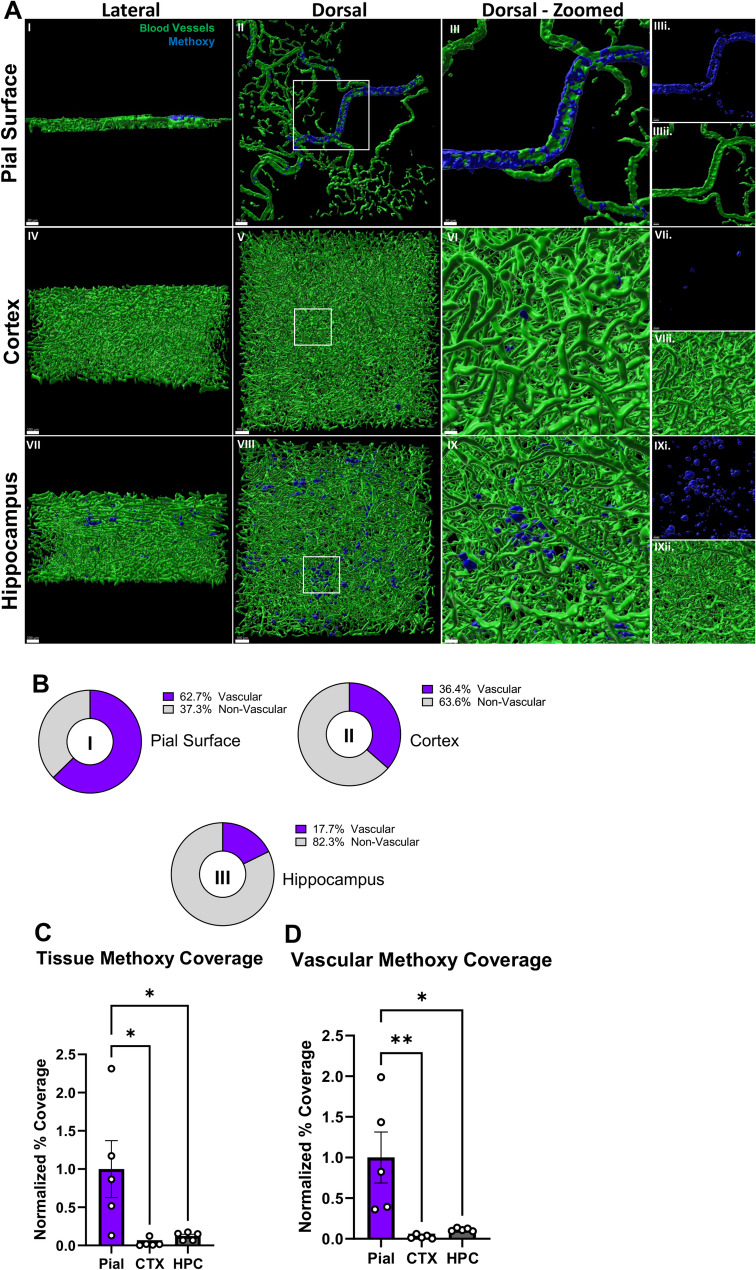 Figure 2
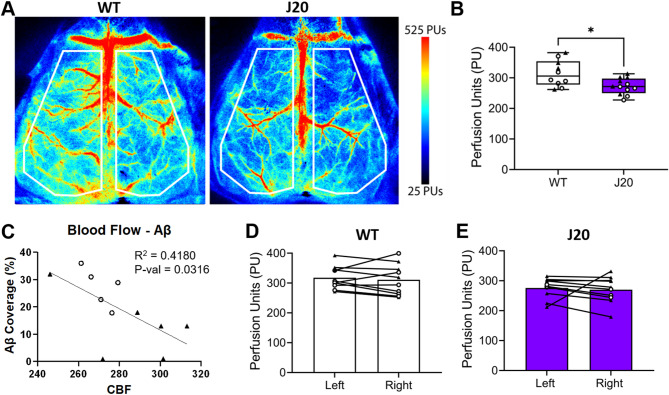 Figure 3
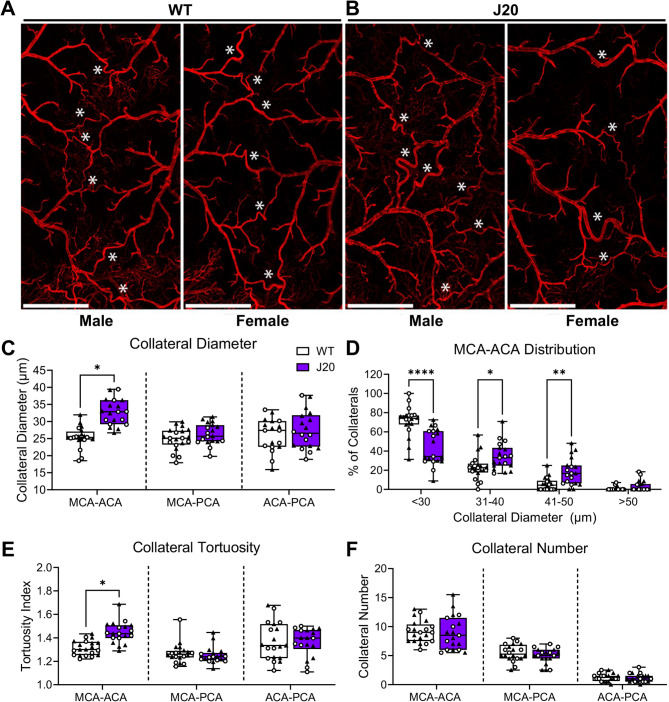 Figure 4
Peer Reviews
No public reviews on file for this paper yet. If you reviewed it on a platform where reviews are public (OpenReview, ICLR, NeurIPS, ICML), you can paste yours below so the community can read it here.
Videos
No videos yet. Explain this paper in a talk, walkthrough, or lecture? Add one.
Taxonomy
TopicsCerebrospinal fluid and hydrocephalus · Barrier Structure and Function Studies · Alzheimer's disease research and treatments