Evolutionary history reveals information on the functionality of ear tufts in owls (family: Strigidae)
Adrian Surmacki, Piotr Minias

TL;DR
This study explores how ear tufts in owls evolved, suggesting they may help nocturnal owls blend in during the day.
Contribution
The study provides new insights into the evolutionary drivers of ear tuft development in owls, linking them to nocturnal behavior and diet.
Findings
Ear tufts coevolved with nocturnal activity and are larger in strictly nocturnal owl species.
Owls that hunt birds have relatively larger ear tufts.
Ear tuft evolution shows strong phylogenetic conservation and is linked to shifts in activity patterns.
Abstract
Ear tufts are plumage features which have particularly high prevalence in owls (Strigidae). Several hypotheses have been developed to explain their function, mostly including camouflage, species recognition, deterring predators/mobbers, and visual signaling among conspecifics. In the present study, we used phylogenetically-informed comparative approach to reconstruct evolutionary history of ear tufts across the entire Strigidae family (184 species). Specifically, data on the occurrence and relative size of ear tufts compiled from color plates and photographs were analyzed in relation to life history and ecological traits. We found that ear tuft occurrence coevolved with circadian activity rhythm and predominated in species with strictly nocturnal activity. The highest evolutionary rate was found for transitions from nocturnal to mixed activity in species without ear tufts and from…
Genes, proteins, chemicals, diseases, species, mutations and cell lines named across the full text — each resolved to its canonical identifier and authoritative record.
Click any figure to enlarge with its caption.
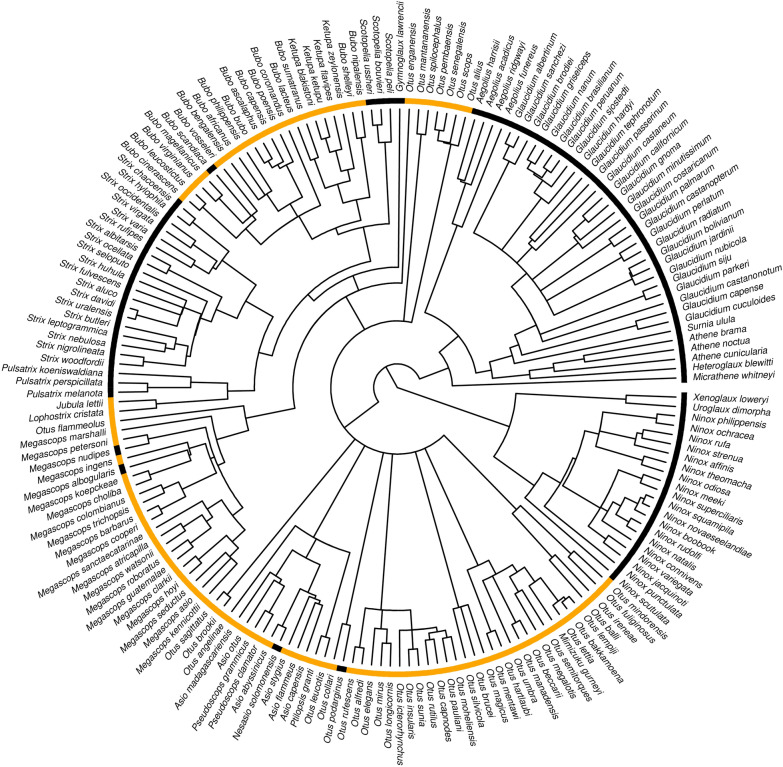 Figure 1
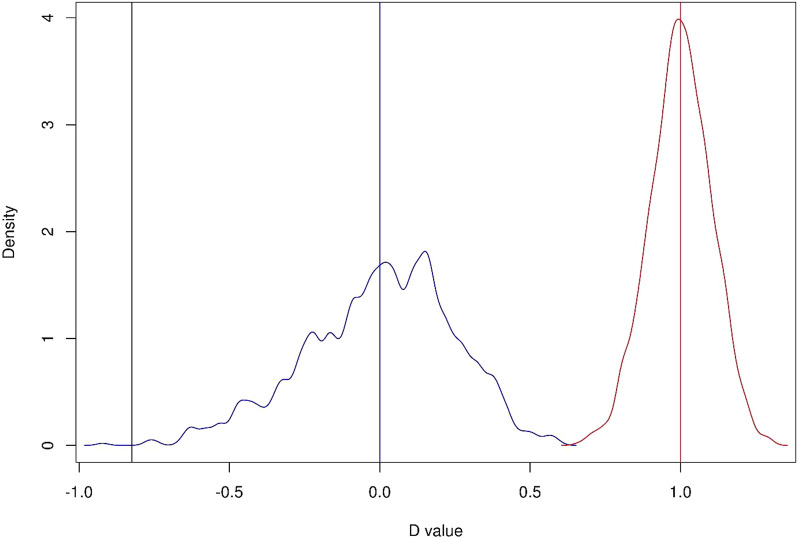 Figure 2
 Figure 3
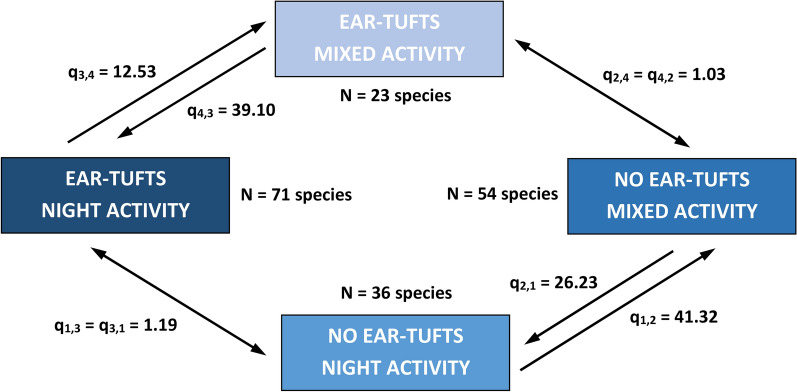 Figure 4
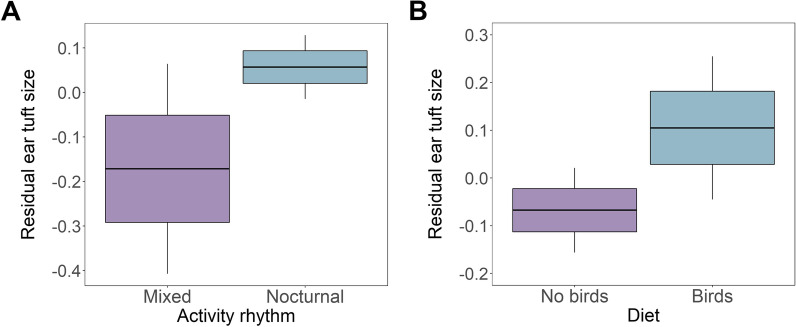 Figure 5
Peer Reviews
No public reviews on file for this paper yet. If you reviewed it on a platform where reviews are public (OpenReview, ICLR, NeurIPS, ICML), you can paste yours below so the community can read it here.
Videos
No videos yet. Explain this paper in a talk, walkthrough, or lecture? Add one.
Taxonomy
TopicsAnimal Behavior and Reproduction · Avian ecology and behavior · Bird parasitology and diseases