Optimizing the mirror illusion during mirror therapy: evidence from unimpaired individuals
Jin Min Kim, Freya O. Challis, Carmen C. Y. Koo, Jade-Cheuk L. Leung, Leo H. Lo, Sang-Hoon Yeo, T. David Punt

TL;DR
This study explores how different factors affect the mirror illusion in healthy people, aiming to improve mirror therapy for stroke recovery.
Contribution
The study identifies optimal conditions for enhancing the mirror illusion through empirical testing of four intervention parameters.
Findings
A large mirror significantly enhances the believability of the mirror illusion compared to a small mirror.
Bimanual movements increase illusion believability, but this effect is reduced with complex tasks.
Multisensory congruency is critical for maximizing the strength of the mirror illusion.
Abstract
Mirror therapy has demonstrated functional benefits for patients recovering from hemiparetic stroke, with its effectiveness primarily attributed to the induction of a compelling visual illusion that engages sensorimotor networks. Although previous research has identified various intervention parameters influencing therapeutic outcomes, a comprehensive understanding of their effects on the illusory experience remains limited. This study investigated how four critical parameters—mirror size (large vs. small), object manipulation (present vs. absent), task complexity (simple vs. complex), and movement execution (unilateral vs. bilateral)—modulate the believability of the mirror illusion in neurologically unimpaired individuals. Forty healthy participants performed movements under 16 different combinations of these parameters while receiving mirror visual feedback and rated the…
Genes, proteins, chemicals, diseases, species, mutations and cell lines named across the full text — each resolved to its canonical identifier and authoritative record.
Click any figure to enlarge with its caption.
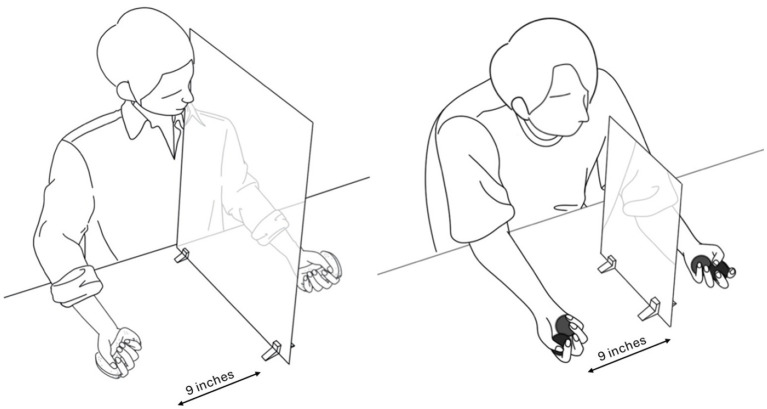 Figure 1
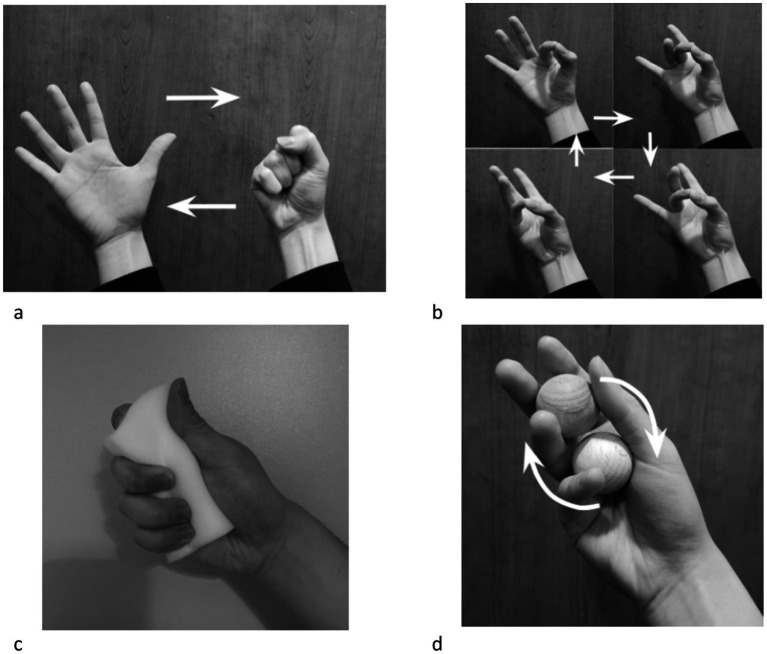 Figure 2
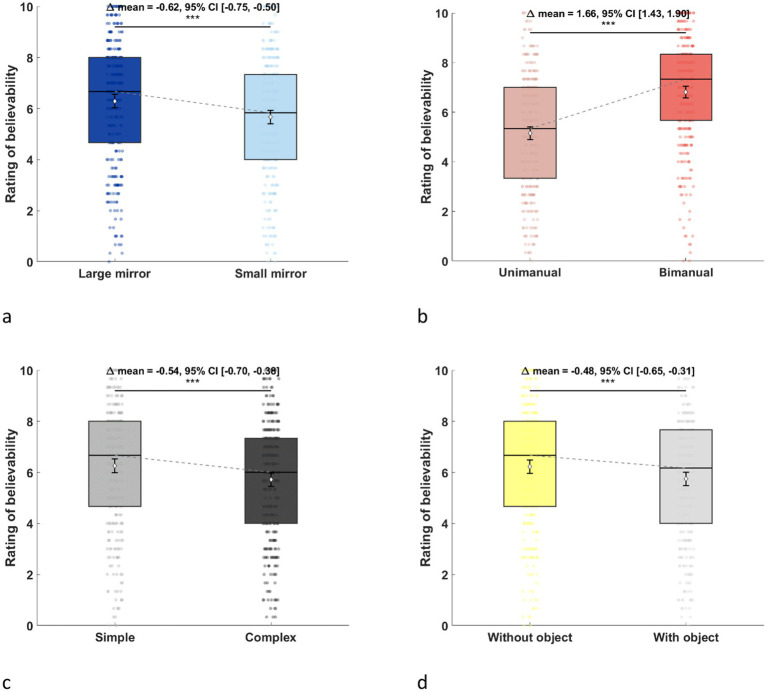 Figure 3
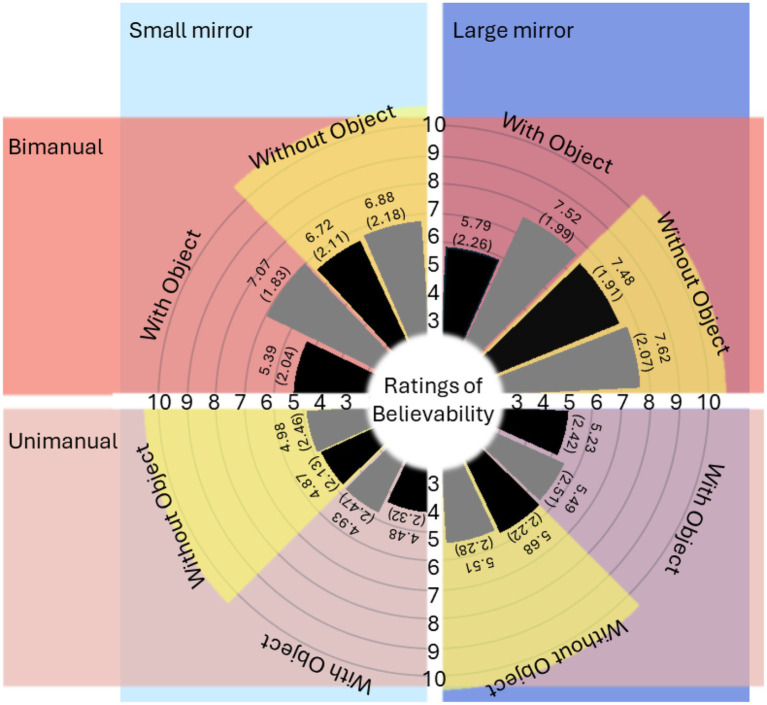 Figure 4
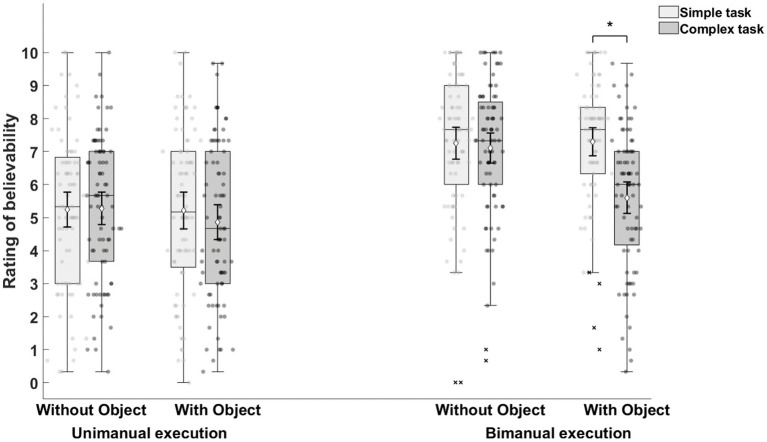 Figure 5
Peer Reviews
No public reviews on file for this paper yet. If you reviewed it on a platform where reviews are public (OpenReview, ICLR, NeurIPS, ICML), you can paste yours below so the community can read it here.
Videos
No videos yet. Explain this paper in a talk, walkthrough, or lecture? Add one.
Taxonomy
TopicsVirtual Reality Applications and Impacts · Spatial Neglect and Hemispheric Dysfunction · Action Observation and Synchronization