Expanding the spectrum of white matter abnormalities in Wolfram syndrome: a retrospective review
Justin Simo, Heather M. Lugar, Elka Miller, Adi Wilf-Yarkoni, Yael Goldberg, Ayça Kocaağa, Shoichi Ito, Sirio Cocozza, Giulio Frontino, Cristina Baldoli, Aziz Benbachir, Catherine Ashton, Guy A. Rouleau, Tamara Hershey, Yann Nadjar, Roberta La Piana

TL;DR
This study expands the known white matter abnormalities in Wolfram syndrome, suggesting a possible link to MS-like lesions.
Contribution
Identifies a new MRI pattern of MS-like lesions in Wolfram syndrome patients.
Findings
41% of WFS subjects showed focal white matter lesions resembling MS.
Three subjects met McDonald criteria for inflammatory demyelination.
WFS1's role in myelination suggests selective white matter vulnerability.
Abstract
Wolfram syndrome (WFS) is a genetic disorder mainly caused by pathogenic variants in the WFS1 gene. It is characterized clinically by optic atrophy (OA), diabetes mellitus (DM), sensorineural hearing loss (SNHL), diabetes insipidus (DI), and variable neurological/psychiatric symptoms. WFS typically manifests before age 20 and progresses into adulthood. Classical neuroradiological features include cerebellar and/or brainstem atrophy as well as white matter abnormalities ranging from small, ovoid lesions to diffuse, symmetrical changes along the visual pathway. Following the identification of multifocal, progressive white matter abnormalities that prompted the consideration of multiple sclerosis (MS) in two molecularly confirmed WFS subjects, we sought to verify whether MS-like lesions constitute a novel WFS-associated MRI pattern. We conducted an international multicenter retrospective…
Genes, proteins, chemicals, diseases, species, mutations and cell lines named across the full text — each resolved to its canonical identifier and authoritative record.
Click any figure to enlarge with its caption.
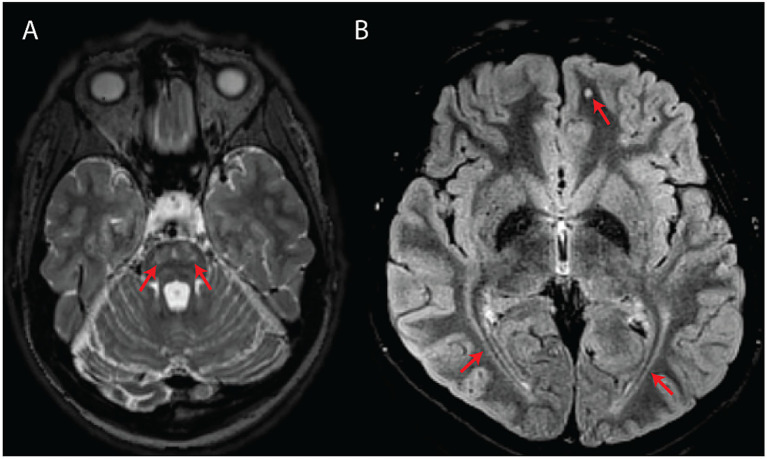 Figure 1
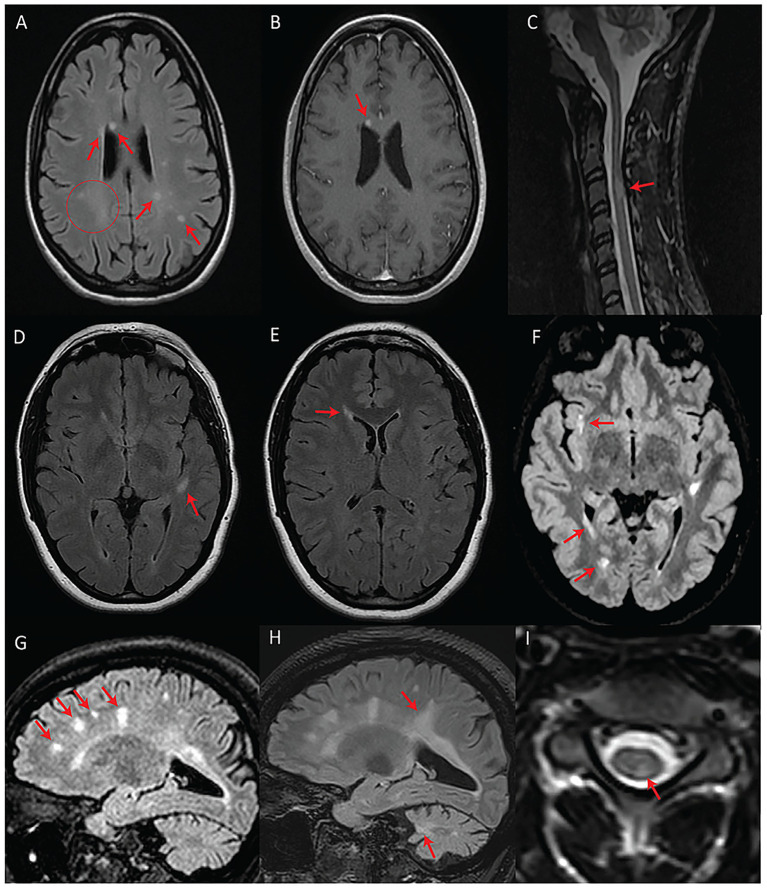 Figure 2
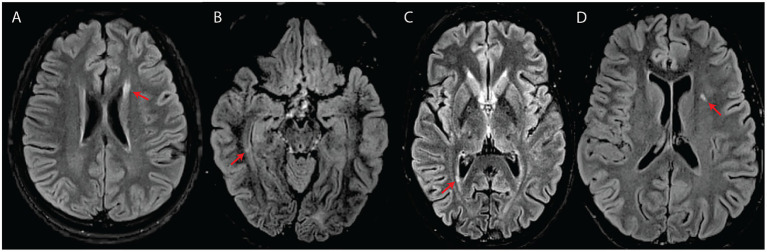 Figure 3
Peer Reviews
No public reviews on file for this paper yet. If you reviewed it on a platform where reviews are public (OpenReview, ICLR, NeurIPS, ICML), you can paste yours below so the community can read it here.
Videos
No videos yet. Explain this paper in a talk, walkthrough, or lecture? Add one.
Taxonomy
TopicsEndoplasmic Reticulum Stress and Disease · Chromatin Remodeling and Cancer · Hereditary Neurological Disorders