Benders Decomposition Using Graph Modeling and Multi-Parametric Programming
Parth Brahmbhatt, David L. Cole, Victor M. Zavala, Styliani Avraamidou

TL;DR
This paper introduces a new framework for accelerating Benders decomposition using graph modeling and multiparametric programming surrogates to improve performance and interpretability in solving complex optimization problems.
Contribution
The novel framework combines graph-theoretic modeling with multiparametric programming surrogates to replace subproblem solves with fast evaluations in Benders decomposition.
Findings
Using mp surrogates achieves substantial speedups in subproblem solve time while preserving convergence guarantees.
The framework enables solution analysis and interpretability through mp critical region tracking.
The approach overcomes scalability issues of mp and supports heterogeneous subproblems with a unified structure.
Abstract
Benders decomposition is a widely used method for solving large and structured optimization problems, but its performance is affected by the repeated solution of subproblems. We propose a flexible and modular algorithmic framework for accelerating Benders decomposition. Specifically, we express the problem structure by using a graph-theoretic modeling abstraction in which nodes represent optimization subproblems and edges represent connectivity between subproblems. A key innovation of our approach is that we embed multiparametric programming (mp) surrogates for node subproblems, which maps the exact analytical map of the subproblem solution space. The use of mp surrogates allows us to replace subproblem solves with fast look-ups and function evaluations for primal and dual variables during the iterative Benders process. We formally show the equivalence between classical Benders cuts and…
Genes, proteins, chemicals, diseases, species, mutations and cell lines named across the full text — each resolved to its canonical identifier and authoritative record.
Click any figure to enlarge with its caption.
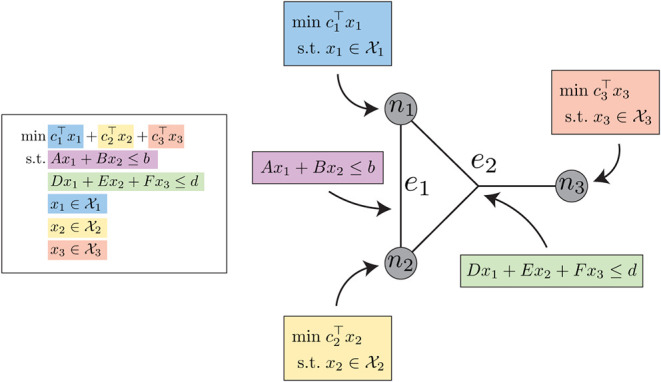 Figure 1
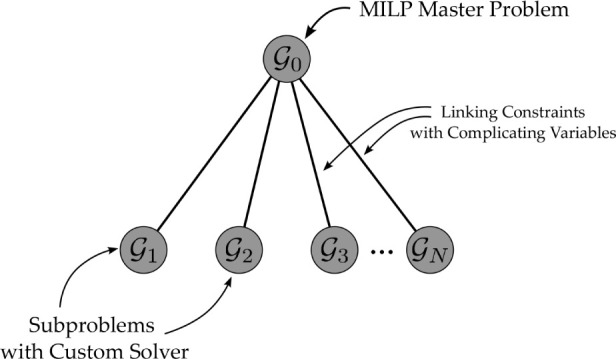 Figure 2
 Figure 3
 Figure 4
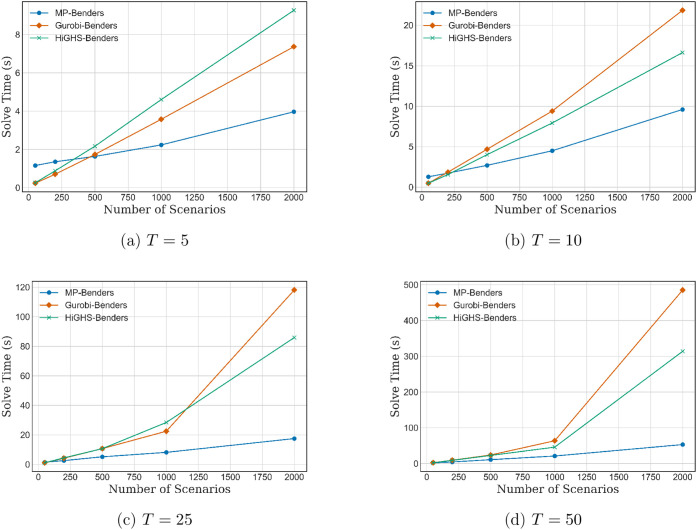 Figure 5
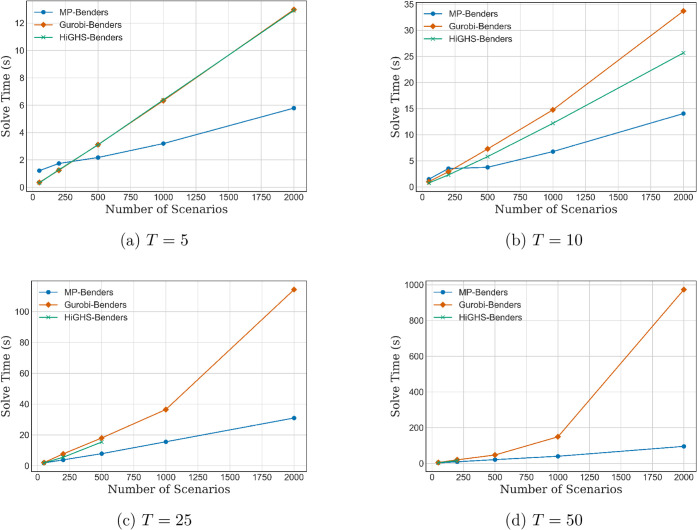 Figure 6
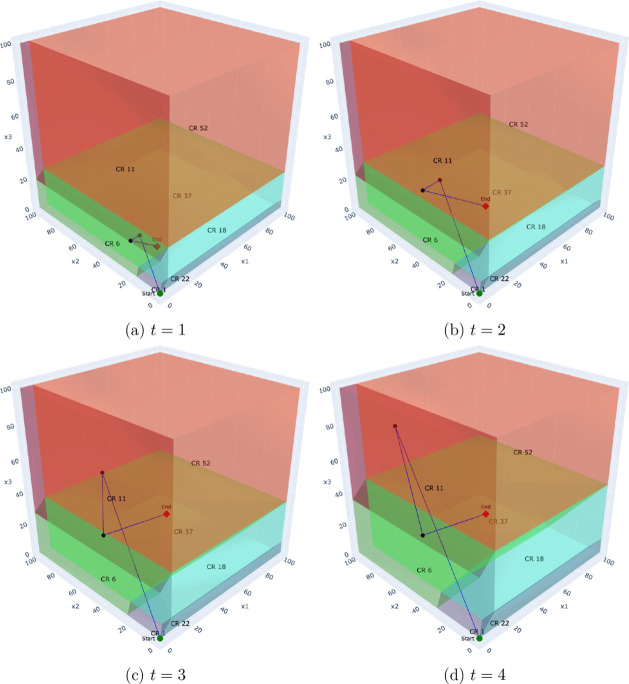 Figure 7
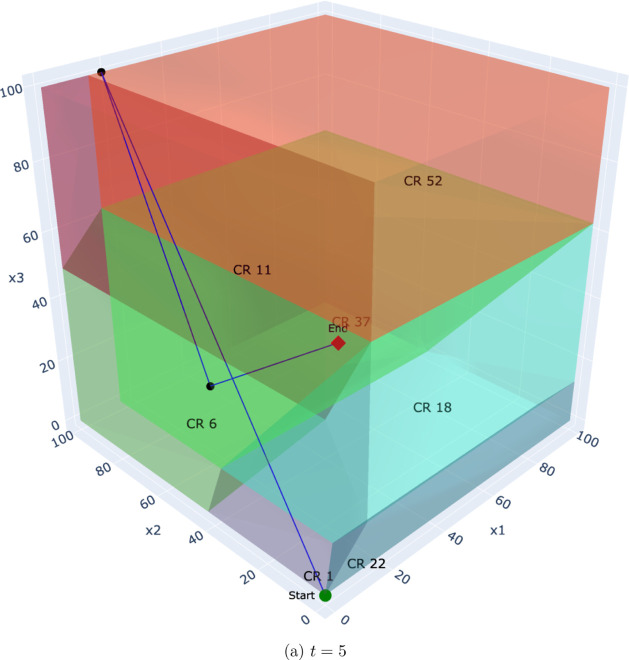 Figure 8
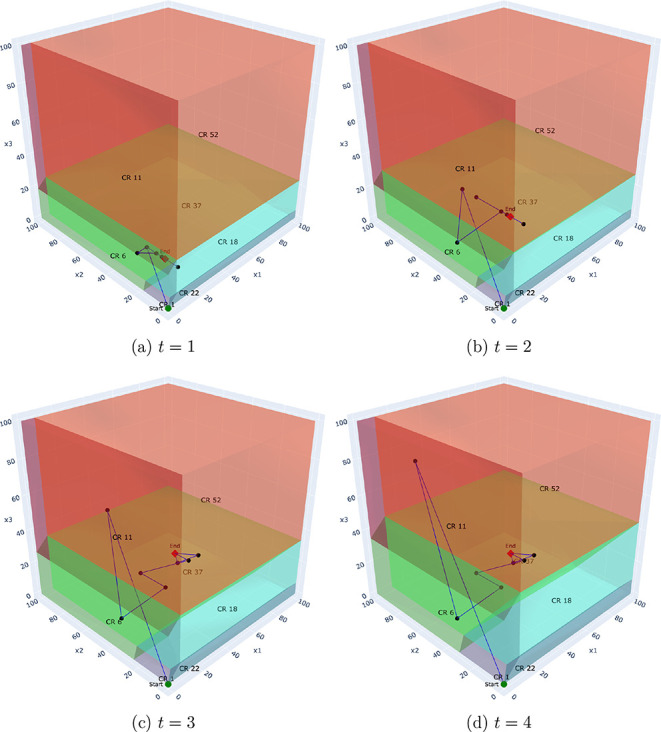 Figure 9
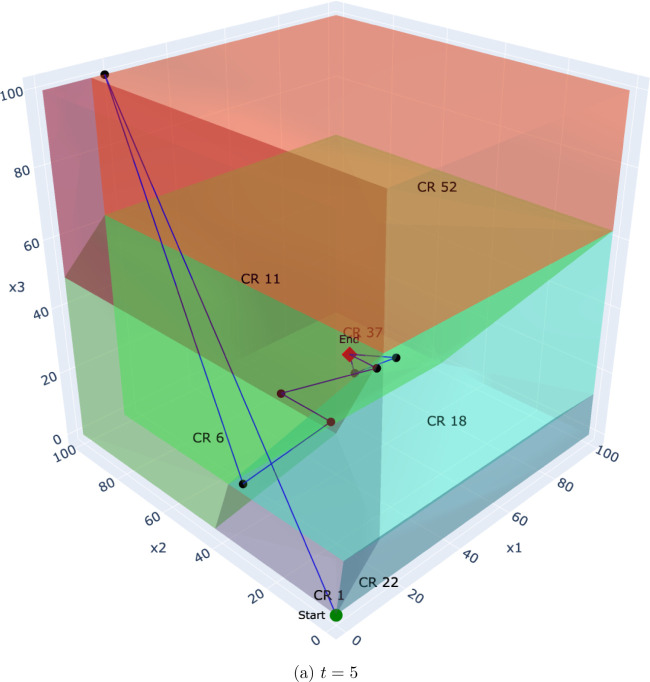 Figure 10
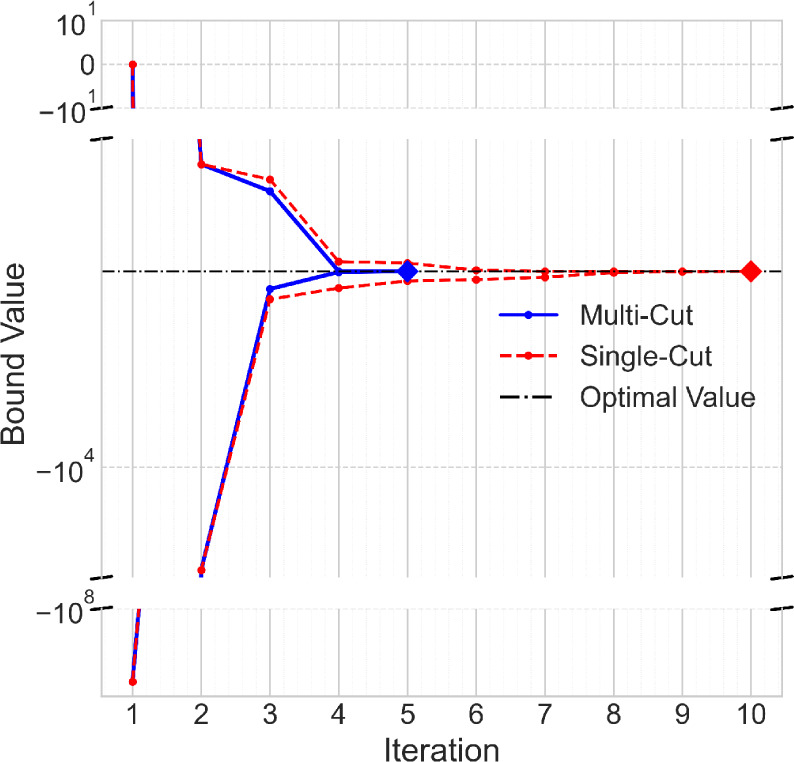 Figure 11
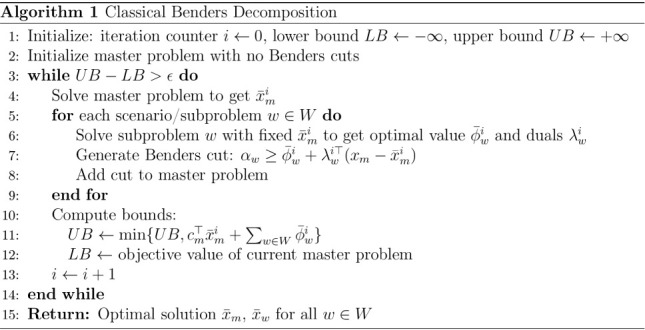 Figure 12
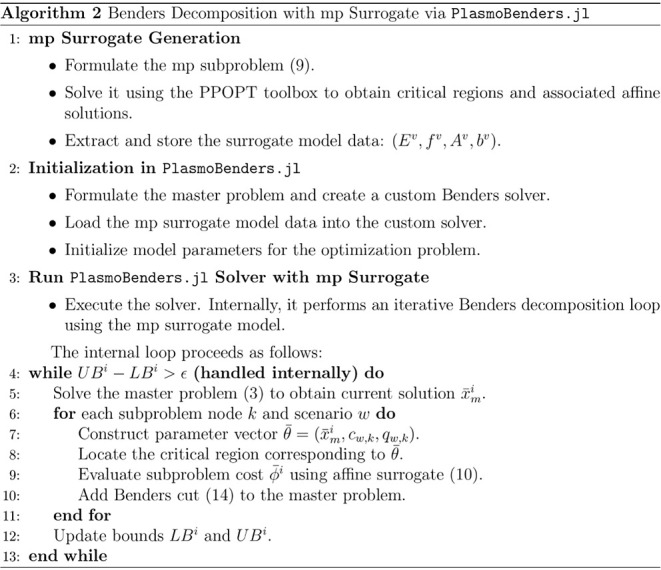 Figure 13
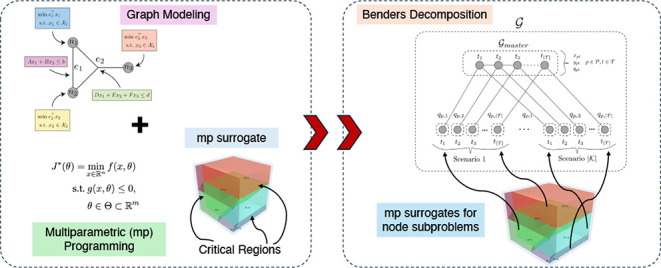 Figure 14
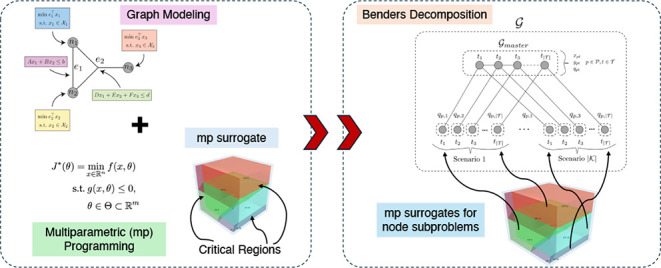 Figure 15
 Figure 16
 Figure 17
 Figure 18
 Figure 19
 Figure 20
 Figure 21
 Figure 22
 Figure 23
 Figure 24
 Figure 25
 Figure 26
 Figure 27
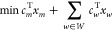 Figure 28
 Figure 29
 Figure 30
 Figure 31
 Figure 32
 Figure 33
 Figure 34
 Figure 35
 Figure 36
 Figure 37
 Figure 38
 Figure 39
 Figure 40
 Figure 41
 Figure 42
 Figure 43
 Figure 44
 Figure 45
 Figure 46
 Figure 47
 Figure 48
 Figure 49
 Figure 50
Peer Reviews
No public reviews on file for this paper yet. If you reviewed it on a platform where reviews are public (OpenReview, ICLR, NeurIPS, ICML), you can paste yours below so the community can read it here.
Videos
No videos yet. Explain this paper in a talk, walkthrough, or lecture? Add one.
Taxonomy
TopicsAdvanced Multi-Objective Optimization Algorithms · Constraint Satisfaction and Optimization · Risk and Portfolio Optimization