Hydrogen Bonds Induce Double-Well Spectroscopic Signatures in α‑Glycine
Noam Pinsk, Nimrod Benshalom, Michal Hartstein, Yael Diskin-Posner, Matan Menahem, Olle Hellman, Leeor Kronik, Omer Yaffe

TL;DR
This study shows how hydrogen bonds in α-glycine crystals create unique Raman spectroscopy patterns linked to double-well potentials.
Contribution
The paper provides direct evidence connecting hydrogen-bond double-well potentials to specific vibrational spectroscopic anomalies.
Findings
Two Raman peaks in α-glycine merge and narrow with temperature, defying conventional selection rules.
Simulations using an asymmetric double-well potential reproduce the observed spectral behavior.
The findings confirm a direct link between hydrogen-bond potentials and vibrational spectroscopy features.
Abstract
Hydrogen bonds in molecular crystals are often modeled as double-well potentials, yet direct evidence linking this potential form to vibrational spectroscopic features remains elusive. In this study, we investigate α-glycine, a hydrogen-bonded crystal that exhibits pronounced Raman anomalies without undergoing a structural phase transition. Through temperature- and polarization-dependent Raman spectroscopy, supported by isotope substitution and first-principles calculations, we identify two peaks whose behavior violates conventional Raman selection rules. These peaks merge and narrow anomalously with temperature, an effect that cannot be explained by harmonic models or thermal broadening. Simulated spectra based on a weakly evolving asymmetric double-well potential reproduce this merging, indicating that both peaks originate from one double-well potential. Our results establish…
Genes, proteins, chemicals, diseases, species, mutations and cell lines named across the full text — each resolved to its canonical identifier and authoritative record.
Click any figure to enlarge with its caption.
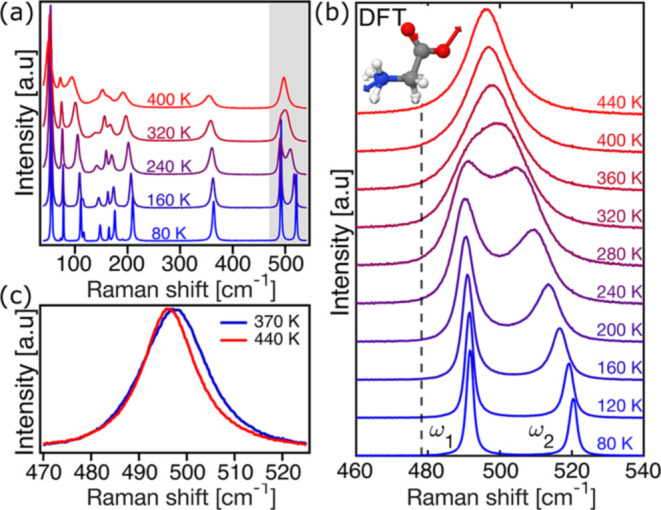 Figure 1
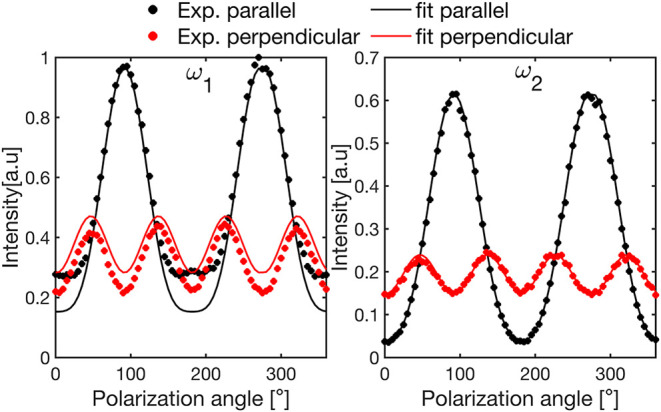 Figure 2
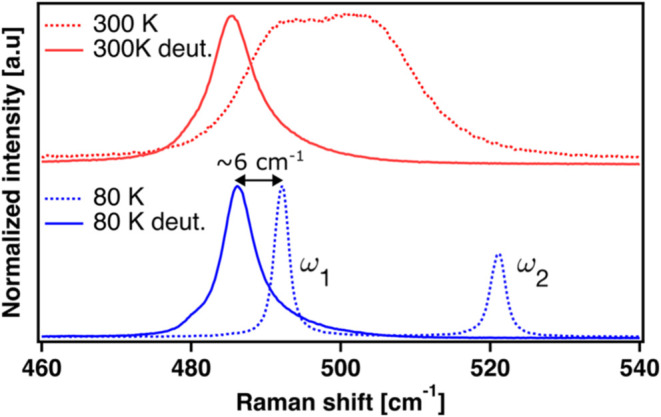 Figure 3
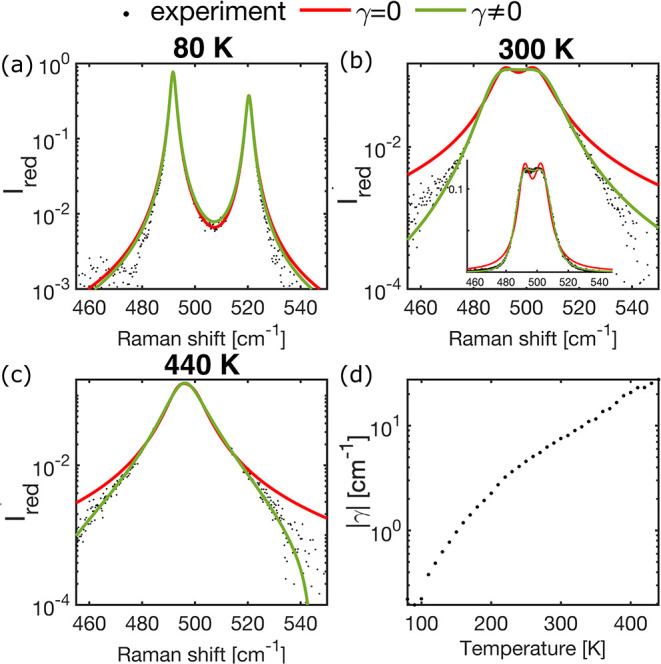 Figure 4
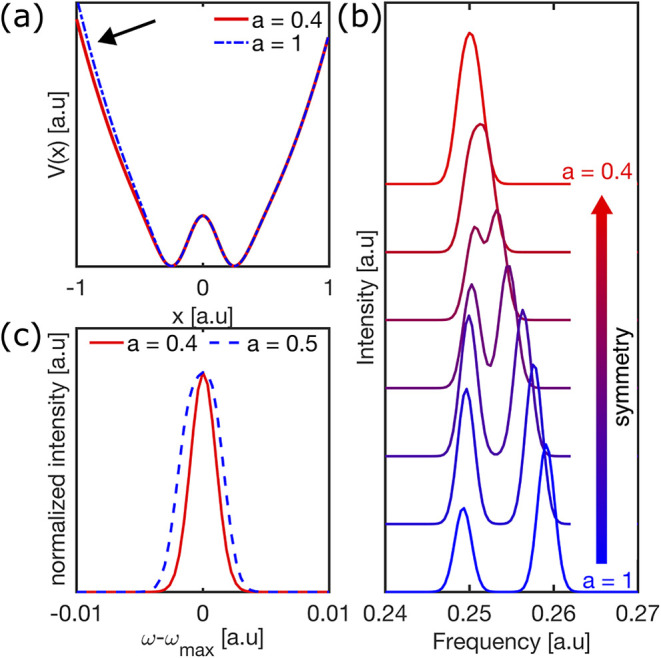 Figure 5
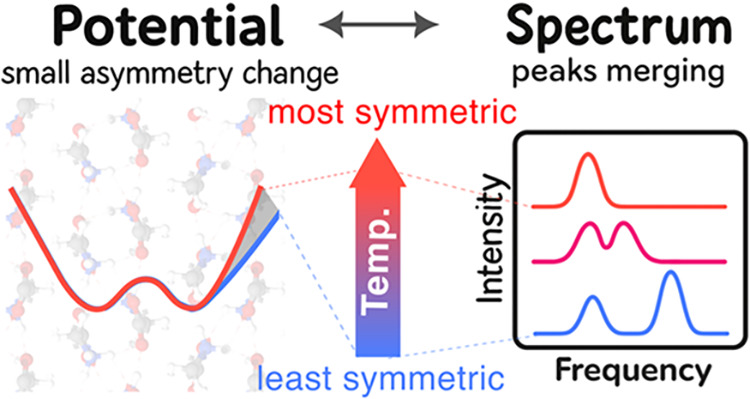 Figure 6
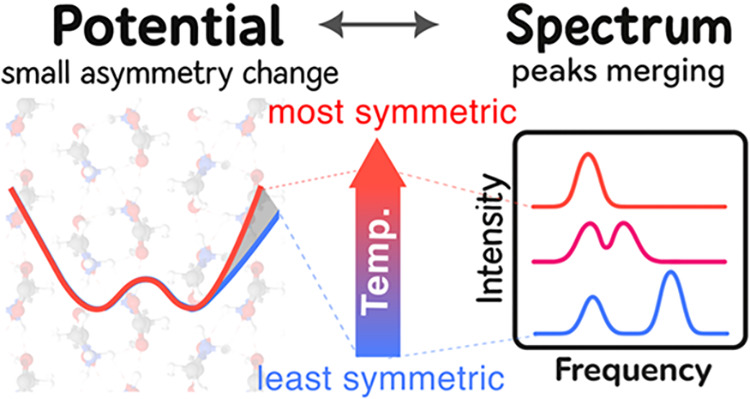 Figure 7
 Figure 8
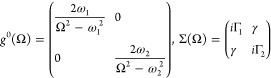 Figure 9
Peer Reviews
No public reviews on file for this paper yet. If you reviewed it on a platform where reviews are public (OpenReview, ICLR, NeurIPS, ICML), you can paste yours below so the community can read it here.
Videos
No videos yet. Explain this paper in a talk, walkthrough, or lecture? Add one.
Taxonomy
TopicsSolid-state spectroscopy and crystallography · Crystallography and molecular interactions · Spectroscopy and Quantum Chemical Studies